See Greece’s guide to the Cretan Diet, covering what it includes and asking if it really is one of the healthiest diets in the world.
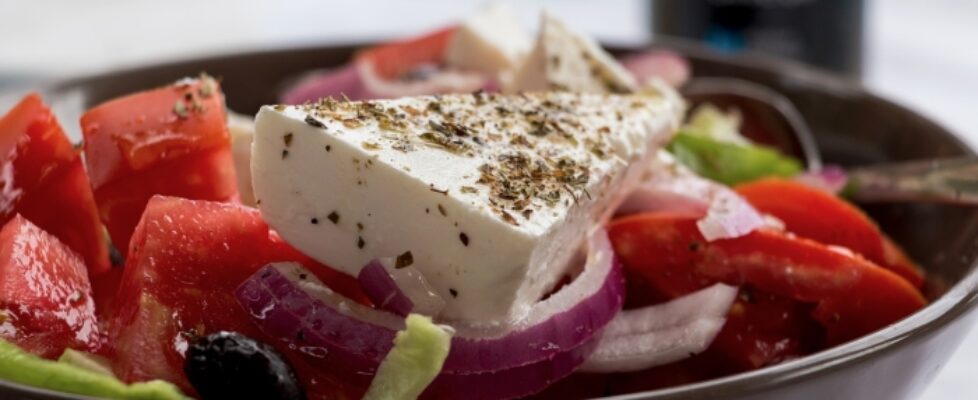
A Healthy Greek Salad
The Cretan Diet is said to be one of the healthiest diets in the world. Several studies have shown this, and fortunately the diet is not just healthy but also very tasty. It blends pulses, olive oil, fresh fruit and vegetables, lots of fresh fish… and the robust but health-giving red wine too.
In addition, the diet incorporates most of the other requisites for healthy eating, including nuts, spices, garlic, bread, cheese and meat. Some people refuse some foods such as meat and cheese, believing them to be unhealthy, but the Cretan Diet shows that a moderate amount of all these items is definitely good for the body.
What Goes into the Cretan Diet?
Vegetables
The Cretan Diet Has Plenty of These
Part of the secret is the quantity of fresh vegetables eaten. Cretans consume three times as many vegetables as other Europeans. These are rich in vitamins and fatty acids, which help fight off heart disease. Most are also organically grown in an ideal climate: mild winters and moderate temperatures in early summer.
Fruit
Plenty of Fruit at Greek Markets
Cretans are also said to eat four times as much fruit as the average southern European (and they eat a lot!), and six times as much as their northern European counterparts. Most notable among the fruits is the orange, which grows in such profusion on the island, even in winter, that sometimes people cannot even give away the crop of oranges on their land.
These provide numerous vitamins in the diet, notably vitamin C. Grapes are eaten as well as turned into wine, grape skins having antioxidant elements which are believed to offer protection against cancer.
Fish
Fish Isn’t Fresher Than This!
Although Crete is a large island, its long, thin shape means that nowhere is so far from the sea that fresh fish isn’t easily available. There are also trout farms in the interior. As well as being full of vitamins, fish oils are known to help protect against heart disease.
Olive Oil
Cretan Olive Oil Bottles
Crete produces especially good-quality olive oil. Olive oil reduces the amount of unhealthy LDL cholesterol in the blood stream, which can lead to clogged arteries, but increases the amount of HDL cholesterol, which helps to break down these fatty deposits.
Next time you have a Greek salad, there is no need to refuse the olive oil in the belief that it is bad for you. Far better to cut down on dairy products, for example eating your bread without butter, as the Cretans do, and only having a modest amount of cheese in the diet.
Wine
Vineyards at the Lyrarakis Winery on Crete
Moderate amounts of wine, especially red wine, are also believed to be generally good for health. Red wine has anti-oxidants which help fight several diseases, and studies have shown that people who drink a moderate amount of wine (roughly one glass per day for women and two for men) live far longer than either tee-totallers or heavy drinkers.
Cretan Diet Research
Research begun in 1956 by the innovative American nutritionist Dr Ancel Keys compared diets, diseases and death rates in seven countries across the world, including Japan, Italy and the USA.
Greek studies were undertaken in Corfu and Crete. Crete had by far the lowest mortality rates for heart diseases and cancer. In Finland, for example, there were 972 such deaths per 100,000 people in 1986, when the studies were still continuing. The figure for Crete was just 38 deaths, the lowest in the world.
Similarly Crete had the lowest rate of deaths from other causes, and lowest incidence of disease. So impressed was Dr Keys by the findings, that he began to follow the Cretan Diet himself… and lived to be 100!
Lyon Study
In a further study of heart patients in Lyon, French doctors divided their patients into two groups. One group was given a conventional low fat/low cholesterol diet, as recommended by the US Society of Cardiology for sufferers from heart disease. The second group was put on the Cretan Diet. The results were astonishing. Mortality rates in the second group were 75% lower than the first group after two years.
See Greece reviews the Greek cookbook, The Ikaria Way by Diane Kochilas, containing 100 delicious plant-based recipes.
The Ikaria Way Cookbook
We recently reviewed the excellent cookbook Ikaria by Meni Valle, and some recipes from that book have become keepers for us, part of our regular ‘go-to’ dishes. And now along comes The Ikaria Way by Diane Kochilas, who is actually from Ikaria originally. We guess everyone just wants to know the secret of why the island of Ikaria is one of the world’s Blue Zones, where people live for much longer than average.
One reason is certainly that they eat a amore plant-based diet than other people (even in Greece), and in The Ikaria Way the author collects 100 plant-based recipes inspired by Ikaria, which she calls ‘the Greek island of longevity’. The New York Times called it the island where ‘people forget to die.’
The Ikaria Way
The Ikaria Way is far more than just a cookbook, though. It’s a guide to healthier eating, and if you have specific health issues it’s a guide to what kinds of food you should be eating to try to help heal your body.
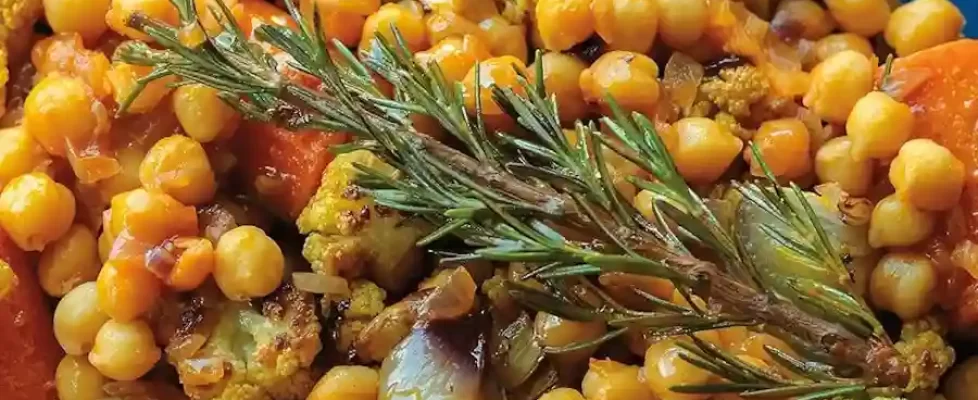
The first chapter alone is worth buying the book for: ‘A pantry inspired by Ikaria’. In it the author goes through the kinds of things you’ll find in most Ikaria kitchens, telling you a little bit about them, where they originated, what you can do with them, and, most importantly, what health benefits they have. For example, adding more beans and pulses to your diet is known to increase longevity, while chickpeas in particular have been shown to reduce the risk of heart disease.
Garlic is Good for You
Garlic is in almost all the recipes in this book, which is good as its healthful properties have been known since the days of the ancient Greeks. Athletes used to consume it to enhance their performance during the Ancient Olympic Games. Greek soldiers used to have a garlic-filled diet, especially before going into battle. I suppose if you ate enough of it, your enemy wouldn’t want to come near you anyway.
There are whole sections dealing with dried herbs, fresh herbs, nuts (rich in vitamins and healthy fats), olives and olive oil, and the benefits of sea salt over processed table salt, which has most of its nutrients removed.
Naturally there are entries for the two ingredients which make up the best breakfast in the world: Greek yogurt and honey. Both of these are excellent for your health, and honey is far batter for you as a sweetener than sugar.
And Then There Are the Recipes!
From The Ikaria Way Cookbook
Reading about the ingredients certainly makes you keen to try some of the recipes which then follow. They’re divided into seven categories: meze, salads, soups, bean dishes, grain dishes, plant-based main courses, and drinks, including a herbal tea and some tasty-sounding smoothies. Naturally everything is accompanied by some equally tasty photography, both of the island and the dishes.
Sprouts and Mushrooms
One recipe we’ll definitely be trying is Pan Shaken Brussels Sprouts and Mushrooms. Caramelised Brussels sprouts are one of our favourite tastes, and we usually roast them in the oven till they’re crunchy and almost black on the outside. The thought of doing them in the pan with mushrooms, olive oil, garlic, a strip of orange zest, some star anise, thyme, and a little dry white wine has us salivating already. Mushrooms are also very good for you and are known to have anti-cancerous properties.
Another meze idea that sounds good is Roasted Carrots with Honey, Olives and Garlic. The flavours here are enhanced with thyme again (herbs are such an important part of Greek cooking), and some dry white wine. Yes, there are some wineries on Ikaria but the author says you could use a dry sauvignon blanc instead.
Other recipes that caught our eye included Pasta with Mushrooms and Chestnuts and definitely Garlicky Red Lentil Soup. Garlic and lentils? I feel healthier just for reading the recipe! This Ikaria cookbook is certainly one we’ll be using.
Buying The Ikaria Way
If you’ve read so far you know we really like this book, and if you want to check it out more you’ll find it on Amazon.
A visit to the Museum of Samos Wine to learn about the muscat grapes that produce the best dessert wines in the world and also the Greek spirit, Metaxa.
Wine-Tasting at the Museum of Samos Wine
Around the harbour from the Archaeological Museum in Vathi stands a museum to another subject that has played a huge role in the history of Samos: its wine. The Museum of Samos Wine celebrates the fact that wine has been made on the island since antiquity, and for centuries the name of Samos has been known around the world for producing some of the finest dessert wines.
Samos even exports its wines to France, which is a triumph in itself as the French are renowned for being very parochial when it comes to their choice in wine. Yet 40% of the wine produced on Samos – and they produce over 5 million litres a year – is exported to France where it is mainly drunk as an aperitif.
Another large portion of the best Samos wine is bought by the Metaxa company and taken to its distillery in Athens, where it is a key ingredient in Greece’s unique spirit, Metaxa. (Most people refer to Metaxa as a brandy, and although it tastes very similar to a fine brandy it technically is not a brandy as brandy by definition does not contain wine.)
Visiting the Museum of Samos Wine
Museum of Samos Wine
The Museum of Samos Wine is housed in a building near the waterfront that dates back to the 1930s and was once a warehouse and barrel-making facility, our guide Iannis Panagiris tells us. Iannis works for the wine cooperative that runs the museum as part of its activities, and which goes by the grand name of the United Winemaking Agricultural Cooperative of Samos.
‘Some of the old barrels are on display,’ Iannis says, ‘but we no longer make barrels here. The biggest one on display holds 18,000 litres. The cooperative was founded in 1934, although of course Samos wine had been popular for many years before that. The winegrowers decided to unite to avoid exploitation by European wine buyers. At the cooperative we take the grapes from 25 villages. We have about 2,500 members, with their families, and the vineyards cover about 1600 acres.’
Old Bottle of Samos Wine
The vast majority of the Samos vineyards cultivate the muscat grape, which grows exceptionally well on the island. It mostly grows here and in the South of France.
Old Photos
‘If you look at the historic black and white photos that are on display around the museum,’ Iannis says, ‘you’ll find that not much has changed because of the difficult access. You can’t get machinery into the vineyards so it is still all done by hand. One change is that each village traditionally had a grape collector, as most people only had donkeys, but now the growers bring their own grapes to us on trucks.’
Museum of Samos Wine Tour
On Samos the grapes grow at everything from sea level up to about 900m high (2,953 ft), with many of the vineyards on the slopes of Mount Ampelos, whose name appropriately means ‘vine’. It’s the highest mountain on Samos, at a height of 1,095 metres (3,593 ft).
Because of the different elevations, the harvest on Samos lasts for about two months, usually in August and September. The sea level grapes are ready first, though the higher grapes take longer to mature and produce a more concentrated taste and wine of a higher quality, although a lot depends on the individual microclimates.
‘The union also supports growers with advice to help control the quality,’ Iannis explains to us. ‘This is an AOC so there are certain rules to follow. The secret to the success of the wine is the altitude, the drainage, the maturation. It’s a sweet wine but also has a freshness that is almost metallic and might remind you of stone. That’s why Samos wines are known around the world. Samos has been known for centuries as a supplier of top sweet wines.
Inside the Museum of Samos Wine
‘The price growers get from us depends on the quality of the grapes and the type of wine they will be making. Better grapes obviously get higher prices. They also get higher prices for grapes that go into the Grand Cru that goes to France because there is a lesser yield. We’re not a profit organisation. We have to cover our costs and then the rest is distributed. The role of the union is vital in the success of Samos wine. Seven of the producers are elected to the Board of Directors. Many of them are quite young, in their 30s, so the younger people are still working the vineyards.’
Visiting the Wine Museum of Samos is clearly educational as well as entertaining. It’s an impressive museum that covers two floors and the old photos are especially interesting. Elsewhere there are collections of wine-making equipment, bottles, books, ledgers and all manner of things.
Wine-Tasting at the Museum of Samos Wine
Sign for the Museum of Samos Wine
At the end, naturally, we enjoy a wine tasting. We start with two dry muscats, an Aegean Breeze and a High Peaks. The Aegean Breeze manages to be both crisp and dry yet aromatic, and we try pairing the High Peaks with a yellow goats’ cheese from Samos, a perfect match.
We move on to the least sweet of the sweet wines, the Grand Cru that the French enjoy so much as an aperitif. It is light and fresh, with a slight metallic taste to it, good as a palate cleanser. The Vin Doux is 15% ABV, a strong and sweet wine that is the typical dessert wine we associate with Samos.
Wine-Tasting at the Museum of Samos Wine
The Samos Anthemis is the same as the Vin Doux but aged for 5 years. It tastes like toffee, raisins and Christmas pudding, and is the most popular Samos wine in the UK. Samos Nectar is aged for six years and is a deeper more tawny colour, tasting of dried fruit, caramel and nuts. No wonder these drinks are popular at Christmas.
Before leaving, don’t miss the museum shop, which sells a few other local products as well as wine. But check those wine prices. For medal-winning wine the prices are much, much cheaper than you’ll find them outside of Greece.
So if you’re in Vathi on Samos, don’t think that the Archaeological Museum is the only museum in town. The Wine Museum of Samos is also full of history – and you get to drink wine too.
Wine-Tasting at the Museum of Samos Wine
Museum of Samos Wine: More Information
The Museum of Samos Wine is open May-October. Check the website for opening times: samoswine.gr
Greek alcoholic drinks include distinctly Greek drinks such as ouzo, Metaxa, retsina, raki, tsikoudia and tsipouro, but also Greek wines and Greek beers.
Toasting with Ouzo on Chios
Ouzo is a very popular aperitif. It’s an aniseed-based drink a little like pastis, raki, or arak. It is served neat in a tall glass with an accompanying glass of water. Some people prefer their ouzo neat and will sip at the water, but the most common way to drink it is to pour some water into the ouzo, till you get the taste that you prefer. Adding water turns the ouzo milky. It’s typically about 37-40% ABV so is as strong as other spirits like vodka and gin, but it’s got a very more-ish taste and is very refreshing in a hot climate so it’s easy to overdo it.
Beer is very popular in Greece and many Greeks drink beer with meals rather than wine. Two of the main Greek brands to try are Fix and Mythos, and if you like light beers brands like Amstel and Heineken are also widely available. For a little variety there are also now an increasing number of craft breweries around the country, so ask if the bar or restaurant has any local beers they can recommend.
Greek wine has improved by leaps and bounds over the years, helped by increased demand from visitors and also young Greek winemakers travelling around the world and bringing new skills and techniques home with them. Long gone are the days when your only choices were Retsina and Domestica (red or white and nicknamed Domestos).
House wines can vary in quality, but in some tavernas it really will be house wine, made by the owner in the family’s own vineyards. In smarter places the wine lists will naturally be more sophisticated. Familiar grape varieties like cabernet sauvignon and chardonnay do grow in Greece but the country also has a wide range of indigenous grape varieties with unusual names like agiorgitiko and roditis. Be adventurous, and don’t be afraid to ask what a particular wine is like, if you don’t know the grape variety.
Retsina is a peculiarly Greek white (or occasionally rosé) wine which has a slight resiny flavour. Some people love it, some people never get a taste for it, but you should certainly try it to find out which camp you’re in. The resin taste is said to have begun some 2,000 years ago when wine was stored in clay amphora, which were sealed at the top with Aleppo resin. This acted as a very effective seal, good at keeping wine fresh, but it did imbue the wine with a slight resin flavour.
The Greeks developed a liking for this distinctive wine. Even when it became possible to store wine in wooden barrels (which needed no resin stop and gave wines a different taste), the Greeks still wanted their retsina and the flavour was added in different ways. Retsina has a reputation as a ‘rough’ wine, not very sophisticated, but today’s winemakers have reinvented retsina and there are some remarkably subtle retsinas available. The name ‘Retsina’ is acknowledged by the European Union as a PDO (Protected Domain of Origin). See our full page about Greek retsina.
Metaxa Bottles on Samos
Metaxa is a common after-dinner drink, which people refer to as Greek brandy, though this isn’t strictly the case. It’s a good way to convey what kind of a drink it is. It was originally referred to as Greek cognac, until cognac-makers came up with a definition of cognac, so Metaxa (which is the family name of the original maker) described itself instead as a brandy, which wasn’t then strictly defined. Later, though, the rules for calling yourself brandy were laid down, and Metaxa didn’t meet the requirements so it became… just Metaxa.
In fact in international competitions Metaxa is in a class of its own as it doesn’t fit into any official categories. It’s a dark spirit that’s distilled at the Metaxa Distillery in Athens, then blended with wine from Samos grapes, with added herbs and other secret ingredients. One known ingredient is rose petals, as someone once observed them being delivered to the distillery, so that little secret was out! It isn’t hard to tell, though, as Metaxa does have a fresh and floral taste as part of its overall complex flavour. Think of it as a brandy/liqueur/digestif kind of drink that is distinctly Greek, and do try a glass after dinner.
It’s common to leave a restaurant/taverna after a meal and move on to a bar or café for a Metaxa (or two) and maybe a dessert or some fresh fruit. Metaxa comes at different prices and, naturally, different qualities. The most common are 5-star, 7-star, and 12-star, with a few special (and expensive) limited editions. The more stars, the better, is a good rule-of-thumb, although even 5-star Metaxa is a delicious and smooth drink. Try a Metaxa cocktail, too. And read our full page all about Metaxa.
Raki or tsikoudia is the after-dinner drink of choice on Crete, where it originated. It’s a spirit distilled from the bits of the grape that are left over from the wine-making process. Waste not, want not. It’s so common that many tavernas and restaurants give customers a complimentary glass at the end of a meal. Quality and strength varies enormously and it can be anything from a standard 40% ABV (like ouzo) to an eye-watering 65%. Our advice is knock it back and hope for the best!
Tsipouro is a similar drink to raki that is made widely on the Greek mainland, the main difference being that it rarely exceeds 40-45% ABV in strength, and doesn’t get up to the high-octane alcohol content that it can do on Crete.
Rakomelo is a drink made in several places in Greece but notably on Crete, which is where we met a rakomelo-maker.
See Greece brings you the story of Greek stifado, a classic dish, with recipes for beef, rabbit, octopus and a vegetarian option, with wine pairings for each.
Greek Stifado: A Rich and Aromatic Stew with a Deep History
Greek Stifado
History of Greek Stifado
Greek stifado (στιφάδο) is a slow-cooked stew known for its rich, sweet-and-savory flavor, tender meat, and an abundance of small onions (or shallots). The dish has roots in ancient and medieval Greek cuisine, with influences from Venetian and Ottoman cooking.
The name stifado likely comes from the Italian stufato, meaning “stew.” During the Venetian occupation of parts of Greece (13th–18th centuries), many Italian culinary terms and techniques were adopted into Greek cooking. The dish evolved further under Ottoman rule, incorporating spices like cinnamon and cloves, which were commonly used in Middle Eastern cuisine.
Traditionally, stifado was made with game meat, such as rabbit or hare, but today, beef is the most common choice. Some regional variations use octopus, lamb, or even wild boar. The key characteristic of stifado is the use of pearl onions or shallots, which caramelize during cooking, adding a deep sweetness to the dish.
Recipe: Classic Beef Stifado
Ingredients (Serves 4–6) – 1 kg (2.2 lbs) beef (chuck or shoulder), cut into large chunks
– 500g (1 lb) small pearl onions or shallots, peeled
– 3 garlic cloves, minced
– 400g (14 oz) canned tomatoes or fresh ripe tomatoes, chopped
– 1 cup red wine
– 2 tbsp red wine vinegar
– 3 tbsp olive oil
– 1 bay leaf
– 1 cinnamon stick
– 3–4 whole cloves
– 1 tsp dried oregano
– 1 tsp sugar (optional, to balance acidity)
– Salt and black pepper to taste
– Fresh parsley for garnish
Instructions 1. Prepare the Onions:
– Blanch the pearl onions in boiling water for 1–2 minutes to make peeling easier. Drain and peel them, keeping them whole.
2. Brown the Meat:- Heat olive oil in a large, heavy pot (like a Dutch oven) over medium-high heat.
– Pat the beef dry and season with salt and pepper. Brown the meat in batches to avoid overcrowding, ensuring a good sear on all sides. Remove and set aside.
3. Sauté the Aromatics:
– In the same pot, add the garlic and sauté for 30 seconds until fragrant.
– Deglaze with red wine and vinegar, scraping up any browned bits from the bottom.
4. Simmer the Stew:
– Return the beef to the pot. Add tomatoes, bay leaf, cinnamon stick, cloves, oregano, and sugar (if using).
– Pour in enough water (or beef stock) to just cover the meat. Bring to a boil, then reduce heat to low, cover, and simmer for 1.5 hours.
5. Add the Onions:
– After the first 1.5 hours, add the peeled onions. Continue simmering uncovered for another 30–45 minutes, or until the meat is fork-tender and the sauce has thickened.
6. Serve:
– Discard the bay leaf, cinnamon stick, and cloves.
– Adjust seasoning if needed and garnish with fresh parsley.
– Serve with crusty bread, mashed potatoes, or orzo pasta.
Alternative Recipe: Rabbit Stifado
For a more traditional version, rabbit can be used instead of beef.
Ingredients: – 500g pearl onions
– 3 garlic cloves
– 1 cup red wine
– 2 tbsp red wine vinegar
– 1 tsp allspice berries
– 1 cinnamon stick
– 400g chopped tomatoes
– Olive oil, salt, pepper
Method:
Follow the same steps as beef stifado, but reduce cooking time slightly (rabbit cooks faster than beef). Simmer for 1 hour before adding onions, then cook for another 30 minutes.
Vegetarian Stifado (Mushroom & Eggplant Version)
Ingredients (Serves 4) 500g mushrooms (cremini or wild), halved
1 large eggplant, cubed
500g pearl onions, peeled
3 garlic cloves, minced
400g chopped tomatoes
1 cup vegetable broth
½ cup red wine (optional)
2 tbsp balsamic vinegar
1 bay leaf
1 cinnamon stick
1 tsp smoked paprika
3 tbsp olive oil
Salt, pepper, and fresh herbs (thyme or parsley)
Instructions Roast Eggplant: Toss eggplant with olive oil, salt, and roast at 200°C (400°F) for 20 minutes.
Sauté Mushrooms & Onions: In a pot, cook onions until soft, add mushrooms, and brown.
Deglaze & Simmer: Add garlic, wine (if using), vinegar, tomatoes, broth, and spices.
Combine & Cook: Stir in roasted eggplant and simmer for 30–40 minutes until flavors meld.
Serve: Garnish with fresh herbs and enjoy with feta or creamy polenta.
Octopus Stifado (A Coastal Delight)
Octopus Being Dried and Tenderized on Lesvos
Ingredients (Serves 4) 1 kg (2.2 lbs) octopus, cleaned and cut into pieces
500g pearl onions or shallots
3 garlic cloves, minced
1 cup red wine
2 tbsp red wine vinegar
400g chopped tomatoes
1 bay leaf
1 cinnamon stick
½ tsp allspice berries
3 tbsp olive oil
Salt, pepper, and fresh parsley
Instructions Tenderize Octopus: Simmer octopus in water for 20–30 minutes until slightly tender. Drain and set aside.
Sauté Onions & Garlic: In olive oil, cook onions until golden, then add garlic.
Deglaze & Simmer: Add wine, vinegar, tomatoes, and spices. Return octopus to the pot.
Cook Slowly: Simmer for 45–60 minutes until octopus is tender and sauce thickens.
Serve: Garnish with parsley and serve with feta cheese and crusty bread.
Wine Bottles in the Museum of Samos Wine
Wine Pairings for Greek Stifado: The Perfect Matches
The rich, aromatic flavors of stifado—whether made with beef, octopus, or vegetables—call for wines that complement its sweet, tangy, and spiced notes. Greek wines are an excellent choice, but international varieties also work beautifully. Below are the best pairings for each type of stifado.
1. Beef or Rabbit Stifado – Bold Reds for a Hearty Stew
Beef stifado’s deep, savory flavors and tender meat pair best with full-bodied red wines that have enough tannins and acidity to balance the dish’s richness.
Best Greek Wines:
Agiorgitiko (Nemea) – A velvety red with dark fruit flavors (black cherry, plum) and a hint of spice.
Xinomavro (Naoussa, Amyndeon) – A structured, high-acid red with tomato and olive notes, perfect for tomato-based stews.
International Alternatives:
Cabernet Sauvignon – Bold with dark fruit and a touch of oak.
Syrah/Shiraz – Peppery and rich, enhancing the cinnamon and cloves in stifado.
Chianti (Sangiovese) – High acidity cuts through the richness, with cherry and herbal notes.
Why They Work: The tannins in these wines soften the fat in the beef, while their acidity balances the sweetness of the caramelized onions.
Octopus stifado is lighter than beef but still rich, benefiting from wines with bright acidity and a touch of earthiness.
Best Greek Wines:
Mavrodaphne (Patras, Kefalonia) – A slightly sweet red with fig and chocolate notes, balancing the octopus’s brininess.
Assyrtiko (Santorini) – A mineral-driven white with citrus and saline notes, great for seafood.
International Alternatives:
Pinot Noir – Light-bodied with red fruit and earthy undertones.
Beaujolais (Gamay) – Juicy and fresh, enhancing the dish’s sweetness.
Vermentino or Fiano – Crisp whites with herbal notes, pairing well with tomato-based seafood.
Why They Work: Lighter reds and structured whites complement the octopus without overpowering it, while their acidity balances the tomatoes and onions.
The earthy, umami-rich flavors of mushroom and eggplant stifado call for medium-bodied reds or aromatic whites that enhance its depth.
Best Greek Wines:
Limniona (Thessaly) – A rare Greek red with floral and red fruit notes, great for vegetarian dishes.
Savatiano (Attica, aged in oak) – A textured white with honey and nutty flavors.
International Alternatives:
Grenache/Garnacha – Fruity yet earthy, matching mushrooms well.
Viognier – Aromatic white with stone fruit and floral notes.
Rosé (Provence style) – Dry and crisp, balancing the dish’s sweetness.
Why They Work: Earthy reds mirror the mushrooms’ umami, while aromatic whites lift the dish’s sweetness and spices.
Bonus: Dessert Pairings for Stifado
If serving stifado as part of a multi-course meal, a sweet wine can be a delightful follow-up:
Muscat of Samos – A Greek dessert wine with orange blossom and honey notes.
Vin Santo – Nutty and caramelized, perfect with baklava or galaktoboureko.
Final Tip: Serving Temperature Matters
Red wines: Serve slightly below room temperature (16–18°C / 60–65°F).
Whites & Rosés: Serve chilled (8–12°C / 46–54°F).
Conclusion
Greek stifado is a dish steeped in history, blending Mediterranean and Middle Eastern influences into a hearty, aromatic stew. The slow cooking process allows the flavors to meld beautifully, with the onions becoming sweet and tender. Whether made with beef, rabbit, or another protein, stifado remains a beloved comfort food in Greece, perfect for family gatherings and cold-weather meals.