See Greece recommends where to stay in Northern Rhodes with hotels and apartments in Faliraki and elsewhere from 5-star luxury to family-friendly.
Porto Angeli Beach Resort Hotel
Where to Stay in Northern Rhodes
Afandou
Oasis Hotel and Bungalows
Oasis Hotel
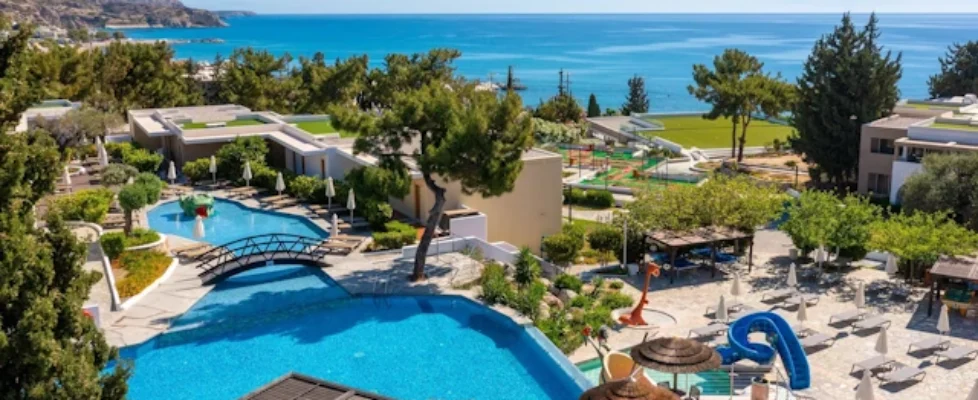
Both bungalow and studio-type accommodations are available at this medium-size hotel. It’s well-suited to families, and quite handy for local beaches. Facilities include a swimming pool, with a separate pool for children, and there are large gardens filled with shady palm trees. It has a golf course right next door and iss on the east coast, a 30-minute drive south from Rhodes Town.
This luxury resort-style hotel offers good facilities, with its own stretch of beach, two pools, and three children’s pools. It’s on the east coast, a 40-minute drive south of Rhodes Town. There are rooms and suites, some with sea views and others with mountain views. Some have private pools. There are several restaurants and bars, a disco club, spa, entertainment, fitness centre, and lots of sports and activity options.
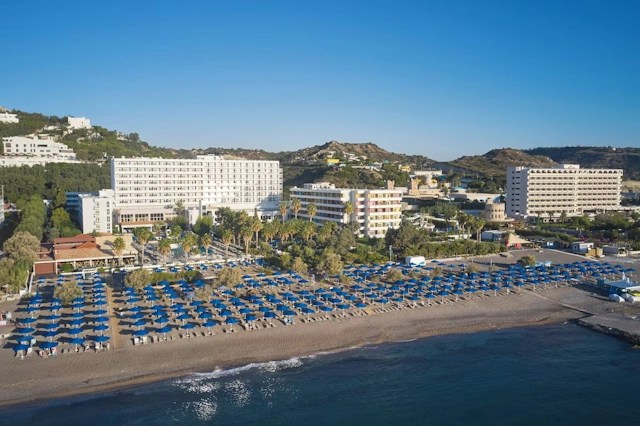
This large, modern beach-front hotel is especially designed for family holidays. It offers every facility, including three pools, three restaurants, five bars, a beach, tennis courts, mini-golf, and volleyball. For youngsters there are numerous attractions and organised activities. It’s on the east coast, a 20-minute drive south from Rhodes Town.
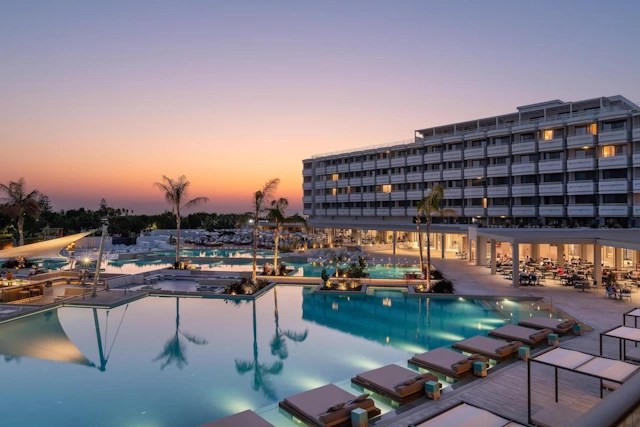
This is another of the island’s modern superior 5-star resort hotels. It’s on the north-west coast of the island, a 20-minute drive west of Rhodes Town. There are various rooms and suites available, including family suites, some with sea views, some with garden views, and some overlooking the impressive pool. It has its own beach, daily live music sessions, a spa, a gym, and several bars and restaurants including Greek, Italian and Asian cuisines.
This huge, luxury 5-star hotel is noted for its conference facilities and for hosting international meetings, and is probably the best hotel on the island. It has all the facilities that you would therefore expect, and a choice of rooms, suites and bungalows. It has numerous restaurants and bars, pools, a beach, a wellness and fitness center, sporting activities, and special programs for children. It’s conveniently-located on the north-west coast, just a 5-minute drive from Rhodes Town and a 20-minute drive from the airport.
This small and pleasant hotel has palm trees and gardens out front. It has its own pool, with a children’s pool too, and a playground. There’s also a pool bar, bar-lounge, and a restaurant. It’s a 40-minute drive south from Rhodes Town, on the east coast.
This is a very smart and beautifully-located hotel, entirely on its own. It caters well for families and has a swimming pool, a children’s pool, and a playroom. Other amenities include a restaurant serving both breakfast and dinner buffet style, a snack bar, and a cocktail bar. It’s to the south of Faliraki and about a 30-minute drive south from Rhodes Town on the east coast.
This walk through the Old Town of Rhodes takes you through this World Heritage Site and along the main streets and past the city walls, palaces and mosques.
Rhodes Old Town in the Dodecanese
The Old Town of Rhodes is a World Heritage Site, yet many visitors only see the few main streets that are lined with souvenir shops no different from anywhere else in Greece. Yet there are many fine monuments, and quiet back streets, not to mention the stunning fortifications of the Old Town, all to be admired, and easily done on a short walk.
Mandraki Harbour
Windmills at Mandraki Harbour in Rhodes Town
Begin at either side of the entrance to Mandraki Harbour, the narrow channel where it is commonly believed the Colossus of Rhodes once stood, a leg on each side. There is no historical evidence for this, and while there may have been a colossal statue it’s thought that it more likely stood near the Temple of Apollo, which was where the Palace of the Grand Masters is now situated. See our page on Mandraki Harbour.
Eleftherias Gate
Walk along the harbour front with the town on your right-hand side, and with the walls of the Old Town ahead of you. Cross the busy street at the first set of traffic lights but carry on walking in the same direction, under some trees and past some kiosks, till you reach the Eleftherias Gate. The name means Liberty and the gate takes you through the imposing walls, which date back to 1330 and in places are 12m (39 ft) thick. They are almost perfectly preserved and run for 4km (2.5 miles) around the Old Town.
The Street of the Knights
Walk straight ahead along Apellou, passing on your left the remains of the Temple of Aphrodite and on your right the Tourist Information Office. Immediately after the tourist office turn right onto Ippoton, otherwise known as the Street of the Knights, one of the most impressive sights in the Old Town.
The Street of the Knights was built in the 14th century and is lined on either side with what were the Inns of the Tongues. These Inns were the meeting places for the different nationalities of the Knights of St John, and on your right further up the street you will pass the Inn of Italy and the Inn of France, while on the left is the Inn of England and the Inn of Spain, amongst many others. The Inns today house government and private offices, as well as foreign embassies.
Palace of the Grand Masters
At the top of the street on your right is the entrance to the Palace of the Grand Masters, where the 19 Grand Masters of the Knights of St John would meet to run their affairs. The original Palace was built in the 14th century but was destroyed in an accidental explosion in 1856. What you see now is a faithful restoration carried out by the Italian rulers of Rhodes in the 1930s. It is well worth touring to see the wonderful central courtyard and the many fine mosaic floors.
Mosque of Suleiman
If saving your visit to the Palace of the Grand Masters for later, carry on past the Palace to the very end of Ippoton and turn left along Orpheus (Orfeos), past the souvenir shops, cafes and restaurants. Where the road swings round to the left you will see on the left the 1523 Mosque of Suleiman, and opposite on the right the Ottoman Library. Turn right after the Library, down Ippodamou, which gradually takes you away from the tourist part of the Old Town into a quieter area.
To Plateia Sokratous
At the far end of Ippodamou follow the road round to the left and at the first junction turn right. This takes you temporarily outside the town walls, giving you a chance to admire them. They are more impressive and easily seen here. Go through the Agiou Athanasiou Gate, turn left along the main road, and take the next left back into the Old Town through the Koskinou, or Gate of St John. Turn left at the first t-junction and follow Pithagora, which takes you all the way to the bustling Plateia Sokratous, where there are several excellent restaurants and cafes, with grandstand views of the passing crowds.
Faliraki is a vibrant resort town on Rhodes offering beaches, coves, dining, and nightlife on Greece’s sunniest island.
Faliraki Beach on Rhodes
Here’s your complete travel guide to the town of Faliraki on Rhodes — one of Greece’s liveliest and most popular seaside destinations. This guide covers history, beaches, activities, food, nightlife, culture, practical tips, and day-trip ideas to help you make the most of your visit.
🏖️ Welcome to Faliraki
Faliraki (Greek: Φαληράκι) is a vibrant seaside resort village on the northeastern coast of the Greek island of Rhodes, in the Dodecanese. It’s about 14 km south of Rhodes Town and 10 km southeast of Rhodes International Airport. Originally a quiet fishing community, today it’s a bustling holiday destination beloved by sun-seekers, families, couples, and party lovers alike.
Faliraki’s charm lies in its blend of golden beaches, crystal-clear waters, traditional Greek culture, lush nearby landscapes, and energetic nightlife. Whether you’re after relaxation, adventure, or fun after dark, Faliraki has something for every traveler.
🌅 Beaches & Water Fun
Faliraki Beach
Faliraki Beach on Rhodes
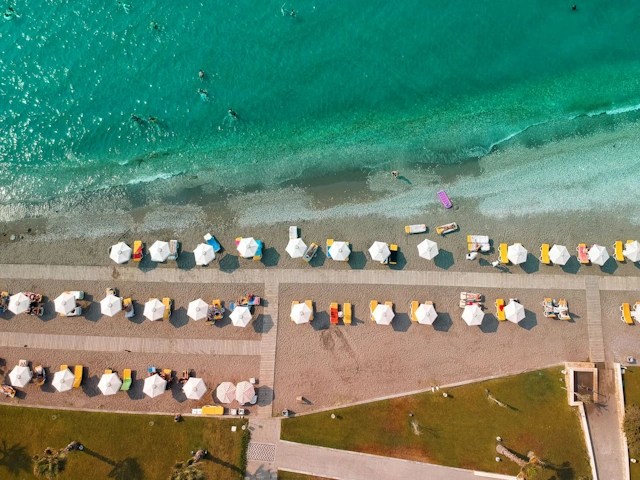
The town’s centerpiece is its 5 km stretch of sandy coastline, one of the longest on Rhodes and backed by a lively promenade. The soft sand, shallow entry, and warm Aegean waters make it perfect for all ages — from families with kids to sun worshippers.
Here’s what to expect:
Beach setups with loungers, parasols, and daybeds.
Water sports stations offering jet skiing, parasailing, banana boat rides, paddleboards, and more.
Beach bars and cafés serving refreshing drinks, snacks, and lunches.
💡 Pro tip: For a quieter scene, stroll to the northern and southern edges of the beach where crowds thin out and the vibe is more chilled.
Kathara Beach
Just south of the main beach lies Kathara Beach — smaller and more tranquil. It offers sunbeds, shade, and several local tavernas just steps away. It’s ideal for those who want a peaceful sea day without straying far from the center.
Mandomata (Naturist Beach)
At the southern end of Faliraki lies Mandomata Beach, a designated naturist area of soft sand and clear water. It’s respectful, calm, and often feels like a different world compared to the busy central sands.
Nearby Coves & Water Spots
Anthony Quinn Bay – A stunning cove named after the actor who filmed The Guns of Navarone here. Crystal-clear emerald waters and great snorkelling make it a must-visit — bring water shoes as the shoreline is pebbly.
Ladiko and Tsambika Coves – Short taxi or bus rides from Faliraki, perfect for scenic swims and photos.
🍽️ Food & Dining
Faliraki offers a wide range of dining experiences — from traditional Greek tavernas to international cuisine:
Greek & Local Cuisine
Greek Moussaka
Expect classics like grilled fish, moussaka, tzatziki, Greek salads, and local seafood straight from the harbour.
The fishing harbour of Agioi Apostoloi is a great spot to watch the day’s catch come in and tuck into freshly prepared fish dishes.
International Eats
Alongside Greek favorites, you’ll find Italian, Mexican, Chinese, and British style restaurants and cafés.
Shopping & Local Markets
Browse local shops for olive oil, honey, spices, soaps, handmade crafts, jewelry, and pottery — perfect souvenirs or gifts. Family-run stores often provide a more authentic experience and better prices than tourist shops.
🍸 Nightlife & Entertainment
Faliraki Nightlife on Rhodes
When the sun sets, Faliraki transforms. It’s known across Rhodes for its busy nightlife scene — especially in summer.
Bar Street & Club Street
These two streets are packed with bars, pubs, and clubs where music, dancing, and late-night energy continue until dawn.
Alternative Evening Spots
Beyond the loudest venues, there are cocktail lounges, harbour bars, and live-music tavernas where you can enjoy drinks with a view or a more relaxed vibe.
💡 Travel tip: Nightlife peaks from June to August. Visiting in early June, September, and October gives a more laid-back feel while still offering plenty of options.
Faliraki Nightlife on Rhodes
🧭 Beyond the Beach
While Faliraki is best known for its seaside fun, there’s more to explore nearby:
Saint Nectarios Church
A striking Orthodox church with traditional architecture and a serene courtyard — perfect for a peaceful few moments or photos.
Faliraki Harbour
Stroll around the harbour in the morning as fishing boats arrive, or in the evening for a quieter waterfront walk.
Day Trips & Excursions
Symi Harbour
Boat trips from Faliraki lead to Lindos, Symi Island, and hidden coves, often including swim stops and meals.
Rhodes Town — explore medieval streets, UNESCO-listed Old Town attractions, and museums.
Kallithea Springs — a historic spa complex with beautiful restored architecture and a calm bay.
Monastery of Profitis Amos — perched above Faliraki, offering panoramic views and tranquil vibes.
🛏️ Where to Stay
Faliraki has accommodation for every budget and style — from large beach resorts and all-inclusive hotels to smaller boutique stays and apartments.
Tips:
Beachfront hotels offer quick access to sun, sea, and beach bars.
Family-friendly resorts often come with pools, kid’s activities, and entertainment.
Adults-only options provide a quieter, romantic escape.
🚗 Getting Around & Practical Tips
Transport
Buses run regularly between Faliraki, Rhodes Town, and Lindos during the day.
Taxis are available for shorter journeys or late-night returns.
Renting a car, scooter, or bicycle gives you flexibility to explore the island at your pace.
Facilities
Faliraki has ATMs, supermarkets, pharmacies, and convenience stores — so you’ll have what you need within walking distance.
Season & Weather
Peak tourist season is June to August, with sunny days, warm waters, and busy beaches.
Shoulder seasons (May & September-October) still offer great weather with fewer crowds.
🧳 Tips for First-Time Visitors
Beach etiquette: Public beaches are free to access; loungers and umbrellas usually have a rental fee. Sunrise and sunset: Early mornings are perfect for peaceful beach strolls, while sunsets light up the harbour and terrace bars. Explore locally: Step beyond the main strip to find quieter lanes, local cafés, and authentic tavernas. Hydrate & sunscreen: The Greek sun can be strong — drink water and use high-SPF sunscreen.
🛫 Final Thoughts
Faliraki is more than just a party destination — it’s a multifaceted seaside resort with beautiful beaches, adventurous activities, rich food culture, and vibrant social scenes. Whether your perfect holiday includes lounging by the sea, discovering scenic bays, sipping wine at sunset, or dancing till dawn, this seaside gem on Rhodes has it all.
The best lunch restaurants in Rhodes Town include fine dining, seafood, and authentic Greek cuisine perfect for cruise visitors and holidaymakers.
Piatakia Restaurant Rhodes Town
Rhodes Town, the capital of Rhodes, is one of the most enchanting destinations in the Dodecanese, where medieval stone walls meet sparkling harbours and sun‑drenched squares. Whether you’re stepping off a cruise ship for the day or enjoying a longer holiday on the island, lunch in Rhodes Town can be a highlight of your visit. The town offers everything from refined fine‑dining restaurants to charming, affordable tavernas serving authentic Greek flavours.
Below are ten excellent lunch restaurants in Rhodes Town, chosen for their quality, ambience, and convenience for daytime visitors. Most are high‑end, with a couple of more budget‑friendly favourites included. Each entry includes why it’s ideal for lunch, what to order, and where to find it.
Best Lunch Restaurants in Rhodes Town
1. Piatakia
Piatakia Restaurant Rhodes Town
Piatakia is one of Rhodes Town’s most inventive and consistently praised restaurants, making it an outstanding choice for a memorable lunch. Known for its playful approach to Greek and Mediterranean flavours, the restaurant serves beautifully presented small plates designed for sharing — ideal for a relaxed midday meal. Expect dishes like slow‑cooked pork with citrus glaze, seafood risotto, and imaginative vegetarian options that showcase local produce.
The tasting‑style menu allows you to sample a variety of flavours without feeling too full, which is perfect if you’re continuing your sightseeing afterward. Piatakia’s warm, modern interior and friendly service create a welcoming atmosphere that appeals to both cruise passengers and holidaymakers looking for something a little different from the typical taverna experience. Its central location in the New Town makes it easy to reach on foot from the harbour or the Old Town.
Address:Leontos 13, Rhodes Town Phone: +30 698 836 2268 Website:facebook.com
2. Oniro Art Meze
Oniro Art Meze Rhodes Town
Oniro is one of Rhodes Town’s most elegant modern Greek restaurants. Located just outside the Old Town walls, it offers a refined yet relaxed setting that’s perfect for a high‑quality lunch. The menu blends traditional Greek flavours with contemporary techniques, focusing on fresh seafood, premium meats, and seasonal produce. For lunch, the grilled sea bass with herb oil is a standout, as is the slow‑braised beef served with creamy mashed potatoes and local spices.
Oniro’s stylish interior and shaded outdoor seating create a calm, sophisticated atmosphere ideal for travellers who want something special without the formality of dinner. Its convenient location makes it easy to reach from both the harbour and the medieval streets, making it a great choice for cruise passengers seeking a memorable midday meal.
Address:Efstathiou Georgiou 7, New Town Phone: +30 2241 601491 Website:facebook.com
3. Pan & Vino
Pan & Vino Restaurant Rhodes Town
Pan & Vino is one of Rhodes Town’s most consistently praised modern Mediterranean restaurants. Known for its polished service and beautifully executed dishes, it’s a superb choice for a refined yet relaxed lunch. The menu blends Italian and Greek influences, with standout dishes such as the seafood risotto, fresh pasta with truffle cream, and grilled prawns served with citrus dressing. Portions are generous but balanced, ideal for a midday meal before continuing your sightseeing.
The restaurant’s stylish interior and shaded outdoor seating create a comfortable atmosphere that appeals to both cruise passengers and holidaymakers looking for something special. Located in the New Town, just a short walk from the Old Town walls, Pan & Vino is easy to reach from the harbour and offers a reliably high‑quality lunch experience.
Address: Dilmperaki 42, Rhodes Town Phone: +30 2241 038373 Website:facebook.com
4. Koukos
Koukos Rodos Rhodes Town Restaurant
Koukos is a Rhodes favourite and housed in the boutique hotel of the same name. It offers exceptional value and authentic flavours, making it a perfect affordable lunch option. The building itself is a charming traditional house with multiple terraces and cosy corners.
For lunch, try the melitzanosalata, baby calamari, or bekri meze—tender pork or chicken cooked in wine and spices. Portions are generous, and the lively atmosphere attracts both locals and visitors. It’s a great place to enjoy a hearty, flavourful meal before continuing your exploration.
Located in a picturesque Old Town square, Ouzeri Tapedaladika is a relaxed, friendly spot known for excellent meze and local wines. It’s an ideal lunch choice if you prefer sharing small plates rather than ordering a large entrée. Try the grilled halloumi with honey, fried zucchini chips, or a classic Greek salad with capers and local olive oil.
The atmosphere is casual but charming, with outdoor seating perfect for warm afternoons. It’s also one of the more affordable options on this list, offering great value without sacrificing quality.
Wonder is a stylish, contemporary restaurant known for its creative Mediterranean‑fusion dishes and elegant presentation. It’s a superb choice for a refined lunch, offering dishes like tuna tartare, truffle risotto, and grilled sea bream. The leafy courtyard provides a cool, tranquil setting—ideal for a long, relaxed midday break.
Address: El. Venizelou 16-18, Old Town Phone: +30 2241 039805 Website:restaurantwonder.gr
7. Nireas Seafood Restaurant
Shrimp Salad at the Nireas Restaurant in Rhodes Town
Nireas is a classic Old Town seafood restaurant with a charming vine‑covered courtyard that’s perfect for lunch. The menu focuses on fresh fish and traditional Greek flavours, with standout dishes like grilled octopus, red mullet, and shrimp pasta.
The atmosphere is warm and welcoming, offering an authentic Greek dining experience without being overly rustic. Its quiet Old Town location makes it a peaceful escape from the busier tourist areas.
Address: Sofokleous 22, Old Town, Phone: +30 2241 021703 Website:None
8. Hatzikelis Seafood Restaurant
Hatzikelis Seafood Restaurant Rhodes Town
Hatzikelis is one of Rhodes Town’s most established seafood restaurants, known for its fresh catches and harbour‑side location. It’s an excellent lunch choice for travellers who want a meal with a view—especially cruise passengers who appreciate being close to the port. Try the lobster pasta, grilled sea bass, or the fisherman’s meze platter for a sampling of local seafood. The breezy outdoor seating area makes it ideal for a midday meal by the water.
Romios is one of the Old Town’s most charming and consistently well‑reviewed traditional restaurants. Open for lunch and set in a beautifully restored stone building with a leafy courtyard, it offers a relaxed, atmospheric setting perfect for a midday break. The menu focuses on classic Greek dishes prepared with care — favourites include the slow‑cooked lamb kleftiko, grilled octopus, and stuffed vegetables baked in olive oil and herbs. Portions are generous, and the friendly service adds to the welcoming feel.
Romios is located just a few minutes’ walk from the main Old Town sights, making it convenient for both cruise passengers and holidaymakers exploring the medieval streets. It’s a great choice for those who want a satisfying, authentic Greek lunch in a picturesque setting.
Address: Sofokleous 26, Old Town Phone: +30 2241 025334 Website:romios-restaurant.gr
10. Ronda Beach Bar & Restaurant
Ronda Beach Bar and Restaurant Rhodes Town
For those who want a chic, beachside lunch with a stylish atmosphere, Ronda is a top pick. Located on Elli Beach, at the northern tip of both the island and Rhodes Town, it offers a beautiful sea view and a menu that blends Mediterranean and international flavours. Recommended dishes include sushi platters, grilled salmon, and refreshing salads.
The vibe is modern and upscale, making it a great choice for travellers who want a leisurely lunch by the water before returning to sightseeing. At a three-minute taxi ride or fifteen-minute walk, it’s also close enough to the harbour to be convenient for cruise passengers.
The See Greece guide to Rhodes food and drink recommends five must-try Rhodes dishes and other island specialities, including beer and spirits.
Octopus Stew at the Ouzokafenes Restaurant in Rhodes Town
Exploring Rhodes food and drink reveals a distinct culinary identity shaped by the island’s unique position between East and West. Unlike more typical Aegean fare, Rhodian cooking is defined by the heavy use of cumin, ancient grains, and sun-drenched honey, creating a robust, aromatic palate that reflects its fertile plains and mountain traditions.
Five Must-Try Rhodes Dishes
The cuisine of Rhodes is a fascinating blend of Mediterranean ingredients—wheat, olive oil, and wine—enriched by centuries of history. While you will find Greek staples like Moussaka and Souvlaki everywhere, the island has several unique dishes that define its specific culinary identity.
Cumin
One of the most defining characteristics of Rhodian cooking is the heavy use of cumin (often called “long smell” or makryo myroudi by locals), which appears in much higher quantities than in the rest of Greece.
Here are five dishes closely associated with the island of Rhodes:
1. Pitaroudia (Chickpea Fritters)
These are perhaps the most famous appetizer on the island. Unlike the standard Greek keftedes (meatballs), Pitaroudia are savory fritters made from mashed chickpeas, onions, tomatoes, and plenty of mint. They are seasoned heavily with the island’s signature cumin and fried until crispy and golden.
Where to find it: Most traditional tavernas in Rhodes Old Town and mountain villages like Embonas.
2. Lakani (Slow-Cooked Meat and Chickpeas)
Lakani is the quintessential Sunday family meal of Rhodes. It is a slow-cooked stew traditionally prepared in a large ceramic pot (the lakani). It typically consists of goat or beef, chickpeas, and chondros (cracked wheat or bulgur), seasoned with tomato sauce, cinnamon, and cumin. In the past, families would take their pots to the communal wood-fired oven on Saturday night to be ready for Sunday lunch.
3. Melekouni (Sesame and Honey Treat)
Melekouni is the “gastronomic ambassador” of Rhodes. While it resembles a common pasteli (sesame bar), it is much softer and more aromatic. It is made with local thyme honey, toasted sesame seeds, whole almonds, and flavored with orange zest, cinnamon, and nutmeg. It is a symbol of joy and is traditionally served at weddings and baptisms.
4. Kamilakia (Stuffed Cyclamen Leaves)
While most of Greece is famous for Dolmades (stuffed grape leaves), Rhodes has a unique variation called Kamilakia. These are small rolls made from the tender leaves of the cyclamen flower. The leaves are blanched to remove bitterness and then stuffed with a mixture of rice, onions, and herbs, often served with a tangy avgolemono (egg-lemon) sauce.
5. Matsi (Handmade Rhodian Pasta)
Rhodes has a rich tradition of handmade pasta. Matsi is a local variety made from flour and water (sometimes milk), shaped into small strips or squares. It is often boiled in goat or beef broth and served simply with a mountain of grated local mizithra cheese and “syvrasi” (onions sizzled in butter).
Local Drinks to Pair
Souma: A strong, clear spirit made from grape pomace, similar to Raki or Grappa. It’s often served as a welcoming drink.
Kanelada: A refreshing, non-alcoholic local soft drink made from cinnamon syrup and ice-cold water.
Other Rhodes Food and Drink
Sharing Meze
Mezédhes (starters)
Making a meal of it in a Greek taverna may mean that you never get past the mezédhes (or meze, for short). The Greek style of eating mezédhes is to order half a dozen mixed plates and then for everyone to dig in.
Mezédhes worth trying on Rhodes include manitaria (mushrooms), keftedes (spicy meatballs), dolmadakia (rice wrapped in vine leaves), kotópoulo (chicken portions), saganáki (fried cheese), khtapódhi (octopus), spanokeftedes (spinach balls) and bourekakia (meat pies). Add to all this a couple of dips such as tzatziki (garlic and cucumber yoghurt) or melitzanosalata (aubergine and garlic).
Horiatiki (Greek Salad)
A Healthy Greek Salad
A Greek salad (horiatiki) is a good way to start any meal or is just right for a light lunch. The best horiatiki are plentiful and comprise a marvellous mix of green salad with cucumber, tomatoes and onions, the whole capped with a generous slice of feta cheese sprinkled with herbs. It’s also sometimes called a Country Salad or a Peasant Salad.
Meat Dishes
Greek Stifado
Meat dishes on Rhodes follow the Greek standards of moussaka, souvlaki (shish kebab with meat, peppers, onions and tomatoes), pastitsio (lamb or goat meat with macaroni and tomatoes), stifádo (beef stew with tomato sauce and onions) and padakia (grilled lamb or goat chops). Souvlaki is a good standby, but you might be better settling for chicken (kotópoulo) souvlaki, because veal or pork on the grill can be tough in some tavernas. Lamb souvlaki is usually good but not easily found. Any meat dish that is braised or stewed is usually good.
Fish Dishes
fresh fish sign at greek restaurant
Rhodes has always been noted for its fish and the island boasts some outstanding psarotavernas (fish restaurants). But overfishing, pollution and a general rise in prices has meant that while the choice is still good, fish dishes can often be very expensive. It is also difficult to know whether fish on offer is locally caught or is imported, frozen or farmed versions.
Reasonably-priced dishes include marídhes (whitebait deep-fried in olive oil and sprinkled with lemon), and swordfish, either in meaty steaks or as xsifhia, chunks on a kebab. Kalamarákia (fried baby squid) is another favourite. Red mullet and lobster tend to be more expensive.
Drink
Rhodian wines have a good reputation and provided you are not a wine snob, you will enjoy some excellent vintages from the major island wine producers CAIR and Emery Wineries, the latter based at Embonas. CAIR labels worth trying include Ilios, a dry white wine produced from the Athiri grape; Chevalier de Rhodes, a superior red, and the Moulin range of white, rosé and red wine.
Free tastings are available at the CAIR winery, located a couple of kilometres outside Rhodes town on the Lindos road. Good Emery wines include the Cava red and first-class Chablis-style Villare dry white. Distinctive wines from smaller Rhodian wineries, such as the Anastasia Triantafillou Winery, are available in some island restaurants.
Kourtaki Retsina
Most tavernas have their own house wine, which can often be reasonable. Retsina, resinated white wine, is an acquired taste but the best is excellent. Kourtaki is a decent retsina to try, although it isn’t specifically from Rhodes. Light beers and lagers, such as Amstel, Heineken and the Greek Mythos, are widely available.
Rhodes Beer
While Rhodes is traditionally known for its local wines and ouzo, it has a small and rapidly growing craft beer scene. The island is home to a few dedicated breweries and specialised taprooms where you can sample everything from traditional lagers to artisanal, unfiltered craft ales. Look for names like The Mule’s Brew, Magnus Magister and Kouyos, and visit Charlie’s Craft Beer Garden at Archelaou 3 in Rhodes Old Town.
Rhodes Distilleries
Rhodes has several professional distilleries and a deep tradition of home distilling in its mountain villages. While the island is most famous for wine, its spirit production—specifically Souma (a potent grape marc distillate similar to Raki) and Ouzo—is a major part of the local culture.
1. Aigaion Distillery (Rhodes Town area)
This is one of the most prominent professional distilleries on the island. Operating since the 1940s, they are famous for their Ouzo Aigaion and their high-quality Souma. • What to try: Their “Ouzo Venus” (stronger and more aromatic) and their “Soumamelo” (a honey-based spirit similar to Rakomelo). • Location: 6th km Rhodes-Kallithea Ave.
2. CAIR (Rhodes Town / Lindos Road)
While primarily known as a historic winery founded in 1928, CAIR also operates a distillery. They are famous for being the first to produce sparkling wine in Greece, but they also produce spirits, liqueurs, and a highly-regarded 40-year-old Reserve Vermouth. • What to try: Their traditional distillates and herb-infused liqueurs.
3. Estate Anastasia Triantafyllou (Paradisi)
This family-run estate is unique because it holds a professional license to produce Tsipouro and Souma on-site. It’s a great place for a more intimate experience than the larger factories. • The Experience: They offer a “Full Experience Tour” that includes the distillery, vineyard, a cooking class, and a 10-course lunch.
4. Village Distilleries (Siana and Embonas)
If you want to see the more traditional side of distilling, head to the mountain villages of Siana and Embonas. • The Experience: These villages are the “heart” of Souma production. You will find many small, family-run “cavas” (like Cava Stafylos) where you can see the copper stills (called kazani) used to boil the grape marc. • Timing: If you visit in late September or October, you may catch the local festivals where the stills are fired up, and the whole village celebrates the first “run” of the season.
Tips for Spirit Tasting • Souma is strong: It often exceeds 40–45% ABV (and sometimes hits 60% in villages). Always pair it with meze (small snacks) to pace yourself. • The “Long Smell”: In some village distilleries, you might find Souma flavored with the island’s signature cumin—ask for “Souma me kymino.”
Museums in Rhodes Town include an archaeological museum, Byzantine museum, a museum of decorative arts, and exceptional collections of modern Greek art.
Museum of Modern Greek Art in Rhodes Town
There are several museums in Rhodes Town that are well worth a visit, and if you are staying on Rhodes you should plan to spend at least one day in Rhodes Town, but preferably two or three.
Archaeological Museum
Archaeological Museum of Rhodes
Rhodes’s Archaeological Museum is located in the old Hospital of the Knights, a rather severe, but impressive, 15th-century Gothic building. A steep staircase leads to the magnificent infirmary hall with its central colonnade, the capitals of which are carved with heraldic devices.
The smaller side chambers of the upper gallery contain some fine artefacts including the celebrated, yet unglamorous, Marine Venus, a sea-eroded 4th-century BC statue of Aphrodite, which inspired the writer Lawrence Durrell to call his book about Rhodes, Reflections on a Marine Venus.
In other chambers are superb Rhodian amphorae, some fine Attic pottery pieces, and Mycenaean jewellery. Look for the 4th-century gravestone of Kalliarista and its touching epigram inscribed by her husband, as well as the tiny vases and bowls that formed a child’s funerary gifts. Beyond the upper gallery is a sunlit sculpture garden.
Rhodes is the proud guardian of one of the finest collections of modern Greek art in existence. The collections are housed in separate galleries. Two are in the Old Town; the Municipal Art Gallery, which contains a collection of fine engravings, while the second, the smaller Centre of Contemporary Art, exhibits and promotes work by contemporary artists.
Pride of place goes to the splendid Nestoridion Melathron, housed in the one-time Olympic Hotel at the heart of New Town’s hotel district. The building has been thoroughly modernised and contains superb collections from the 1860s to the present day. The displays include an extensive number of paintings and prints, together with sculptures and drawings by celebrated Greek artists.
Nestoridion Melathron, 1 Haritou Square, mgamuseum.gr
Centre of Contemporary Art, 179 Sokratous Street
Decorative Arts Collection of Rhodes
Decorative Arts Collection of Rhodes
The Decorative Arts Collection of Rhodes is housed in a ground floor room that was once part of the armoury of the Knights of St John. It is more of a folk art museum than its name implies, and has a charming and colourful collection of domestic goods from the 16th to the early 20th century.
These include folk costumes from the islands of Symi and Astypalaea, carved and painted chests and bedsteads, carved wall cupboards and other furnishings. There is a large collection of ceramics and fabrics, including carpets and such distinctive items as embroidered bed tents.
The Byzantine Museum is housed in the splendid Church of Panagia tou Kastrou, the Virgin of the Castle. This 11th-century building has had a remarkable history. Originally it was the Byzantine Cathedral of Rhodes and had a classic Byzantine ‘cross-in-square’ form, with a central dome. The church was converted to a Roman Catholic cathedral by the Knights of St John, who replaced the dome with a barrel vault and cross vaults.
During the Turkish occupation of Rhodes the building was converted into a mosque complete with minaret, removed during the Italian reconstruction. Today, the church contains a few Byzantine and post-Byzantine icons and wall-paintings, sculptures and mosaic fragments.
Located within the Palace of the Grand Masters, this is an outstanding collection of artefacts that leads you through a series of displays from the Stone Age settlement of Rhodes through the classical to the Roman period. Among the many exhibits is a fine head of the Sun God Helios, Rhodes’ mythic founder.
A mosaic floor of the Middle Hellenistic period displays a superb ‘New Comedy Mask’ that you would swear was a painting rather than an intricate mosaic. Look out for the little bronze figures of bulls and grasshoppers. There are splendid collections of pottery and household goods from all periods displayed in an imaginative way.
See Greece recommends where to eat in Rhodes Town with fine-dining restaurants and inexpensive tavernas in the Old Town and the New Town.
Yiannis Home Cooking in Rhodes Town
If you like your food then you’ll be spoiled for choice in Rhodes Town in the Dodecanese. Here’s our pick of the best places to eat, ranging from gourmet restaurants with sophisticated food to cafes serving delicious cakes and pastries. Some are in the Old Town, some in the New Town but all are guaranteed to satisfy.
Where to Eat in Rhodes Town
TAMAM Restaurant
Sample Shrimp Dish at TAMAM Restaurant in Rhodes Town
For foodies this is a must-visit in the New Town, known for its exceptional hospitality and a menu that balances authentic Greek roots with creative international touches. The first-class service makes every guest feel like part of the family. The signature dish is the slow-cooked lamb, often served with a rich, savory sauce that highlights traditional Greek herbs. Other favorites include their feta wrapped in eggplant and fresh seafood specialties.
Sample Dish at the Hatzikelis Restaurant in Rhodes Town
Hatzikelis is a renowned seafood restaurant located within the medieval walls of Rhodes Old Town, offering an upscale dining experience that blends traditional Greek flavors with innovative culinary touches. Established in 1982, it has built a reputation for its commitment to high-quality ingredients and a romantic atmosphere.
Signature Seafood: The menu centers on fresh catches from the Aegean, with standouts like grilled whole snapper, local live raw Greek oysters with chili vinaigrette, and mussels prepared with tomato sauce and feta.
Unique Specialties: Several creative dishes such as shrimp cooked in an ouzo sauce and seafood risotto, alongside more traditional appetizers like prawn saganaki.
Music: Live Greek music performances typically taking place on weekends.
Sample Dish at the Marco Polo Restaurant in Rhodes Town
Marco Polo Restaurant is a highly acclaimed dining destination nestled within the historic Marco Polo Mansion in the medieval Old Town of Rhodes. It is widely considered one of the most inventive and atmospheric restaurants in the area, set in a lush, lemon-scented 15th-century courtyard.
Creative Gastronomy: The menu is celebrated for blending authentic Greek and Dodecanese flavors with gourmet international techniques. Notable dishes mentioned by reviewers include slow-cooked octopus in sea urchin sauce, seafood salad with parmesan, and grilled sea bream with traditional kakavia (fisherman’s soup) sauce.
Essential Planning: Due to its immense popularity and small, intimate setting, reservations are mandatory and often need to be made weeks in advance. It’s also tucked away in narrow alleys, so it’s recommended to allow extra time to find the entrance.
Rodon Café is a modern and highly popular patisserie and coffee shop located in the Mandraki area of Rhodes Town. It has quickly become a local favorite since its establishment in 2019, known for its extensive selection of artisanal desserts and a vibrant, busy atmosphere that makes it a great spot for people-watching.
Artisanal Pastries and Cakes: People rave about their unique and beautifully presented desserts, including the “to die for” pistachio and banoffee cakes, as well as their giant cannoli (OK, so it’s Italian) and traditional Greek “Tsourekia” (Easter bread).
Versatile Dining Environment: The cafe features a mix of comfortable couches and tables, making it suitable for families with children, large groups, or even remote workers looking for a cozy spot with free Wi-Fi.
Budget-Friendly Indulgence: It’s noted for being a high-quality yet affordable spot for everything from a quick morning coffee and savory pie to elaborate evening cocktails and artisanal ice cream.
Romeo Restaurant is a vibrant, family-friendly destination in the Old Town of Rhodes, set within a historic 500-year-old stone building that seamlessly blends ancient charm with modern entertainment. It is particularly well-known for offering an energetic dining experience complete with live Greek music and traditional dancing.
Signature Seafood and Grill: The restaurant is noted for its seafood platter and mixed grills, as well as unique appetizers like the “masterpiece” sardines with cheese.
Historic Setting: You can enjoy meals in a quirky, plant-filled garden setting or inside the renovated historic building, which features traditional stone walls and ivy-covered ceilings to keep the space cool.
Traditional Greek Entertainment: Every night features live singers and dancers, and guests are encouraged to participate.
Diverse Culinary Range: Beyond traditional Greek specialties, the menu includes a wood-burning oven for pizzas, a variety of pasta dishes, and dedicated vegetarian and vegan-friendly options.
Aubergine Dish at Yiannis Home Cooking in Rhodes Town
Yiannis is a long-established family-run taverna tucked away in the medieval Old Town of Rhodes, offering an authentic taste of Greek hospitality that has remained unchanged since it first opened in 1987.
Authentic Signature Dishes: Known for its traditional comfort foods like slow-cooked beef stew, moussaka, and market-fresh seafood, as well as their unique bean stew and delicious dolmades.
Charming Old Town Setting: Located on a quiet street away from the main tourist hubs, it offers a cozy and traditional setting ideal for a relaxed lunch or a romantic, candlelit dinner.
Wide Selection of Local Spirits: The menu features a variety of local Dodecanese wines, Retsina, and house-made Ouzo specials to complement the hearty Greek fare.
Shrimp Salad at the Nireas Restaurant in Rhodes Town
Nireas is a premier seafood taverna located on a charming, leaf-shaded square in the Old Town. It’s famous for its garden setting, where you can enjoy the Mediterranean breeze under a canopy of trees. The focus here is strictly on the freshest catch of the day, prepared with simplicity to let the natural flavors of the fish shine. It has earned a reputation for providing high-quality seafood in a relaxed, traditional environment that feels authentic rather than touristy.
The signature dish is the grilled octopus, celebrated for its tender texture and charred, smoky flavor. Failing that, try the Fritto Misto, a light and crispy assortment of local fried seafood, or the mussels saganaki.
No website. Address: Sofokleous 22. Phone: +30 2241 021703
Ouzokafenes
Octopus Stew at the Ouzokafenes Restaurant in Rhodes Town
Ouzokafenes provides a quintessentially Greek taverna experience, specializing in the art of meze—small plates designed to be shared alongside ouzo or tsipouro. Tucked away in a quiet alley of the Medieval City, this spot is favored for its rustic, no-frills charm and its focus on traditional Rhodian recipes. It’s an ideal place for those looking to explore a variety of local tastes in a communal, lively atmosphere where the emphasis is on social dining and authentic flavors.
The signature dish is the marinated anchovies, often served as part of a larger Ouzo Platter that includes stuffed vine leaves and fava bean mousse. Their spicy meatballs and shrimp in ouzo sauce are also excellent.
See Greece’s guide to the best beaches on Rhodes, including Rhodes Town, Lindos and Faliraki, with a list of facilities at each beach.
Lindos Town, Beach and Acropolis on Rhodes
Sun, history, and crystalline waters—Rhodes is an island that seems to have been designed by the gods specifically for beach lovers. As the largest of the Dodecanese islands, Rhodes offers a diverse coastline that shifts from cosmopolitan beach bars in the north to wild, wind-swept surf spots in the south.
Whether you are looking for a shallow bay for the kids, a hidden rocky cove for snorkeling, or a vibrant beach with music and cocktails, you will find it here. In this guide, we explore ten of the best beaches on Rhodes to help you plan your perfect Greek getaway.
Best Beaches on Rhodes
1. Tsambika Beach
Location: 26 km south of Rhodes Town (East Coast)
Widely considered the most beautiful sandy beach on the island, Tsambika is a broad stretch of golden sand framed by imposing rocky headlands. The water here is remarkably shallow and turquoise, making it a top choice for families with young children.
Facilities: This is a well-organized beach with several beach bars and tavernas serving fresh seafood and Greek staples.
Activities: You’ll find a range of watersports, including parasailing and jet skis. There is also an inflatable water park in the sea for children.
Pro Tip: For a breathtaking view, hike up the 300 steps to the Tsambika Monastery perched on the cliff above the beach before heading down for a swim.
2. Anthony Quinn Bay
Location: 15 km south of Rhodes Town, near Faliraki
Named after the actor who starred in The Guns of Navarone (which was filmed here), this bay is legendary for its emerald-green waters. It is a small, narrow cove surrounded by jagged rocks and pine trees that reach right down to the water’s edge.
Facilities: Due to its rocky nature, space is limited. There are sunbeds perched on stone platforms and a small canteen at the top of the stairs overlooking the bay.
Activities: This is arguably the best spot on the island for snorkeling and scuba diving thanks to the underwater rock formations and abundant fish life.
This nearly enclosed circular bay feels more like a giant swimming pool than the open sea. Situated right below the towering Acropolis of Lindos, the scenery is unmatched. According to legend, St. Paul landed here in 51 AD to preach Christianity to the Rhodians.
Facilities: There are two main beaches in the bay; both offer high-end sunbeds, umbrellas, and chic beach restaurants that serve cocktails and gourmet Mediterranean dishes.
Activities: The calm, crystal-clear water is perfect for leisurely swimming and paddleboarding.
4. Prasonisi Beach
Prasonisi Beaches on Rhodes
Location: 91 km south of Rhodes Town (Southern Tip)
Prasonisi is a unique geographical marvel. It is a small peninsula connected to the main island by two sandy strips, creating two separate seas: the Mediterranean on one side (calm) and the Aegean on the other (wavy).
Don’t Miss: Our piece on Easter on Rhodes, which includes a visit to Prasonisi.
Facilities: The area is somewhat remote but features several surf clubs, tavernas, and mini-markets.
Activities: This is the undisputed capital of windsurfing and kitesurfing in Europe. If you aren’t a surfer, it’s still worth the drive just to witness the spectacle of hundreds of colorful sails against the deep blue horizon.
5. Lindos Main Beach (Megali Paralia)
Lindos Beach and Acropolis
Location: Below the village of Lindos
If you want the classic “Greek Island” postcard view while you sunbathe, this is it. Megali Paralia (The Big Beach) offers soft golden sand and a stunning view of the white-washed houses of Lindos and the ancient Acropolis.
Facilities: Extremely well-organized with numerous cafes, changing rooms, and sunbeds.
Activities: You can rent pedal boats or join a boat trip that leaves from the small jetty to explore nearby caves.
6. Elli Beach
Location: Rhodes Town (Northern Tip)
For those staying in the capital, Elli Beach is a cosmopolitan hub within walking distance of the Old Town. It is a pebbled beach with incredibly clear, deep blue water, lined with trendy beach clubs and luxury hotels.
Facilities: High-quality beach bars, umbrellas, and restaurants. It is very accessible and usually bustling with energy.
Activities: Don’t miss the iconic diving platform (Trampolino) located about 100 meters out in the sea—it’s a rite of passage for visitors to jump from its levels.
7. Kallithea Springs
Location: 9 km south of Rhodes Town
While technically a thermal spa complex, Kallithea is home to several small, pebbly coves nestled between manicured gardens and Art Deco architecture. The “beach” here often consists of wooden decks built over the rocks, providing direct ladder access to the sea.
Facilities: There is an elegant cafe-restaurant within the springs complex. Entry to the Springs requires a small fee, which covers access to the historical site and the beach area.
Activities: The area is a favorite for diving schools because of the underwater caves and clarity of the water.
8. Agathi Beach
Location: 38 km southeast of Rhodes Town, near Haraki
Known to locals as “Golden Sand,” Agathi is a sheltered, cozy beach that remains relatively uncrowded compared to Lindos or Faliraki. It is framed by mountains and the medieval castle of Feraklos.
Facilities: There are three canteens on the beach providing snacks, drinks, and basic meals. Sunbeds and umbrellas are available for rent.
Activities: The sand is very fine and the water stays shallow for a long distance, making it perfect for family beach games and safe swimming.
9. Faliraki Beach
Location: 14 km south of Rhodes Town
Faliraki is the most organized and highly developed beach on the island. Stretching for over 4 kilometers, it offers something for everyone, from quiet corners to high-energy party spots.
Facilities: Every facility imaginable is here: shops, cocktail bars, international restaurants, and public showers.
Activities: This is the “action” beach. You can try bungee jumping, paragliding, and every type of towable water toy. It is also home to one of the largest water parks in Europe.
10. Afandou Beach
Location: 20 km south of Rhodes Town
If you prefer space and tranquility, Afandou is for you. It is one of the longest beaches on Rhodes, made up of small pebbles and sand. Because of its sheer size, it never feels crowded, even in the height of August.
Facilities: While some sections are organized with sunbeds and small canteens, large parts of the beach remain wild and free.
Activities: The water deepens quite quickly here, making it excellent for swimming laps. It’s also located right next to the Rhodes Golf Course.
Which Beach Should You Choose?
For Families: Tsambika or Agathi (shallow waters). For Couples: St. Paul’s Bay or Kallithea Springs (romantic settings). For Adventure: Prasonisi (windsurfing) or Anthony Quinn (snorkeling).
Mandraki Harbour is the main harbour of Rhodes Town for travellers and from here you can catch ferries to Piraeus, Symi, Kos, Kalymnos, Patmos, and to Turkey.
Entrance to Mandraki Harbour in Rhodes Town
The attractive Mandraki Harbour is the most northerly of Rhodes Town’s three harbours and by far the most interesting. This was the ancient ‘sheep pen’, the name in Greek being mandri, a name often used for small, encircling harbours. To the east is the Commercial Harbour, and beyond that is the Marina.
Mandraki was one of the five ports of ancient Rhodes. It was the naval port and was known as the ‘small harbour’ as opposed to the ‘great harbour’, the present Commercial Harbour. The entrance to ancient Mandraki could be sealed with chains.
History of Mandraki Harbour
Ancient Origins: Mandraki Harbour, located on the northern tip of Rhodes Town, has served as a vital port since antiquity. It was one of three main harbours of Rhodes, acting as the “front door” to the island.
Medieval Period: During the Middle Ages, the Knights of St. John fortified the harbour. Landmarks such as St. Nicholas Fortress and the three medieval windmills were built to protect and support maritime trade
Ottoman & Italian Influence: The harbour area evolved under Ottoman rule and later during Italian occupation in the early 20th century. The Italians constructed notable buildings like the Evangelismos Church (1920s) and the Nea Agora Market, blending Gothic and modern styles
Modern Role: Today, Mandraki serves as a marina for yachts and cruise departures to nearby islands like Symi. It remains a hub of tourism, lined with promenades, statues of deer (symbols of Rhodes), and vibrant markets
Mandraki Harbour is not only a functional port but also a cultural and historical showcase, reflecting Rhodes’ strategic importance in the Mediterranean across centuries.
The Colossus of Rhodes
The Colossus of Rhodes
Construction: The Colossus was built around 280 BCE by the sculptor Chares of Lindos to celebrate Rhodes’ victory over Demetrius I of Macedon. It was funded using weapons and siege equipment left behind by the defeated army.
Appearance: Standing about 33 metres (108 feet) tall, the statue depicted Helios, the sun god, crafted from bronze plates over an iron framework. It was one of the Seven Wonders of the Ancient World, the tallest statue of its time.
Location Myth: While legend suggests the statue straddled Mandraki Harbour’s entrance, modern research indicates it likely stood beside the harbour, not across it.
Destruction: In 226 BCE, an earthquake toppled the Colossus. Its remains lay scattered for centuries before being sold off as scrap metal in the 7th century CE
Legacy: Though long gone, the Colossus remains a symbol of Rhodes’ resilience and ambition. Today, statues of a stag and doe mark the spots where the giant’s feet are believed to have stood.
Mandraki Harbour in Rhodes Town
Mandraki Harbour Boat Tours
Mandraki Harbour is the place to head to if you want to do any boat tours from Rhodes Town. Several boats offer island tours so ask around to find out exactly where they’ll take you and when you’ll come back.
There are also different options if you want to visit the nearby island of Symi. Some are for day trips only, and you won’t be allowed to take anything more than a backpack with you. If you want to take luggage and are going to Symi to stay overnight or for a few days, you must find the regular ferry boats, in another part of the harbour.
Travel Tip
If you do plan to take the regular ferry to Symi to stay there, take the one which arrives in the evening. Sailing into the beautiful Symi harbour by night is a magical experience.
You can also go to several other Greek islands from Mandraki Harbour, including Kos, Tilos, Kalymnos, and Patmos, and also to Turkey. There are regular ferries to and from Piraeus, as well.
Cathedral of St John the Evangelist
On the quayside stands the Ekklisía Evangelismoú, the Cathedral of St John the Evangelist. This was built in 1925 as a Catholic church while the Italians occupied Rhodes, and as originally called the church of San Giovanni dei Cavalieri. It uses the distinctively-coloured local sandstone.
Mandraki Harbour Restored Windmills
Windmills at Mandraki Harbour in Rhodes Town
A row of restored medieval windmills, symbols of the days when corn was ground at the harbourside, stands along the outer quay.
At the seaward end of the quay is the fortress of St Nicholas, built in the 1460s and now the site of a lighthouse. On its landward side the harbour is bordered by the busy Eleftherías Street, at the end of which is Plateía Vasileos Georgiou I. Here the Italians left a collection of interesting monumental buildings in a mix of Venetian, Gothic and Ottoman architectural styles.
During Easter on Rhodes the See Greece publisher Mike Gerrard travels from Lindos to Kattavia to visit a monastery and spend Easter with a Greek family.
Easter in Greece
We left Lindos at midnight on Saturday as the church bell was ringing, the fireworks exploding and the villagers were taking their Easter candles home and bidding each other Christos Anesti, Christ is Risen. For Ianni this was to be a rare chance to see his family in the south of Rhodes, as for 180 days of the summer season he would be working in a bar he co-owned in Lindos, catering to the mass of visitors, seven days a week for at least ten hours a day.
As I’d already helped him get his bar profits off to a good start for the year, he invited me to spend Easter Sunday with his family in the village of Kattavia, where he returns in the winter. By 1am we were there, and after Ianni woke his parents up to tell them he was home, we went to light a candle in the village church, where people were singing and praying their way through till Sunday morning, the air thick with incense and chanting.
For such a small village, the church is enormous, at least twenty times the size of the tiny Byzantine one in Lindos. Kattavia is home to about 2,000 people, Ianni tells me, though only 350 or so live there permanently, the rest away working for ten or twenty years in America or Australia while their homes stand empty awaiting their return. Meanwhile, the life of the village centres on its church, two shops, three cafés and a solitary garage.
As we left the church, Ianni said he would take me to the hilltop monastery at Skiadi, a few miles away, to show me how the boys from his village spend Easter Saturday night. The monastery means a great deal to his family, as one son from each generation has always gone into the church, with Ianni’s grandfather rising to the rank of Bishop of Skiadi.
The monastery dates from the 14th century, and has housed a holy icon since the 15th, when a heretic stabbed a painting of the Madonna and Child which promptly spurted blood from the wound in the Madonna’s cheek.
We didn’t see the icon that night as the services were over by the time we arrived. Ianni woke up the caretaker who, like the other Greeks I saw, didn’t seem to mind being disturbed in the middle of the night. Well, not on this night, anyway. The caretaker said that the boys from Kattavia had set off home at 11pm, though there were still over 100 men there who had come from every part of Rhodes to spend Easter at the monastery.
We groped our way back in absolute darkness, feeling our way along the monastery walls to the Ford pick-up that Ianni had borrowed, then bumped and pitched back to the village down a road that was like a bomb site. ‘You know what we call this road?’ Ianni asked me. ‘We call it The Road that Kills People. A pity there is no moon as you cannot see over the side and down to the beach. Is beautiful.’
It was around 3am when we arrived back in Kattavia and found half a dozen of Ianni’s friends sitting round drinking Scotch and beer, in one of Greece’s typical ‘sell everything’ shops, and watching what seemed to be interference on an enormous TV. It turned out that we were the interference as we’d interrupted their blue video session. They asked if I’d be offended if they put the film back on.
The French frolics weren’t quite the Greek Easter experience I was expecting, but as Ianni explained, there wasn’t a lot to do in Kattavia. One of the men was poised with his finger on the remote control and switched off at every passing noise from the street, from where the TV was clearly visible. The Gallic gropings and gruntings were ended for good when one of the men saw his parents pull up and park outside, and the flickering figures had hardly faded from the screen when his mother came in carrying a more traditional Greek offering: a pot of Easter soup.
This was our cue to return to Ianni’s parents for a 4am meal of Greek salad, slabs of cheese the size of house bricks, dark local bread, and a bowl of Magaritsa, an egg and lemon soup with rice and heavy with the offal from the lambs whose meat would be roasted for Easter Sunday.
‘OK,’ Ianni said, ‘now we have four hours sleep. Breakfast at eight o’clock. You are sleeping in my grandmother’s house.’ He took me fifty yards or so to the house and marched in, switching on the light to reveal grandmother and a family aunt sleeping head-to-toe in a single bed, leaving the other one free for their unexpected guest.
Although grandma had been told about my overnight visit, she had forgotten by the time she woke up and was more than a little confused on Easter Sunday morning to find a bearded figure sleeping across the room from her.
Breakfast was three fresh fried eggs and the inevitable salad, after which Ianni drove me around to see some of the local beaches. They were easily the most beautiful I’d seen on the island, the more so for being empty of the visitors who were already, in the opening weeks of the season, crowding the two main centres of Rhodes Town and Lindos.
On the three long sweeping beaches we visited we saw no-one but a single Greek family, picnicking and dancing by the side of their battered green van. This was on the beach at Prasonisi, the southernmost tip of Rhodes, the site of a Greek village in pre-Christian times, where Ianni showed me a beautiful floor mosaic he’d found in the scrub behind the beach.
Driving back to Kattavia we passed two roadside shrines side by side, an unusual sight. Ianni told me the story. Two lovers from the village had fallen foul of the Greek law forbidding a man to marry his sister-in-law, and they chose to live together in death at Prasonisi.
In Kattavia a service was in progress outside Ianni’s parents’ house in the village square, and the priest had brought the holy icon down from the monastery. The villagers, mostly in black, formed a half-moon round the priest and the painting, against a backdrop of blue sky and green hills. On the cheek of the Madonna you could see the cut from the heretic’s knife, with brown stains where the blood was said to have flowed. At the end of the service everyone queued to kiss the silvery painting and Ianni paid the priest to have the icon stay overnight in his parents’ house: a blessing and an Easter gift for his mother.
Lunch was barbecued lamb and the sweet red local wine. My plate was piled with large hunks of meat and anything that needed finishing, but my stomach’s relief when the table was finally cleared was short-lived.
‘Now,’ said Ianni, ‘we go to my grandmother’s house. My aunt has cooked a different kind of lamb… come, we must eat there too.’
Must we, I thought, though I somehow expanded to fit in my fourth meal in less than twelve hours – and a bottle of retsina, a milk-sweet pastry and the Greek coffee that had been so hard to find in the more commercial Lindos.
Still, it was back to Lindos we went, stopping only to buy a tub of honey and passing, outside Kattavia, the Turkish community of half-a-dozen houses, of fields, donkeys, children and olive groves.
‘Do you get on with the Turkish people?’ I asked Ianni, as the Greeks and the Turks haven’t always been the easiest of neighbours.
‘Of course, why should we not? They are poor people, like we are. My best friend in Kattavia is the fisherman, Mustapha.’
And we drove on to Lindos where, by five o’clock, Ianni was back behind the bar. There were only 170 more days to go until October and the end of the season, when he could return to Kattavia and tend his father’s olive groves all day, and in the evening talk with his friend Mustapha.
See Greece recommends what to do on Rhodes including visiting Rhodes Old Town, Lindos, Kameiros, and a day trip to Symi.
Back Street in Rhodes Old Town
What to do on Rhodes? You’re spoiled for choice as it’s a big island with attractions raging from the UNESCO site of Rhodes Old Town to classic Greek beaches and beautiful villages such as Lindos. Here’s our Top Ten.
What to Do on Rhodes
Rhodes Old Town
Rhodes Old Town
The UNESCO-listed Rhodes Old Town is one of Europe’s best-preserved medieval cities. Walking through its cobbled streets feels like stepping back into the era of the Knights Hospitaller, who fortified the city against Ottoman sieges. Highlights include the Palace of the Grand Master, the Street of the Knights, and the Archaeological Museum housed in the former Knights’ hospital.
Rhodes Old Town
Cafés and shops tucked into stone archways add charm, while the imposing walls and gates remind visitors of its strategic importance. Exploring at dusk is magical, as lanterns light up the alleys and the atmosphere becomes even more enchanting. This is the cultural heart of Rhodes and a must-see for history lovers.
Lindos and the Acropolis
Lindos Acropolis
The whitewashed village of Lindosis postcard-perfect, perched on a hillside overlooking a turquoise bay. Its narrow streets are filled with boutiques, tavernas, and rooftop restaurants offering stunning views.
Above the village rises the Acropolis of Lindos, an ancient citadel blending Greek, Roman, and Byzantine ruins. The climb is steep but rewarding, with panoramic vistas across the Aegean. Lindos Beach below is ideal for swimming, making this destination a perfect mix of culture and relaxation.
Ancient Kameiros
Often called the “Pompeii of Greece,” Kameiros was one of Rhodes’ three ancient cities. Unlike Lindos, it was never rebuilt after its decline, leaving behind evocative ruins that showcase daily life in antiquity. Visitors can see remnants of houses, temples, cisterns, and streets laid out in a grid pattern.
The city thrived during the Classical period, and its water system was remarkably advanced for its time. Standing among the ruins, with the sea shimmering in the distance, offers a sense of connection to Rhodes’ ancient past. Kameiros is quieter than other sites, making it a contemplative stop for history enthusiasts.
Day Trip to Symi
The Harbour at Symi
A short ferry ride from Rhodes brings you to Symi, a jewel of the Dodecanese. Its harbor is lined with pastel-colored neoclassical mansions, creating one of the most picturesque arrivals in Greece. Visitors can stroll along the waterfront, climb to the upper town for wonderful views, or visit the Panormitis Monastery, dedicated to Archangel Michael.
Symi is also known for its sponge-diving heritage and fresh seafood. The island’s slower pace contrasts with Rhodes, offering a perfect day of exploration and relaxation. Swimming in Symi’s crystal-clear bays is unforgettable, making this excursion a highlight of any Rhodes itinerary. To make the visit more magical, think about spending a night on the island before returning to Rhodes.
Where to Stay on Symi
The Valley of the Butterflies
Jersey Tiger Moth in the Valley of the Butterflies
In summer, the Valley of the Butterflies becomes a magical sanctuary where thousands of Jersey Tiger moths gather. Shaded paths wind through lush greenery, streams, and wooden bridges, creating a tranquil escape from Rhodes’ bustling towns. The sight of butterflies clustering on tree trunks is mesmerizing, and the cool microclimate makes it a refreshing retreat.
A small museum at the entrance explains the valley’s ecology. Visiting early in the morning or late afternoon avoids crowds and enhances the serenity. This natural wonder is unique to Rhodes and appeals to families, nature lovers, and anyone seeking a peaceful walk.
Tsambika Beach
For pure relaxation, Tsambika Beach is one of Rhodes’ finest stretches of sand. Nestled beneath a hill crowned by a monastery, the beach boasts golden sand and shallow waters perfect for swimming. Sunbeds, tavernas, and water sports facilities make it ideal for both families and adventure seekers. It’s on the east coast roughly halfway between Rhodes Town and Lindos.
The climb to the Monastery of Tsambika above offers panoramic views and a touch of spirituality, as it is associated with fertility blessings. Spending a day here combines leisure with a sense of local tradition. The beach’s size ensures space even in peak season, making it a favourite among visitors.
Monolithos Castle
On Rhodes’ west coast, Monolithos Castle sits dramatically on top of a rocky hill, overlooking the sea. Built by the Knights of St. John in the 15th century, the castle was never conquered, and its ruins still exude strength. Inside, a small chapel dedicated to St. Panteleimon adds charm. The views from the castle are breathtaking, stretching across the Aegean to nearby islands.
The surrounding area offers quiet beaches and traditional tavernas, making it a rewarding detour
Prasonisi Peninsula
At Rhodes’ southern tip lies Prasonisi, a unique double beach where the Aegean and Mediterranean seas meet. Depending on the season, the sandy strip connecting the mainland to the islet may be submerged or exposed. Prasonisi is famous for windsurfing and kitesurfing, thanks to strong winds and ideal conditions.
Even if you’re not into water sports, the landscape is striking, with waves crashing on one side and calm waters on the other. It’s a place of raw natural beauty, perfect for adventurous travelers. Watching the sunset here is unforgettable, as the skies and seas merge in dramatic colours.
Seven Springs (Epta Piges)
Hidden in a forested valley, Seven Springs offers a cool, shaded retreat. Streams converge into a small lake, and visitors can walk through a narrow tunnel to reach it—a fun adventure for children and adults alike. The area is rich in flora and fauna, and peacocks often roam freely. A traditional taverna nearby serves local dishes, making it a pleasant spot for lunch.
The springs are said to have healing properties, and the setting feels almost mystical. Seven Springs combines nature, relaxation, and a touch of folklore, making it a charming stop on a Rhodes road trip. You’ll find them on the east coast, a ten-minute inland from Tsambika Beach.
Mandraki Harbor
Windmills at Mandraki Harbour in Rhodes Town
Mandraki Harbor is Rhodes Town’s modern waterfront, blending history with contemporary life. Legend says the Colossus of Rhodes once stood here, though today two statues of deer mark the entrance. The harbour is lined with yachts, fishing boats, and excursion vessels, creating a lively atmosphere. See our full page about Mandraki Harbour.
The Colossus of Rhodes
Nearby, Italian-era buildings, the Evangelismos Church, and the windmills add architectural interest. Mandraki is also the starting point for boat trips, including the ferry to Symi. Strolling along the promenade at sunset, with the sea breeze and views of the medieval walls, is a quintessential Rhodes experience.
See Greece recommends where to stay in Rhodes Town, including boutique and historic hotels in the Old Town and modern hotels in the New Town.
S. Nikolis Hotel in Rhodes Old Town
If you want to know where to stay in Rhodes Town, the capital of Rhodes, then you have two main choices. Do you want to stay in the Old Town, close to all the main historic attractions, or do you want to stay in the New Town, and be closer to shopping, bars and other modern amenities?
Accommodation in the Old Town is usually more atmospheric and characterful, but it may mean stairs to climb with luggage because there are no lifts, and quirky arrangements. The New Town is where you tend to find the more comfortable and more modern hotels, with a short walk to the Old Town.
Here’s our choice of some good places we can recommend in both parts of Rhodes Town.
Where to Stay in Rhodes Town
Best Western Plaza Hotel
Best Western Plaza Hotel in Rhodes New Town
This 4-star hotel has 136 comfortable rooms with luxury fittings, and the breakfast buffet is outstanding. It has an outdoor pool, a sauna, a cocktail bar, and a restaurant. It’s in the New Town but only about a 10-minute walk from the Old Town.
A pleasant, family-run hotel with character, and the owners speak English, Italian, French, and Greek. The Anastasia is located in a leafy garden area off one of the main streets, a 10-minute walk from the Old Town. The rooms are simple but are bright and sunny and have high ceilings. They also have fridges and air-conditioning, and are all non-smoking. There’s an outside breakfast area beneath a lovely hibiscus canopy.
Note that the hotel is at number 46 on 28 Oktovriou Street. The Greek practice is to put the street name first and then the number of the house.
This 500-year-old former Turkish sultan’s house has been turned into a delightful and remarkably inexpensive little hotel in a quiet residential street in the Old Town. It’s worth booking well ahead as the old atmosphere has been retained and there are only 11 rooms. There’s a roof terrace with views of the medieval walls and across the Aegean to Turkey.
Sample Dish at the Marco Polo Restaurant in Rhodes Town
For the ultimate Old Town experience, this splendid 15th-century building in the old Turkish quarter is the place for style and flair, with surviving Ottoman features adding to the ambience. The hotel has a 3-star rating and has an acclaimed restaurant too, as well as a peaceful garden.
A big roof terrace with superb views over the Old Town is a bonus at this reasonably-priced option in a quiet area inside the medieval city walls. This is open from May to October and is where they serve breakfast, drinks, snacks, and light meals.
Tucked away in a quiet square, and with lots of cosy charm, this small, friendly pension has pleasant rooms round a small courtyard. No website. Phone: +30 2241 022469.
Timikida 9, Old Town
S. Nikolis
S. Nikolis Hotel in Rhodes Old Town
This boutique hotel is in a handsome Old Town building in a hidden corner, and we love it. The house was built around 1300 AD, and became a hotel in 1980. Its wonderful ambience includes an inner courtyard with a resident tortoise. A selection of very different types of room is available, and most of them have great character. Excellent facilities, too, and the roof garden offers guests breakfast with a view.
There’s a friendly atmosphere at this small hotel that is in a handy, but quiet location on a narrow cobbled street at the heart of Rhodes Old Town. Don’t be misled by its official 1-star rating as it’s a perfectly comfortable hotel with an old-fashioned feel to it. A buffet breakfast is included.
Lindos is one of the main attractions on the Greek island of Rhodes, with its Acropolis, other ancient sites, beaches and historic captain’s houses.
Lindos on Rhodes
Lindos on Rhodes in the Dodecanese is an impossibly picturesque village; a labyrinth of white-painted Dodecanesian-style houses climbing the slopes to the dramatic Acropolis and Knights’ Castle. The village is, of course, a hugely popular visitor attraction, and from Easter onwards it is crowded by day and fairly lively at night. It’s an hour’s drive south of Rhodes Town, about half-way down the island’s east coast.
The Acropolis is the main attraction, but Lindos has much more to offer than this splendid monument. Its narrow streets are empty of traffic and locals carry everything in motorbike trailers with which they negotiate some alarming challenges in the steeper streets.
In some ways Lindos is robbed of its inherent character by the sheer pressure of visitors and by the multi-lingual guided tours. It’s a popular excursion from the cruise ships which dock in Rhodes Town. Yet the village is still captivating, especially if you allow time to wander and seek out less well-known ancient ruins, the tiny churches, and the quieter corners.
Acropolis of Lindos on Rhodes
Ancient Lindos
Ancient Lindos was the most prestigious of the three great city-states of Rhodes, the others being Kameiros and Ialyssos. When the three cities combined to found the unified city of Rhodes, Lindos continued to prosper and its sanctuary of Lindian Athena remained a place of pilgrimage until Roman times.
The Knights of St John kept a strong presence here, and during the Turkish era, Lindos was a prosperous seagoing community. Modern Lindos still reflects this history of commerce and culture.
Acropolis at Lindos on Rhodes
Ancient Sites Around Lindos
The prime site of the Acropolis apart, there are a number of other ancient sites scattered throughout the Lindos area. Within the village itself is the well-preserved 4th-century BC amphitheatre. It’s located on the south-western side of the Acropolis just below the Stavri Square car park. Nearby are the remains of a large building, thought to have been a temple of the 3rd or 2nd century BC. Later Christian churches were built over the site.
Directly opposite the Acropolis, on the side of Krana Hill and above the highest houses of the village, is the ruin of a monumental necropolis, the tomb of a wealthy Hellenistic family. On Cape Agios Emilianos, across the main bay from the Acropolis, is the so-called ‘Tomb of Kleoboulos’, a large circular mausoleum composed of stone slabs. It can be reached by a path from the main beach. There is no convincing evidence that this actually is the tomb of Kleoboulos, a famous ruler of Lindos.
Lindos Town, Beach and Acropolis
Beaches Around Lindos
On the north side of the village is a substantial bay in the shelter of the Acropolis hill. Directly below the Acropolis lies a small harbour where fishing boats moor. Further round the bay is Lindos’s very busy main beach. There are several tavernas and bars, beach furniture can be hired, and water sports are available.
There is another beach further round the bay, and bathing places beyond the headland of Cape Agios Emilianos. To the south of the Acropolis lies the remarkable natural harbour of St Paul, where the evangelist is said to have landed on his mission to spread Christianity.
Street in Lindos on Rhodes
Houses of the Captains
An earthquake of 1610 devastated Lindos but the settlement was rebuilt in traditional style, and today’s houses, a mix of simple vernacular buildings and handsome Gothic mansions, enhanced with subtle Byzantine and Moorish features, stand behind their high walls and inner courtyards where there is much use made of the exquisite pebble flooring called hokhlaki.
The Lindian doorways, called pyliones, often have fine carvings around them. Wealth from seagoing enriched Lindos, and many of the finer houses were built by sea captains. Several of these restored captains’ houses are open for public viewing, although they are often tied in with restaurants or gift shops. You can get details from the tourist office.
Panagia (Church of the Assumption of Our Lady)
Panagia is the main church of Lindos and stands at the heart of the village. It dates from medieval times but has been lovingly cared for and refurbished over the years. The characteristic exterior is rather engulfed by its close-knit surroundings but the interior is overwhelming, a superb example of Orthodox decoration.
Late 19th-century frescoes, restored in the 1920s, cover the walls and depict vivid biblical scenes. There are numerous fine icons, and the wooden altar screen and Bishop’s throne are beautifully carved. The pebble mosaic floor is outstanding. There is a strict requirement for visitors to dress soberly, and photography is not allowed.
See Greece picks the best time to visit Rhodes, with a monthly summary of the weather, plus hotel prices and special events to help plan a visit.
Lindos Town and Acropolis on Rhodes
Rhodes, the largest of Greece’s Dodecanese islands, is a jewel in the Mediterranean with year-round mild weather. Historical sites, stunning beaches, vibrant nightlife, and charming villages, it’s no surprise that this island is a beloved destination for travellers worldwide.
But when is the absolute best time to visit Rhodes? Let’s explore the island’s climate month by month, including weather, special events, and hotel prices!
City Walls in Rhodes Old Town
Best Time to Visit Rhodes Month-by-Month
Starting with January, Rhodes, like the rest of Greece, is in its winter season. The average temperature is around 56°F (13°C) with an average rainfall of 5.9 inches (150 millimeters). They don’t usually experience snowfall. Hotel prices generally are at their lowest, appealing to budget-conscious travelers. For history enthusiasts, a winter visit can be more comfortable exploring ancient sites like the Acropolis of Lindos without large crowds or intense heat.
In February, temperatures slightly increase to an average of 57°F (14°C). The rainfall is around 4.7 inches (120 millimeters). February is similar to January in terms of pricing and low tourist numbers, with the added benefit of experiencing the Apokries, an engaging pre-lent carnival with traditional music and dancing adding color to the island’s streets.
March sees the arrival of spring, with temperatures hovering at an average of 60°F (16°C), and rainfall decreases to 3.5 inches (90 millimeters). The Independence Day celebrations on March 25th offer an impressive parade showcasing historical Greek costumes and military units. Hotel prices remain quite affordable.
Street in Lindos on Rhodes
April brings more warmth, having an average temperature of 66°F (19°C), and rainfall drops further to 1.6 inches (40 millimeters). Easter celebrations in Rhodes are quite a spectacle, with processions, traditional meals, and fireworks. Hotels start increasing their prices, anticipating the summer tourists.
In May, the temperature averages 73°F (23°C) with only 0.7 inches (18 millimeters) average rainfall, marking the start of the dry season. The Medieval Rose Festival during this month is worth attending, bringing back the medieval times with knight tournaments and street theatre. It’s a great time to be staying in the Old Town of Rhodes. Prices for hotels start to rise, though, due to the increase in visitor numbers.
June ushers in summer with an average temperature of 81°F (27°C) and average rainfall of 0.4 inches (10 millimeters). The Island Rhodes Marathon in mid-June attracts athletes and sports enthusiasts from all corners of the world, creating a unique atmosphere. Hotel prices further increase, marking the start of the high tourist season.
Rhodes Old Town
July is peak summer with daytime temperatures soaring to around 86°F (30°C). It’s virtually rain-free, with an average rainfall of 0.2 inches (5 millimeters). There are various beachside festivities during this month, with hotel prices being the highest. It’s recommended to book well in advance if you’re planning your trip during this time.
August continues the heat trend with an average temperature of 86°F (30°C) and minimal rainfall at 0.2 inches (5 millimeters). In early August, locals celebrate Dekapentavgoustos, The Assumption of the Virgin Mary, with religious processions and feasts. Accommodation costs remain high due to popular demand.
September welcomes the onset of autumn. The temperature drops slightly to 81°F (27°C), and the rainfall starts increasing, reaching up to 0.6 inches (16 millimeters). The International Street Theater Festival is a treat to experience with artistic performances from around the world. The hotel rates start declining after the summer rush.
Windmills at Mandraki Harbour on Rhodes
In October, temperatures cool down to 74°F (23°C) on average, and rainfall increases to 2.7 inches (70 millimeters). The festival of Panormitis, dedicated to the island’s patron Saint Michael, takes place in late October on neighbouring Symi, a short ferry ride away. Hotel prices continue to reduce, proving to be an attractive time for budget travellers.
November sees a further drop in temperature to an average of 65°F (18°C), and the rainfall is at its peak with 5.3 inches (135 millimeters). This is a quieter month with fewer events, but the serene landscapes and reduced hotel prices can attract those who enjoy off-peak travel.
December marks the beginning of winter, the temperatures decreasing to an average of 59°F (15°C) and a rainfall of 4.5 inches (115 millimeters). The festive mood is unforgettable, with Christmas and New Year celebrations. Hotel prices remain at their low end, making it a considerable time to enjoy a Mediterranean winter.
Rhodes Sunset
Where to Stay in Rhodes Town
Best Time to Visit Rhodes Summary
In conclusion, the best time to visit Rhodes in Greece ultimately depends on your personal preferences. If you long for the warm sunshine and lively beach scene, then the summer months are a perfect choice.
However, if you’re looking to explore the rich history and culture at a more leisurely pace and lower budget, the shoulder seasons (spring and autumn), or even winter may be your best bet.
See Greece reviews the travel memoir An Aegean Odyssey by novelist Kathryn Gauci, an account of a journey to Athens, Chios, Lesvos, Rhodes, Karpathos & Crete.
By Mike Gerrard
What’s most interesting about An Aegean Odyssey for me, a writer, is the fact that the author made her journey through Greece and kept her journals before she had written a single book. She was learning to write as she travelled. She then put the journals away and only returned to them after she felt she had learned to write, as her numerous books and awards testify.
We readers can be thankful for that, as An Aegean Odyssey is an excellent and evocative tale of travels in Greece to very contrasting destinations: Athens, Chios, Lesvos, Rhodes, Karpathos, and Crete.
Gauci had worked in Greece, in Athens, as a carpet designer in the 1970s. About thirty years later, in 2005, she decided, almost on a whim, to put on hold her business as a textile designer in Melbourne and return to Greece in order (she hoped) to become a writer. Her husband, who sounds like a saint, readily supported his wife’s wish to travel halfway round the world and be away from home for two months, in order to try to become a writer… with no indication that she had any writing talent.
Well, her journey did produce a book, but it wasn’t the expected travel diary. It was a novel, which begins in 1822 in one of the places she visited, Chios. The story then moves to Smyrna in Turkey and then to Athens, another stop on the author’s Aegean Odyssey.
An Aegean Odyssey: Athens
An Aegean Odyssey
The first stop on the author’s journey is Athens, where she stays well away from the city centre and the tourist crowds, and reflects on her previous time in Athens, looking for the carpet factory where she works. She makes friends with neighbours and finds out just how much Athens (and she herself) has changed in the thirty years since she lived there. This is not a book where the author visits the familiar sites, and is all the better for it.
To Chios
The author then goes to Chios, a choice influenced by a painting she saw in the Louvre in Paris, Delacroix’s Scenes from the Massacre at Chios. This was painted in 1824, and the author’s first novel begins on Chios in 1822, so you can see how her trip inspired her future fiction writing.
An Aegean Odyssey: The Author
Kathryn Gauci is a British-born award-winning best-selling author who worked in Athens for six years as a carpet designer before settling to live in Melbourne, Australia. Here she ran a textile design studio before turning to writing, her work influencing her first novel, The Embroiderer, set in Greece.
Gauci has subsequently written numerous novels set in both Greece and Turkey, including an acclaimed series set during World War II. She became a USA Today Bestseller and an Amazon Bestseller, and has won several awards for her fiction.
History-Lover
The author is certainly a lover of Greek history – the Chios chapter begins with several pages of it – so if you’re as interested as I am in it, you’ll probably love the book, and the author’s historical novels.
But it’s not all dry factual history. If you’re a lover of good writing, you won’t be disappointed. Take this, for example:
I was surrounded by a palette of diverse, rich colours. Everything was saturated with the Mediterranean sunshine. Glowing purple aubergines contrasted with brilliant red tomatoes and glossy red peppers, bright green peppers, fresh green parsley and baby courgettes. Braids of garlic cascaded everywhere, and the carrots, potatoes, and onions still had a damp smell as if they had just been pulled out of the earth. There were mounds of beans in all shapes and sizes, enormous bunches of spinach, and my favourite of all, the delicate yellow-tipped courgette blossoms. In summer, fragrant fruits added another rush to the senses. Dark, velvety grapes, blush-coloured apricots, and orange-fleshed melons bursting with perfume made one feel glad to be alive.
What a beautiful vivid description – and the book is full of them. The author is clearly very observant, and she draws your attention to aspects of Greek life that you might take for granted, like the sound of church bells or the hand-drawn signs above shop doorways, like this:
The best and most creative signs of all are the milk and cheese shops, vegetable shops, and especially the butchers. They are in the centre of the old market streets, adding extra character to the area. Some of these signs take up the whole of the shop front, covering every centimetre of the wall except for the windows. One butcher has named his shop Eclectic and underneath is written Meats. On each side are stylised images of a leg of lamb and a chop.
I especially liked this comment:
I flop on my bed and watch the news on the BBC, where I am faced with wars, terrorism, and economic doom and gloom, with a little Hollywood gossip thrown in to add spice. I switch it off. Now I know why I left the real world behind me.
I was glad I left the real world behind me in the time I spent reading An Aegean Odyssey. It’s one of the best travel books about Greece that I’ve read in the past few years.