There are two sides to every Greek island, the tourist and the traditional, and this drive from Corfu Town through northern Corfu shows the two faces of Corfu.
There are two sides to every Greek island: the tourist and the traditional. Many visitors never stray further than the beaches and the bars, so have no idea what life is like for the average Greek person. To drive through northern Corfu is to see both sides of the picture, from busy resorts to quiet mountain villages, and to take in some of the most breathtaking scenery on the island.
The drive should take you a day, allowing for stops on the way, including lunch.
Northern Corfu Drive
Leaving Corfu Town
Leave Corfu Town on the main coastal road (no. 24) going north, following the signs for the first two resorts, Kondokali and Gouvia. Only major roads in Greece usually carry a number, most of the time drivers must look for the names of their destinations. In Corfu roads are signed both in the Roman and the Greek alphabets.
Around Mt Pantokrator
View from Mt Pantokrator on Corfu
In Gouvia the road divides, with the right fork continuing on around the coast, but you take the left fork marked for Palaiokastritsa. This takes you around the lower slopes of Mt Pantokrator and through a delightful wooded valley. You pass through the village of Sgombou, and about 2km (1.25 miles) beyond here the road divides again with route 24 carrying on towards Palaiokastritsa. You take the right turn signposted for Sidari.
The Troumpeta Pass
The road now climbs to the Troumpeta Pass, one of the loveliest spots on the island, with some of the most dramatic views after those from the top of Mt Pantokrator. The whole of the fertile Ropa Plain in the centre of the island spreads out below to the left. At the pass, take the right turn marked for Roda and Sidari.
Mountain Villages
The road now winds and descends through the mountain villages on the western side of Mt Pantokrator, places where rural life goes on as it has for centuries: Khorepiskopi, Valanio, Kiprianades, Xanthatai, Platonas and Sfakera. You should stop in a few of these, take a walk round and get a feel for life in rural Corfu.
Sidari
After Sfakera you continue on down back towards the sea and the coastal road which you left in Gouvia. When you reach it, turn left towards Karousades and Sidari. Sidari is the busiest resort on this part of the coast and has a lively waterfront, worth stopping off at perhaps to have lunch or just to look at the unusual rock formations here. After seeing the mountain villages, this is very much back in the busy tourist side of Corfu.
Continue on the main coastal road, where you can stop at a viewpoint at Avliotes on the northwest corner of Corfu. There are three offshore islands here (Erikoussa, Othoni and Mathraki) barely inhabited but with accommodation for a real get-away-from-it-all experience.
Continue on through Arillas and after about another 2km (1.25 miles) look for the left turning onto the road for Sidari. You are not going back there but starting to complete a circle that will eventually return you to the Troumpeta Pass. First you will reach Kavadades, where you should leave the car and look for the signs to the viewpoint. This gives you great views of the wooded mountain scenery around.
Driving Back to Corfu Town
In Kavadades take the right turn towards Armenades, and when you get there you turn right again through Dafni, then Agros and back to the Troumpeta Pass. Here you carry on back down the way you first arrived, following the signs for Kerkyra Town (Corfu Town).
Kalami in north-west Corfu is a hidden gem which many people know about because writer Lawrence Durrell once lived here in The White House.
Kalami
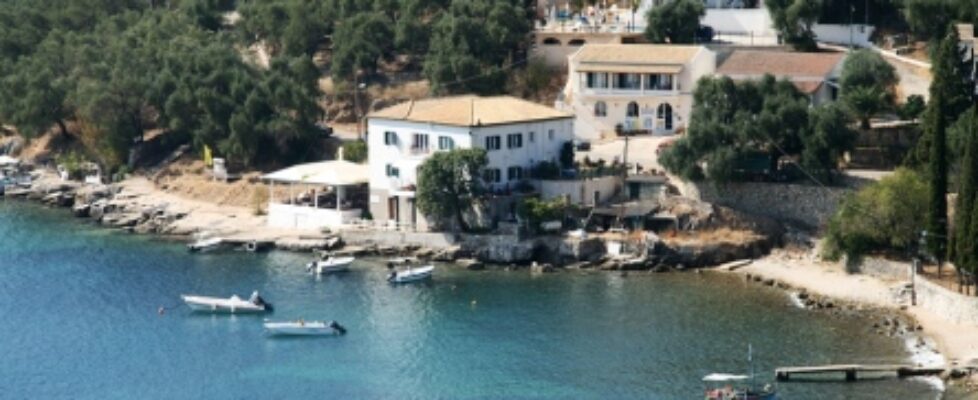
Nestled along the northeast coast of Corfu, about an hour’s drive north of Corfu Town, lies the enchanting seaside village of Kalami. Renowned for its unique, horseshoe-shaped bay, this picturesque hideaway is widely celebrated as one of the most tranquil and visually captivating spots on the Ionian Sea. Surrounded by a dramatic landscape where steep, emerald hills covered in centuries-old olive groves and soaring cypresses cascade down to meet the water, Kalami offers a masterclass in classic Greek natural beauty.
Kalami’s Blue Flag Beach
The heart of the village is its pristine, Blue Flag-awarded beach. Composed of clean white pebbles and smooth shingle, the shoreline gives way to incredibly clear, cobalt-blue waters that are ideal for swimming and snorkeling. Because the sea is exceptionally calm and translucent here, visitors can easily spot marine life moving across the rocky seabed. While relaxation on hired sun loungers is the primary pastime, the beach also caters to low-key adventure, offering paddleboarding, canoeing, and a watersports center for water-skiing and wakeboarding.
Kalami
Lawrence Durrell
Beyond its natural allure, Kalami holds a legendary place in twentieth-century travel literature. At the northern edge of the bay stands the White House. In the late 1930s, this oceanfront villa was the home of the acclaimed British author Lawrence Durrell and his wife, Nancy. It was here that Durrell was inspired to write Prospero’s Cell, his lyrical homage to the landscapes and culture of Corfu. The building still stands today, preserved as a nostalgic landmark that operates as a traditional tavern on the ground floor and offers holiday rentals above, allowing literary enthusiasts to look out over the exact same vistas that captivated the author.
Despite its prized reputation, Kalami has fiercely resisted the pitfalls of mass commercialization. It maintains an unpretentious, authentic village vibe that attracts couples, families, and hikers seeking a slower, more deliberate pace of life. Development remains low-scale and respectful of local architecture, characterized by a mix of traditional stone studios, elegant hillside villas, and a select few boutique hotels, such as the adult-only San Antonio Resort, which blends seamlessly into the cliffside.
As twilight descends, the resort’s minimal and intimate nightlife awakens. Evening entertainment in Kalami does not revolve around loud clubs, but rather around lingering dinners at the family-run waterfront tavernas. Places like Thomas’ Place and the White House Taverna serve exceptional Corfiot cuisine—such as fresh grilled squid, tzatziki, and locally caught seafood—accompanied by local wine and the steady, rhythmic soundtrack of the Ionian tide.
Where to Stay in Kalami
For those wishing to explore further, Kalami serves as an excellent base on the northeast coast. A scenic fifteen-minute coastal footpath wraps around the northern headland to the quiet, circular fishing harbor of Kouloura, home to a single fish tavern and a harbor dotted with traditional wooden boats. To the south, a similar trail connects to the pebbled coves of Agni Bay. Whether you are walking the ancient hillside trails, renting a small motorboat from the jetty to explore hidden coves, or simply reading a book under the shade of a beachfront tamarisk tree, Kalami remains a timeless, peaceful sanctuary that perfectly captures the romantic spirit of the Greek islands.
Corfu olives are an important part of this Greek island’s economy, with an estimated 3-4 million trees producing olive oil of exceptional quality.
Much of Corfu’s lush green landscape comes from its vast groves of olive trees. For islanders they have long been an economic mainstay. For visitors, there is nothing more magical than a walk or drive through these rustling, sun-dappled groves that cling to the hillsides on stone-banked terraces. Corfu’s olive trees are larger than anywhere else in Greece. Some of these ancient giants with their gnarled and knotted trunks are nearly 500 years old.
Legend has it that St Spyridon appeared in an olive grove and forbade the islanders to cut or beat the branches of the trees, because it was cruel. So for centuries they have not pruned the trees, and instead of picking the olives they let them fall to the ground by themselves, spreading nets beneath the trees to catch them. But recently the Greek government has decreed that olive trees must be pruned in order to maintain peak productivity.
The Venetians were responsible for the widespread, systematic planting of olives on the island, which reached its peak in the 16th century. They wanted to ensure their city would never run short of oil. According to Lawrence Durrell, the Venetians gave ten gold pieces for every grove of 100 olive trees planted, and when they left it is said the islanders had nearly 2 million trees.
In Prospero’s Cell, Lawrence Durrell describes the sour, pungent taste of Corfu’s black olives as ‘A taste older than meat, older than wine. A taste as old as cold water.’
Today there are between 3 and 4 million trees and olives remain one of the main agricultural crops on Corfu. Trees bear fruit only every other year, and new trees may take 12 years to yield a first crop. In a good year the olive harvest lasts from January through May.
Corfu’s olive oil is a dark, slightly greenish colour and is of high quality. Despite the abundance of trees, it can be surprisingly hard to find on Corfu. According to Rainer Kalkmann, who runs the Olives and More shop in Afionas (see p00), the locals keep most of it for their own use and the rest is exported to Italy.
Ancient fruit
Since ancient times, olives have been part of the staple diet of people throughout the Mediterranean. Olive cultivation and the production of oil date back to the Early Bronze Age (3000 BC). Corfu’s land and climate were highly favourable for growing olives. In the Odyssey, Homer tells us that the tree was cultivated here by King Alkinoös.
‘A hunk of bread and a Greek tomato the size of a baby’s head need only a saucer of the magic stuff to provide a wonderful meal.’ Emma Tennant on olive oil, Corfu Banquet
In addition to being part of the daily diet, olive oil had many other uses. It was used to cleanse and beautify the body, like soap today. Artwork on vases from the 6th and 5th century BC shows young men smearing their bodies with oil, and scraping themselves clean with a curved blade known as a strigil.
Olive oil had therapeutic properties and was used to soothe skin irritations. It could be blended with flower or herbal essences to produce fragrant oils. It was also burned in household lamps and later in the lamps of Christian churches and saints’ shrines. Olive oil was stored and transported in large clay vessels called pithoi or amphoras, which had a closed shape.
Olive Groves
Corfu’s black gold
Nearly every Corfiot family owns at least a few olive trees. In the 17th century a family’s wealth was determined by the number of trees it possessed. It was customary for large landowners to let out the oil crop to the peasants living on the property, who worked the harvest in return for half the oil.
In rural areas the number of trees is still a factor in calculating land values. Trees and land are often owned separately. When purchasing a piece of land, the buyer must also find out who owns the trees, as they have right of way.
Corfu has a mild Mediterranean climate with wet winters, sunny summers, long sunshine hours and lush landscapes. Best visit May–September.
Corfu has a very different climate from much of Greece, shaped by its position in the Ionian Sea and its exposure to moist Atlantic-influenced air masses. It’s one of the greenest Greek islands, and its climate is the main reason for that.
Unlike the arid, sun-baked landscapes of the Cyclades, Corfu experiences a humid Mediterranean climate with relatively high rainfall, mild winters, warm summers, and a noticeable seasonal contrast in vegetation.
Rainfall and humidity
Corfu is one of the wettest areas in Greece. Annual rainfall typically ranges from about 110 cm to over 130 cm (43-51 inches), depending on the exact location and elevation. This is significantly higher than most other Greek islands, especially those in the Aegean Sea.
The rain is heavily concentrated in the cooler half of the year, particularly from October through March. November, December, and January are usually the wettest months, often receiving frequent and sometimes intense rain events driven by Atlantic low-pressure systems moving into the Mediterranean.
Winter rainfall can be persistent rather than sporadic, meaning several days of overcast skies and rain are common. However, these conditions are also what sustain Corfu’s dense vegetation, olive groves, and cypress forests. By contrast, the summer months—June through August—are typically very dry, with rainfall becoming rare and often negligible for weeks at a time.
Humidity levels are generally higher than on most Aegean islands, especially in summer. While this contributes to the lush landscape, it can also make hot days feel warmer than the thermometer suggests.
Sunshine hours
Despite its reputation for rain, Corfu still enjoys a substantial amount of sunshine annually, averaging around 2,200 to 2,400 hours per year. This is lower than sunnier parts of Greece such as Crete or Rhodes, which can exceed 3,000 hours annually, but still high by European standards.
Summer is the sunniest season, with June, July, and August often delivering 11–13 hours of sunshine per day. Skies are typically clear or mostly clear, with long daylight hours enhancing the island’s appeal for beach tourism.
In spring and autumn, sunshine remains strong but more variable, with a mix of bright days and occasional cloud cover or showers. Winter sees a significant reduction, with December and January often averaging only 3–5 hours of sunshine per day due to increased cloud cover and rainfall.
Temperature patterns
Corfu’s temperatures are moderate compared with mainland Greece and southern islands. Summers are warm but rarely extreme, with average daytime highs around 30°C in July and August. Heatwaves can occur but are usually less intense than in inland Greece due to the moderating influence of the sea. Nights remain relatively comfortable, often dropping to around 20–23°C.
Winters are mild, with daytime temperatures typically ranging between 10°C and 15°C. Frost is rare at sea level, although higher inland areas may occasionally experience colder conditions. Snow is extremely uncommon on the coast but can appear briefly on the island’s highest peaks during cold snaps.
Comparison with other Greek islands
Compared to the broader Greek island groupings, Corfu stands out as one of the most climatically distinct. The Cyclades (including islands such as Mykonos and Santorini) are much drier, windier, and sunnier, with annual rainfall often less than half of Corfu’s. These islands experience the strong Meltemi summer winds, which help moderate heat but also contribute to a harsher, more arid environment.
Crete, Greece’s largest island, has a more varied climate but is generally warmer, sunnier, and drier than Corfu, especially in the south. Eastern Aegean islands like Rhodes and Kos also enjoy more sunshine and lower rainfall totals, making them more reliably dry for summer holidays.
In contrast, Corfu belongs to the Ionian Islands group, which is influenced by western weather systems. This results in higher rainfall, higher humidity, and greener landscapes. While the Aegean islands often appear rocky and sun-bleached, Corfu feels more like a temperate Mediterranean garden, with dense vegetation and abundant water sources.
Corfu’s climate is defined by mild winters, warm dry summers, high rainfall in the cooler months, and relatively moderate sunshine compared to Greece’s drier islands. Its weather creates one of the most fertile and green island environments in the Mediterranean.
While it may not offer the extreme sun reliability of the Cyclades or Crete, it provides a more temperate, lush, and varied climate that shapes its distinctive character and seasonal appeal.
The history of Corfu and cricket goes back to 1823 when the island was under British rule, which left them with a legacy of loving both cricket and ginger beer.
A History of Corfu and Cricket
On 23rd April, 1823, on the feast of the English patron saint, St George, an event took place on Corfu whose effects are still being felt 200 years later. And felt not only on Corfu, but far away in the British Embassy in Athens too. That event was the first ever cricket match to be seen by the curious Corfiots.
Corfu was under British rule at the time and in order to amuse themselves a match was arranged between the officers of the island-based British Garrison and the visiting British Royal Navy. But the game didn’t only amuse the British, for whom cricket is a passion and an obsession, it amused the local people enormously and they decided to take the game up too.
Over the next few years two local teams were formed, both to play against each other and as a challenge to the British. The two teams went by the simple names of Large and Small, according to the players’ abilities.
The British Leave, but Cricket Stays
When the British left Corfu in 1864 there were still only two enthusiastic clubs on Corfu, though by now the names had changed to Gongakis and Camvissis. By 1893, though, interest in the game had waned, which is hardly surprising when you only have two teams!
The two teams merged in 1893 because there simply weren’t enough players to keep two clubs going, and the sole remaining team took the name of Gymnastikos. Their only opponents were occasional visiting British ships, but Gymnastikos kept the faith alive and the club still exists today as part of the Kerkyraikos Gymnastikos Syllogos multi-sports club.
In 1923 another club was started, taking the name of Ergatikos, although in 1936 it changed its name to Byron Cricket Club in honour of the British poet, Lord Byron, and that club is also still going strong today. Others have classical names like Atlas and Achilles. You can find out more at the CricketCorfu website.
Hellenic Cricket Federation
There is now a Hellenic Cricket Federation, which has 15 members, all on Corfu except for teams in Athens and Thessaloníki, Greece’s second city. There is a Corfu island team, and a Greek national team, as well as an occasional team fielded by the British Embassy in Athens. In addition, the teams on Corfu have very active youth policies and also have under-18 and under-14 teams.
It is these youngsters you might now see playing on the cricket pitch in front of the Liston in Corfu Town. The main teams used to play there until recently, when some of the space was taken for a car park, reducing the size of the pitch. When the men played, with cars parked all around, there would inevitably be damage to the cars sometimes, although the Town Hall used to pay the bills!
The arrival of large numbers of British tourists on Corfu every year has been a great boost for the island’s cricket lovers. Cricket teams from Britain come touring, and school teams as well, to play against the younger sides. A new ground was built at the Kontókali Marina to make up for the loss of the one in the town centre, though there are no reports yet of yachts being damaged by flying cricket balls.
Discover Paleokastritsa’s best restaurants, from fresh seafood at Alipa to modern Mediterranean at Akron and traditional Greek at Limani.
Sample Dish at the Akron Restaurant
Paleokastritsa, a gem on the island of Corfu, is not only famed for its stunning beaches and crystal-clear waters but also for its delightful culinary scene. From traditional Greek tavernas to restaurants offering international fare, there’s something to please every palate. Here’s a guide to some of the best dining experiences you can have in Paleokastritsa, including some serving dishes unique to Corfu.
Alipa Restaurant
Alipa Restaurant,
Alipa Restaurant is a beloved spot known for its fresh seafood and breathtaking views of the main bay of Paleokastritsa. Specializing in traditional Greek and Mediterranean cuisine, Alipa offers a truly authentic dining experience. Their menu features a wide array of grilled fish and seafood, often caught fresh daily. A highly recommended dish is their “Fish Platter for Two,” which allows you to sample a variety of their daily catches, perfectly grilled and seasoned. The ambiance is relaxed and inviting, making it perfect for both lunch and dinner.
• Cuisine: Greek, Mediterranean, Seafood
• Recommended Dish: Fish Platter for Two
• Address: Paleokastritsa 490 83, Greece
• Phone: +30 26630 41614
• Website: alipa-corfu.com
Akron Beach Bar & Restaurant
Akron Restaurant
Perched right on the edge of Agia Triada beach, Akron offers a chic and modern dining experience with unparalleled sea views. While it functions as a lively beach bar during the day, it transforms into an elegant restaurant by evening. The cuisine is predominantly Mediterranean with a modern twist, focusing on fresh, high-quality ingredients. Their “Shrimp Saganaki” with ouzo and feta is a superb appetizer, and for a main course, their perfectly cooked “Sea Bass Fillet” is often praised. The cocktail menu is also extensive, featuring creative concoctions perfect for enjoying the sunset.
While primarily known as a unique bar carved into the cliffs, La Grotta also offers a limited but delicious menu, making it a fantastic spot for a casual meal with an extraordinary view. The focus here is less on gourmet dining and more on light bites and refreshing drinks in an unforgettable setting. They serve a selection of pizzas, sandwiches, and salads, perfect for a midday snack or a light dinner. Their “Club Sandwich” is surprisingly satisfying after a swim, and the “Greek Salad” is always fresh. It’s an ideal spot to combine a swim with a casual meal and enjoy the stunning scenery.
Overlooking the main port of Paleokastritsa, Limani offers a classic Greek taverna experience with a focus on fresh seafood and traditional Corfiot dishes. The atmosphere is warm and welcoming, typical of a family-run establishment. Their “Pastitsada,” a rich beef and pasta dish, is a local specialty and highly recommended for those wanting to try authentic Corfiot cuisine. They also excel in grilled octopus and calamari. The portions are generous, and the friendly service adds to the charm of this traditional eatery.
Elia Taverna is a charming, traditional Greek taverna set back slightly from the busiest areas, offering a more tranquil dining experience. Known for its home-style cooking and use of local ingredients, Elia provides a genuine taste of Greek hospitality. Their “Moussaka” is consistently praised by diners for its rich flavors and comforting quality. They also offer excellent grilled meats and a variety of mezedes (small plates) perfect for sharing. The olive oil used in their dishes often comes from their own groves, adding an extra touch of authenticity.
This guide to southern Corfu’s beaches and villages includes busy resorts, quiet beaches, hill villages and the southernmost tip of Corfu at Cape Asprókavos.
Cape Asprokavos
Pérama
Pérama is an often overlooked little resort, the first one you reach heading south from Corfu Town, on the far side of the Chalkiopoúlou lagoon from the airport. The fact that it does get some airport noise, depending on the wind direction, means it’s not proved popular with the overseas package tour operators. You also have to climb down some steep steps to the beaches, which is not so bad, though the climb back at the end of the day puts many people off.
If you’re not an avid beach person, though, the village can make a handy base, with several good restaurants, easy access to Corfu Town, the east coast and to the Achilleion Palace and the village of Gastoúri around it. It also remains very Greek and has not taken on an international face as most other resorts have.
Sinarádes
This large, attractive hill town is a friendly place where the older locals greet you and seem pleased you’ve paid a visit. Its main attraction is the History and Folklore Museum of Central Corfu which, though small, is one of the most delightful museums on the island, set in a traditional Corfu house on a quiet back street.
Worn steps lead to the first floor, which contains a replica kitchen, dining room and bedroom of 1860-1960. On the second floor is a fascinating array of items including musical instruments, toys, traditional costumes, shadow theatre, weaving loom, corn mill, shoemaker’s workbench, and a stuffed caretta turtle.
The star exhibit is a Papyrella, a boat made of reeds like those of ancient Egypt and used on the island’s west coast until World War II. Some 450 items are on display, many donated by the people of Sinarádes and nearby villages.
Ágios Górdis
Though comparatively small, Ágios Górdis has become a brash and busy resort which is not for those who like the quiet side of Greek life. Plenty of people do enjoy what it’s got to offer, and this includes one of the best beaches on the island, a curving bay of soft sand backed by wooded hills.
Much of the entertainment centres on the Pink Palace, which is a hotel that’s as flamboyant as the name suggests. It houses swimming pools, bars, restaurants, shops, sports facilities and a disco, all open to non-residents.
Worth noting if you’re just visiting for the day to sample the beach is that parking by the beach is very limited indeed, and the narrow roads can get jammed with traffic, so look for the car park sign further up the hill before you start descending to the beach and leave your car there.
Áyii Déka
Corfu’s second highest mountain is Áyii Déka, which stands 576 meters (1,889 feet) high, to the south of Corfu Town. There is a gorgeous view back towards Corfu Town from the village of Áyii Déka, which is reason alone to warrant a visit.
If you don’t have the freedom of a car, many coach tours take a stop here to both take in the view and relax in a typical hill village. The name, incidentally, means ‘Ten Saints’, and there is an exhilarating climb to the top of the mountain from the village of Áno Garoúna.
Paramónas
One of the nicest resorts on this stretch of the west coast, although it hardly merits being called a resort – more of a village with a beach, a few tavernas, and several places to stay. No buses go here and the narrow road to it from the nearest town, Ágios Mattaíos, zig-zags and forks several times so casual visitors may or may not end up there.
Those who do get there, find a pleasant beach, somewhere good to have lunch or an evening meal, a hotel to stay the night if you wish… and not much else. For many people, that’s all they need.
Ágios Mattaíos
This is the only town of any size in this part of central Corfu, though if you blink you could miss it. Blinking while driving through isn’t recommended, however, due to the narrow streets and blind corners which all through traffic has to negotiate. Drivers have to simply hope that a huge bus or tractor isn’t coming the other way.
It has a cluster of shops and cafés, and very much a rural feel, hardly impinged upon by the tourism along the coast. It stands on the slopes of the mountain of the same name, which at 463 meters (1,519 feet) offers a good hike from a path within the village, and at the end some impressive views of the valley inland and the coast to the west.
Moraïtika
Moraïtika
First impressions of Moraïtika might not be favourable, as it appears to be a long stretch of bars, shops, and restaurants along a busy main road, but it has managed to retain some character and it attracts a broad cross-section of people.
As with many of the resorts, away from the beach there’s an old part of town, in this case Áno Moraïtika, which nestles on the slopes of the hill towards the north of the modern town centre. Here there’s some peace in among the old houses and the relaxed cafés and tavernas, where the locals hang out.
You won’t find much peace on the main street of modern Moraïtika in the evening, when the bars and clubs burst into life, but as yet it has not become an over-the-top party place like Kávos, further south. During the day the activity focuses on the long beach, which might not be as pretty as some on the west coast but makes up for it with plenty of activities.
Mesongí
Mesongí is separated from Moraïtika only by the Messongís River, which is surprisingly wide in winter and spring after the rains. It makes rather an attractive boundary, too, and although the two resorts do merge into one, there is a definite change of feel as you head south into Mesongí.
It is quieter and more laid-back than its ‘big brother’, with more of a family and a Greek feel to it. The beach isn’t as large or as good as the one across the river, but if you don’t mind that and want somewhere that’s a little quieter then the narrow streets of little Mesongí could be it. And south of here the coast gets quieter still.
Gardíki Castle
Gardiki Castle
The road south from Paramónas and the one north from Lake Korissión meet at Gardíki Castle, though don’t expect a towering ruin as Gardíki is an odd castle in that it is almost at ground level. The Byzantine fortress is thought to date back to the start of the 13th century and for a long time was closed to the public but now is open again… not that there’s very much to see.
A walk up to the highest point, which is a small mound, gives an overall view of the defensive walls. You also get a view of the land around, which gives an idea of how flat this particular part is, but there is not a lot else for the casual visitor: big green lizards, wild flowers and an old Coca-Cola cabinet.
A short walk along the road towards Paramónas, on your right, is a path which leads up to a cave where Paleolithic remains have been found and which can be seen in the Archaeological Museum in Corfu Town.
Boúkaris
Boúkaris is one of the most delightful spots on the whole of the east coast. It’s a world away from the bustle of the resorts north of Corfu Town, as this is the world of the deserted beach, the fish taverna by the sea, and low-key tourist development. It’s a place for walkers, and those seeking to find the traditional way of life of Corfu, before fishing villages like this were swallowed up by the needs of the modern holidaymaker.
The coast road south from here becomes rather too rough for the average car, and nervous drivers should take the inland road if they want to head further south. Boúkaris, though, is the kind of place you may never want to leave, once you’ve found it.
Petríti
If Petríti had a good beach then it would no doubt be a popular tourist spot by now, as it’s a pleasant village that spreads out from a large harbour into an open plain and up the slopes of green hills. It has a big, open feel to it, and a friendly air, perhaps caused by the fact that it isn’t a busy tourist resort.
The harbour for such a small place is surprisingly large, with some big commercial fishing boats going in and out, as well as the smaller family boats off to catch fish for the island’s markets and tavernas. If touring this part of the island, it’s definitely worth a visit.
Ágios Geórgios
At the southern end of Lake Korissión, the lovely sandy dunes become the lovely sandy beach of the small resort of Ágios Geórgios. Small but growing, as there’s now quite a bit of tourist development here and plenty of watersports on the beach to keep everyone occupied.
It’s a place that’s popular with families, as there are plenty of children’s activities too, and though there’s not much of a Greek feel to the place, it’s still an enjoyable relaxed resort in a pretty setting.
Ayía Varvára
If you want somewhere quiet but still with a bit of life to it, then Ayía Varvára, hidden away at the end of a side road in the south of the island, could be just the spot. It has an attractive sandy beach, a few tavernas and rooms, and inland on a hill sits the old village where life goes on as it has for centuries at its own slow pace. There are good walks to be had, and it’s the perfect place for chilling out for a few days and getting totally relaxed.
Lefkímmi
Lefkimmi in Southern Corfu
There are few if any conventional tourist attractions in Lefkímmi – no museums, no beach, no seafront tavernas – and since the building of a bypass which takes traffic right to Lefkímmi port for the ferries, there is probably no reason for visitors to go there at all. This is a shame, as it’s because of these very reasons that people should try to pay a visit.
It is the main town of southern Corfu, the second largest on the island after the capital, and very much a rural community. It’s a rare chance to see a sizeable Corfu town that is virtually untouched by tourism. Lefkímmi is made up of several little villages that have all grown together, and negotiating the one-way system that winds through them can be daunting for the driver. The best solution is to find somewhere to park as soon as you can, and get out and walk.
There is a bustling community here, shops that sell everything apart from souvenirs, tavernas where you can get a real Greek meal, and several large and interesting churches: you can’t mistake the Church of St Arseniou, with its twin belfries.
Kávos
Kavos at Night
People tend to love Kávos or hate it. Those that love it will be staying there, and those that hate it probably won’t go within miles of the place, though perhaps some are drawn by curiosity. It’s the undoubted party capital of Corfu, by a long way, but is tucked away at the far south of the island where it can be left to its own devices and not affect the lives of most Corfiots.
When most of the rest of the island is sleeping, Kávos is booming to the beat of disco music, its streets filled with mostly European youth in various states of dress and inebriation. Along the main streets and down by the beach, clubs and bars with brash names all compete for custom, staying open until dawn. It winds down a little during the day, of course, when clubbers crash out on the very good sandy beach – one of the reasons for the resort’s initial development.
Cape Asprókavos
About thirty minutes’ walk south of Kávos, and a world away in atmosphere, is the southern tip of Corfu: Cape Asprókavos. It’s the recommended starting point for the Corfu Trail and to get to it you take the southern road out of Kávos, marked for Sparterá, and follow the signs for the path to the Cape.
It’s a lovely walk through farmland, a breath of air after the non-stop nature of Kávos itself. The path leads to the Cape’s cliffs, from where you can see Paxos across the sea to the south, and if you continue on around the headland you come to the ruins of an old monastery, which stands quietly retaining its monastic peace and solitude.
These Corfu shopping tips include advice on buying souvenirs like ceramics, jewelry, gold, silver, wood carvings, and food and drink, with tips on haggling.
Worry Beads for Sale on Corfu
Corfu has quite a good range of shopping options. Although it is primarily a mass-market tourism destination, it also attracts a number of cruise ships whose passengers have money to spend. The best variety and quality is to be found in Corfu Town, and if based outside the capital you should certainly include a visit there if you want to find some good souvenirs.
Ceramics
There are some excellent ceramic items available all over the island. Some are mass-produced but there are also good work from local artists. You should shop around as not all shops stock the same goods.
Food and Drink
Extra virgin olive oil can be found everywhere, some in elaborate bottles suitable for buying as gifts, but make sure it is olive oil from Corfu as a lot is imported from mainland Greece. If you simply want to buy in quantity to use yourself, consider getting a large tin of it.
Honey is also good, although not necessarily a cheap buy. You’ll see hives all around the island, and some of the mountain honey is really delicious, flavoured by wild herbs and flowers.
Bottles of Kumquat Liqueur
Liqueur made from the island’s kumquats is an unusual and very special gift. Watch for the different strengths available, as it’s usually a case of the stronger it is, the better and richer it tastes. Some restaurants will give you a complimentary glass of the liqueur at the end of a meal, but these are usually the weaker and cheaper varieties. If these don’t impress you, do try to sample the stronger versions. Many shops will let you try a taste.
Other specialities to look out for include local olives, herbs, spices, nuts, and cheese.
Gold, Silver, and Jewellery
You’ll find silversmiths all over Greece. There is a long tradition of the craft in Epirus, and in particular in the city of Ioannina, across from Corfu on the mainland. Some of the work makes its way to the island, so do ask about it.
Some Greek jewellery is rather too flamboyant for many people, but there are young designers today creating more subtle work with a wide choice of rings, ear-rings and necklaces.
Museum replicas are usually very well-made, and make good personal souvenirs.
Icons
There are few more typical Greek gifts than icons, a centuries-old Greek tradition. Most are machine-made, but you will still find a few artists producing these by hand. You can find the best choice when visiting the island’s monasteries.
Leatherware
Leather is a good buy almost everywhere in Greece, and Corfu is no exception. Look for sandals, shoes, bags, and belts in the Old Town in Corfu Town.
Weaving
Good quality hand weaving and embroidery can be found throughout the island, as it is quite a cottage industry here. You are just as likely to find top class items in some quiet village as in Corfu Town – and at a much cheaper price. Kassiopi is a centre for lace and crochet work.
Wood Carvings
With so many olive trees on Corfu, it is only natural that the islanders should want to make use of the wood too. There are now many wood carving workshops, almost one in every town, where you can buy items like walking sticks, light pulls, beautiful bowls, and kitchen utensils.
General Corfu Shopping Tips
Haggling is an option in some places, but nothing like it is in Greece’s neighbour to the east, Turkey. Corfu is far more like its western European counterparts, where the price shown is the price you pay, and discounts are only to be had if buying several items.
Greece has a high sales tax, and it may be possible for non-EU residents to reclaim this by shopping in stores displaying ‘Tax-Free for Tourists’ stickers.
Not all local crafts are actually made locally. There is a flourishing market in Asia producing local souvenirs for countries all over the world, so look closely before buying. If you see a colourful plate with Corfu written on it, you might turn it over and find ‘Made in China’!
Benitses is a busy but charming coastal village blending Roman history, lush mountain hiking & beautiful beaches, located south of Corfu Town.
Benitses
Nestled on the verdant eastern coastline of Corfu, the village of Benitses stands as a testament to the island’s ability to reinvent itself while honoring its deep-seated traditions. Once a quiet fishing hamlet, then a high-octane party capital of the Mediterranean, and now a revitalized, family-friendly resort, Benitses offers a unique blend of lush mountain scenery, crystal-clear Ionian waters, and a history that stretches back to the height of the Roman Empire.
History of Benitses
The history of Benitses is inextricably linked to its abundant natural resources—specifically its freshwater springs. The name itself is believed to derive from the ancient Greek word Pinio, referring to the confluence of streams that flow from the nearby mountains of Agioi Deka and Stavros. These springs were so plentiful that they fueled the village’s early economy, powering numerous watermills that processed olives and flour for the entire region.
Evidence of the village’s importance in antiquity can be found in the remarkably well-preserved Roman Baths. Located in the heart of the village on a private estate, these ruins include a vaulted hall and intricate mosaic floors dating back to the 3rd century AD. Centuries later, during the British Protectorate in the 1830s, the village’s water sources were harnessed once again to create the island’s first modern aqueduct, a project led by Sir Frederick Adam to solve the water shortages in Corfu Town.
Throughout the Middle Ages and the Venetian era, Benitses was a resilient community that frequently found itself on the front lines of history. It was raided several times by Ottoman forces during the Great Sieges of Corfu, and in the early 20th century, it served as a refuge and hospital site for the Serbian army during World War I.
The mid-20th century brought a dramatic shift. In the 1960s and 70s, Benitses became one of the first organized tourist resorts in Greece. It famously attracted global icons like Vivien Leigh, Laurence Olivier, and even Paul McCartney. By the 1980s, it had transformed into a legendary nightlife hub, home to the world-renowned “Spiros on the Beach” nightclub. Today, the neon lights of the 80s have largely faded, replaced by a sophisticated atmosphere that favors culture, gastronomy, and nature.
Location and Geography
Benitses is situated approximately 12 kilometers south of Corfu Town and the Ioannis Kapodistrias International Airport. Its location is often described as “where the mountain meets the sea.” The village is squeezed into a narrow strip of land between the turquoise Ionian Sea and the emerald-green slopes of Mount Agioi Deka.
The village is divided into several distinct areas:
• The Old Village (Panochori): A labyrinth of narrow, whitewashed alleys and traditional stone houses that climb the hillside, offering a glimpse of authentic Corfiot life away from the coastal road.
• The Marina and Commercial Center: A modern, picturesque harbor that hosts both traditional wooden fishing boats (kaikia) and luxury yachts.
• The Coastal Strip: A long stretch of pebble and shingle beaches that run parallel to the main road, lined with tavernas and cafes.
Benitses Marina
Things to Do for Visitors
Whether you are a history buff, a nature enthusiast, or simply looking to soak up the sun, Benitses offers a diverse range of activities.
1. Explore Ancient and Cultural Sites
A visit to the Roman Baths is essential for understanding the village’s roots. Just a short distance away, the Corfu Shell Museum (widely considered one of the best of its kind in Europe) houses a massive collection of rare shells, corals, and fossils from the Indian and Pacific Oceans. For those willing to venture just a few kilometers north, the majestic Achilleion Palace—the summer retreat of Empress Elisabeth of Austria—offers stunning architecture and panoramic views of the coast.
2. Hiking and Nature Trails
Benitses is a paradise for hikers. Numerous well-marked footpaths lead from the village into the mountains. One of the most popular routes takes you to the Springs of Benitses and the ruins of the British Aqueduct. The trails wind through ancient olive groves, some hundreds of years old, and lead to hidden chapels like the Church of Agia Marina, which offers a breathtaking vantage point over the village and the sea.
3. Life on the Water
The beaches in Benitses have been awarded the Blue Flag for their water quality and cleanliness. The sea here is exceptionally clear, thanks to the vast meadows of Posidonia oceanica (sea grass) that filter the water.
• Snorkeling and Diving: The rocky outcrops and seagrass meadows are home to a vibrant array of Mediterranean marine life.
• Boat Trips: From the marina, you can rent a small boat or join a cruise to the nearby islands of Paxos and Antipaxos, or visit the “Blue Lagoon” on the Greek mainland.
• The Laopetra: Don’t miss the iconic “Laopetra” (People’s Rock), a large limestone formation rising from the sea just offshore, which has become the symbol of the village.
4. Culinary Delights
Dining is a central part of the Benitses experience. The village is famous for its fish tavernas, a legacy of its history as a fishing community. Here, you can enjoy some of Corfu’s special dishes like bourdeto (a spicy fish stew) or sofrito (veal cooked in a garlic and vinegar sauce) while sitting just meters from the lapping waves. The central square comes alive in the evenings, offering a mix of traditional Greek hospitality and contemporary bars.
5. Local Festivals
If you visit in July, you might catch the Feast of Agia Marina (July 17th). This is the biggest event of the year, featuring a religious procession followed by a traditional panigiri (festival) with live music, folk dancing, and plenty of local food and wine.
The main sites to see in Corfu Town are listed on our Corfu Town page, and some also have their own pages, but here are some of the other places to see.
The Liston in Corfu Town at Night
The main sites to see in Corfu Town include the Archaeological Museum, the Byzantine Museum and the Palace of Saint Michael and Saint George, but there are plenty of other places to visit too. Here’s our list of the best of the rest.
Solomos Museum
This isn’t a museum to attract the average visitor, but Greeks are very proud of their poet, Dionysios Solomos, who died in this house in 1857. He was born on the Ionian island of Zákinthos in 1798 but moved to Corfu in 1828. His most famous work is Hymn to Freedom, part of which was set to music to become the first Greek national anthem.
Here in his former home are photographs, paintings, manuscripts and memorabilia, although most of the information is in Greek only. It is also rather hard to find, in a back street to the rear of Arseniou, near the Byzantine Museum. Ask at the Byzantine Museum if you’re having trouble locating it: it isn’t well signposted.
Corfu Reading Society
The Corfu Reading Society was founded in 1836 and has its home in an elegant building at the far north end of Kapodístriou, across the street from the Palace of St Michael and St George. Look for the steps going up to where its library is located.
There are 10,000 volumes about Corfu and the other Ionian islands, and although it is not generally open to the public as an attraction as such, because it is a working library still, interested visitors are more than welcome to call in and look inside. Scholars may also apply to consult the library and sometimes there are special exhibitions. There are also newspapers, maps, documents, paintings and photographs housed in the library too.
The Orthodox Cathedral
The island’s Orthodox Cathedral, or Mitrópoli, is in the northern part of the Old Town and stands impressively at the top of a flight of steps. It dates back to 1577 but was not dedicated as a cathedral until 1841. Inside it is rather gloomy, but with a high roof and three aisles it is quite an impressive building.
There is the usual array of icons, the most notable of which is one of St George, just inside the main entrance. The opening hours vary, and while it is mainly open on weekday mornings, and of course for services on Sunday, it can also be open in the afternoons so try the door if passing.
The New Fortress
The New Fortress in Corfu Town
The Venetians began work on the New Fortress (Néo Froúrio) in 1576, almost thirty years after the Old Fortress was built, showing how important the defence of Corfu Town was to them. These days there is not a lot to see inside the walls, although there are sometimes exhibitions and concerts, and there’s a café that’s mainly open in the summer.
The best reason for visiting, though, is for the views. Just beyond the entrance to the Fortress at the western end of Solomou are good views over the rooftops of the Old Town, and once you have climbed to the top there are better views across towards Albania and the Greek mainland, and over the Old Port down below. There’s also a cafe at the top where you can enjoy the views with a drink and a rest.
The Liston
The Liston in Corfu Town
On the eastern end of the Old Town stands the street known as the Liston, whose name derives from the list of noble people who were, when it was first built, allowed to walk here. It was constructed in 1807 during French rule and designed as a copy in miniature of the rue de Rivoli in Paris, and like the rue de Rivoli it has a mix of coffee shops, restaurants and souvenir shops. It constantly buzzes, day or night, with local people meeting friends, reading newspapers, chattering on mobile phones or simply having a coffee. Your drink will cost more here than elsewhere in town, but people think it worth it for the atmosphere.
The Spianáda
The Spianáda or Esplanade is the pleasant park that is such a focus of life in Corfu Town. The northern half is bordered by the Liston to the west, the Palace of St Michael and St George at its northern end and the Old Fortress to the east. Originally the whole area was a parade ground for the Venetian army. Later the northern part was used as the town’s cricket pitch, but recently the need for parking has cut into the green space so it is only half the size it once was, and few cricket matches are played here these days (see our Corfu and Cricket page).
The southern half of the Spianáda is still very pleasant, though, with an impressive fountain, flowers, greenery, paths and seats, a bandstand used for concerts in summer and at the far end a curious but attractive round building. This is the Maitland Rotunda, built in 1816 as a memorial to the first British Lord High Commissioner to Corfu, Sir Thomas Maitland.
The Town Hall
On the northern side of Plateía Dimarcheío is the elegant Town Hall, built of white marble from around Mount Pantokrátor. It was put up by the Venetians in 1665 as a single-storey building to be used as an assembly room. In 1720 it became the San Giacomo Theatre, showing the cultural enthusiasm that has always existed in Corfu Town. The building only became the Town Hall in 1903 under the British, who built the upper floor in perfect keeping with the harmony of the building. It is not open to the public but the outside can be admired from this pleasant little square.
Platitéra Monastery
Platitera Monastery
To the west of San Rocco Square and a not particularly pleasant 10-minute walk due to the traffic is the peaceful oasis of the Monastery of Platitéra. To be strictly accurate it used to be a convent, and it is no longer in use as such but it is open to the public and used for services.
The traffic noise does at least recede a little as you enter the whitewashed courtyard with its large palm trees, and an archway luring you beyond to the main buildings. It is extremely small and there is not a great deal to see. The dimly-lit church was first built in 1743 but destroyed by the French when attacking the island and rebuilt in 1801.
There are some tombs of notables to one side of the church, but the most notable of all is hidden away behind the altar screen and not readily accessible unless one of the attendants is willing to let you see. It is the last resting place of Ioannis Kapodistrias, who was born on Corfu and in 1827 became the first President of the modern Greek state.
The British Cemetery
From San Rocco Square follow the airport road for a few minutes, and down a side street on your left is the easily-missed entrance to the British Cemetery. As well as a burial place for the island’s British residents, and some of those who died in combat defending Corfu, this is a real treat for the nature lover, especially the botanist.
At the right times of year you will be greeted by a little hand-written sign from the caretakers: ‘please be careful not to tread on the wild orchids’. Almost 30 species have been found here, and less exotic plants such as roses, pansies, ferns, fuchsia, poppies and lilies are here in abundance, along with the birdlife that these also attract. It is a suitably peaceful and dignified resting place for the people buried here, and some of the tombstones give moving glimpses of the lives they commemorate.
The Church of Saints Jason and Sosipater
Tucked away in the southern suburb of Corfu Town called Anemomílos, but easily visited if you are walking out to see Mon Repos, is this, the only complete Byzantine church on Corfu. One of the frescoes on the walls has been dated back to the 11th century at least, so the walls and other parts may well be even older, and it is still very much in use today, a thousand years later.
The two saints to whom it is dedicated were both bishops and followers of St Paul, and brought Christianity to Corfu in the 1st century AD. The church’s tiled roof, ancient brickwork, bell tower and dome are all compressed into a tiny space, very photogenic from the outside and very atmospheric within. The frescoes shouldn’t be missed.
Palaiópolis
Palaiopolis
Palaiópolis means ‘old town’, and it is here that the oldest remains in the area have been found. There is no set focus to it, but several scattered sights in and around the grounds of the Palace of Mon Repos. The most noticeable remains are directly opposite the entrance to Mon Repos, the church of Áyia Kérkyra. This is the saint who provides the Greek name for the island of Corfu: Kérkyra.
The substantial walls still stand toweringly high, and parts date back as far as the 5c, even though they have been knocked down and rebuilt several times over the centuries. It stands where a 5th century BC pagan temple once stood. It is not open to the public at present, but may be so at some unspecified time in the future. Other parts of Palaiópolis are harder to get to and not as rewarding, and in any case should be seen only after a visit to the museum in Mon Repos, which lays out the history of this whole area splendidly.
If you’re saying in Corfu Town and so eating out there a lot, you don’t have to eat at only the expensive places. You can balance the budget by finding cheap eats in some back-street places which still provide mouth-watering food – we know from experience! Try Ninos or Mouragia. For top eats go to Aegli or the Rex.
One of the most respected and respectable restaurants in the town centre, the Aegli has been in business since 1812. It appeals (along with its near-neighbour the Rex) to locals who want a little treat without breaking the bank. Seating spreads out on both sides of the Liston, so you can look out at the Esplanade or watch the passing parade on Kapodistriou. The food is traditional and exemplary, with rooster pastitsada and lobster with spaghetti being two of its specialities.
On a terrace overlooking the Town Hall Square and, as the name implies, surrounded by colourful bougainvillea, this family-run place makes a shady lunchtime stop or a romantic evening venue, when the candles are lit and the fountain is turned on. The menu at the Bougainvillea is wide-ranging and includes Greek specialities such as stuffed lamb Zagori-style, as well as daily specials and Corfiot dishes too.
When asked to recommend a good Italian place, some locals raved to us about La Cucina’s home-made pasta and especially the fish dishes made with it. A starter of house-cured anchovies in oil with parsley, celery and parmesan was mouthwatering, and their own pizzas are tasty and filling. There are some tables outside and more room inside, and you’d be advised to arrive early as it fills up quickly.
Taverna Ninos
Taverna Ninos in Corfu Town
One of the cheapest and yet best eating options in town is Taverna Ninos, if you like your food simple and tasty and your atmosphere Greek and lively. There are a few sidewalk tables in this narrow Old Town street, but the action is inside where a TV is often blaring, and the house wine is poured from a water cooler in the corner. Locals love the gyros and souvlaki, which are also both available as takeaways.
Chrisomalis
In the heart of the old town, Chrisomalis (or Babis as it’s also known) has been pleasing diners for decades: the Durrell family were regulars here back in the 1930s. Go early to grab a table on the pedestrianised side-street, though there’s more seating indoors which is where you’ll also find the old ovens. This is one of the last few places to still cook in this traditional way, producing wonderfully tasty slow-cooked stews. There’s no website but the address is Nikiforou Theotoki 6, which runs back from The Liston.
Mouragia
In business since 1991, this small ouzeri gets packed with locals at weekends and there is a limited number of outdoor tables. Although it has a full menu of main courses including Corfiot specialities like sofrito, many opt for the superb selection of mezes such as fried courgettes, fried aubergines, skordalia, stuffed potatoes, stuffed squid, whitebait and other wonderful seafood snacks. Pile the plates high and linger, like the Greeks. You’ll find it at Arseniou 15, just west of the Byzantine Museum.
The Rex first opened its doors in 1932 and shows no signs of ever closing them, as it continues to maintain high standards of service despite increased competition. It’s the place the locals choose when they want something a little bit special, whether it be lobster spaghetti or its own local creation of chicken in a kumquat sauce. Take a table outside on Kapodistriou to watch the passing parade, or inside for a slightly more formal feel.
The Venetian Well Restaurant in the Old Town in Corfu Town
Some regard the Venetian Well as the best eating place in town, others say it is over-priced, but there is no denying the wonderful romantic setting on a quiet square in the Campiello nor the innovative nature of the cuisine. Dishes such as wild boar with three paprikas and chestnuts sit on the menu alongside Corfiot classic including sofrito and pastitsada.
Corfu’s special cuisine includes dishes like sofrito and pastitsada and the chance to try ginger beer and kumquats.
Kumquats on trees in Corfu
Some dishes you can find all over Greece, like moussaka, but there are a few dishes (and drinks) you’ll only find on Corfu. So, of you’re visiting the island and you get chance to sample kumquat liqueur, sofrito, pastitsada or bourdeto, then take it. You won’t be disappointed!
Ginger Beer and Kumquats
One was introduced by the British, the other came from Asia, and the two together show how different Corfu cuisine is from the typical Greek menu.
The kumquat plant only came to Corfu as recently as 1846, imported from Asia, and the only two places in the Mediterranean where it still flourishes are here and on Sicily. You might see it growing almost anywhere on Corfu, and it looks like a small orange tree, or a big bush.
It is hard to distinguish except when it is fruiting and the small orange fruit appear, though the productive period is quite long and you might see fruit at any time during the first four or five months of the year.
Corfu’s Kumquat Trees
Kumquat Trees Growing on Corfu
There are about 6,000 cultivated kumquat trees on Corfu, almost all of them around the area of Nýmfes, south of Róda, which has proved to have the ideal conditions for their growth. You know they grow well from the sheer volume of kumquat liqueur that is produced each year and on sale in the shops.
Kumquat Liqueur
Bottles of Kumquat Liqueur
The liqueur comes in various strengths and tastes, ranging from a low-alcohol, watery, sweet liqueur to a more robust drink that is more like Grand Marnier. Don’t be put off if you try it once and don’t like it. Try a range of them, perhaps at a tasting at the Vassilakis Distillery or their shop outside the Achilleion Palace, or at the Agricultural Cooperative in Nýmfes. And if you still don’t like the liqueur, settle for a jar of jam or marmalade.
Ginger Beer
The other drink that is unusual and associated with Corfu is ginger beer, or Tsitsibíra, to give it its Corfiot name. This is seen less and less on island menus, though, and it seems that the taste for it is not as strong as for kumquat liqueur. Only one factory, near Kelafatiónes, still makes the drink to the traditional recipe with lemon juice, natural lemon oil, grated ginger, water and sugar. It’s a drink which was introduced by the British, the ideal cooling drink to enjoy while watching a game of cricket.
Corfu’s Special Dishes
Sofrito
Sofrito
There are several food dishes that are also distinctive to Corfu, and which you will see on a lot of restaurant menus. One is sofrito, a casserole made of veal and served with a white sauce produced from wine, garlic, onion and pepper. Every chef has his own version, though, and you will also find beef sofrito, served with a red sauce, and other variations too. As with the kumquat liqueur, you need to try it more than once to taste the different variations.
Pastitsada
Pastitsada
Pastitsada is the other great Corfu meat dish. It is basically meat of some kind served in a tomato sauce over pasta, but the true version will use cockerel meat, which has a more gamey taste to it than chicken. It isn’t always available, and the more common version uses veal.
Bourdeto
Bourdeto
For those who prefer fish and seafood to meat, you will also find lobster pastitsada on many menus, though not served in the average Corfu household. Another popular fish dish that is very traditional on Corfu is bourdeto, and this is a casserole using white fish, onions, olive oil, and spicy red peppers, which give the dish quite a bite.
If you see any of these dishes on a menu you ought to give them a try, as these are true island dishes. You can try asking for the recipe if you like, but they are all different. The only thing they have in common is that they’re all sure to contain the chef’s own secret ingredient!
This Lawrence Durrell walk takes you from Kaminaki Beach in northern Corfu to the White House in Kalami where the writer Lawrence Durrell lived for four year.
Kalami
One of the most famous spots on Corfu is the White House in Kalámi where the writer Lawrence Durrell once lived. This walk approaches it along a coastal path above a handful of idyllic coves: good in springtime for the wildflowers and in summer because there’s plenty of shade.
Start of the Lawrence Durrell Walk
Begin at Kamináki Beach, north of Nissáki: look for the Shell station and a few hundred metres beyond is the small turning on the right to Kamináki. Parking there is so you may want to park on the roadside and walk down.
At Kamináki, turn left along the beach and at the far end take the cement track leading up from the Boat House between sage and prickly pear plants. Soon the cement becomes a dirt path which follows along above the shore. In a few minutes you reach Nissáki Beach.
Atlantica Nissaki Beach Hotel
Atlantica Nissaki Beach Hotel
Head along the beach to the Atlantica Nissáki Beach Hotel. Walk through the grounds with the swimming pool on your right. Pass the rear entrance to the hotel and at the end of the buildings the dirt track continues. The music of the hotel bar gives way to the peace of an olive grove and the lapping waves.
If you like the look of the hotel, check their room rates here.
Prospero’s Cell
As you approach the next cove, look for the little chapel of Ágios Arséniou set into the rocks beside the sea. Durrell loved to bathe here. In Prospero’s Cell, he describes his wife diving down to retrieve cherries he had thrown into the clear waters of the cove.
A couple of minutes beyond, the path forks. Take the wider path up to the left and up the stone steps. At the top of the steps, veer left up to a wider track. Turn right and go up with a wall on your left. You are now looking down over the tops of the cypress trees.
A little further on is a crossroads. The path back and to the left returns to the main road, while to the right it leads down to some new villas being built. Take the path straight on and up the steps. Keep on this narrow path, which takes you round the villas, but note that with construction work the path may be moved slightly.
Nikolas Beach Taverna
Nikolas Beach Taverna
The steps lead back down to a concrete path that goes to the left, rejoining the old path towards Agni. Soon you see a sign for the Nikolas Beach Taverna. The path takes you across their dining area and almost into their kitchen! (The owners also have accommodation in both Kalami and Agni – check their website.)
Nikolas Beach Taverna
At the end of Agni beach the path continues uphill. After a few hundred metres a small track down to the right brings you to an undeveloped cove with large flat rocks for sunbathing at one end. The main path reaches a T-junction: turn right to the beach. Turn left on the beach and immediately left with a stone wall on your left. Then the path turns right between some fenced gardens.
Kalami
Kalami
Beyond the gardens turn left and walk uphill to reach a cement road which zig-zags up and over the headland and down towards Kalámi. Ahead you see the famous White House, where Lawrence Durrell lived from 1935 to 1939.
Where to Stay in Kalami
Lawrence Durrell and the White House
Lawrence Durrell’s connection with the White House at Kalami is one of the most enduring literary associations on the Greek island of Corfu. In 1935, the young writer moved to the island with his family, seeking a warmer climate and a simpler way of life. He rented the White House, a striking Venetian-era building overlooking the turquoise waters of Kalami Bay on Corfu’s northeast coast.
Durrell lived in the house from 1935 until 1940, a period he later described with great affection in his celebrated memoir Prospero’s Cell. During these years, the White House became a gathering place for artists, writers and visitors drawn to the beauty and tranquillity of the island. Durrell wrote extensively while living there, finding inspiration in the surrounding olive groves, fishing boats and dramatic coastal scenery.
The idyllic lifestyle came to an abrupt end with the outbreak of the Second World War, forcing Durrell and his family to leave Corfu. Nevertheless, his writings immortalised both Kalami and the White House, introducing generations of readers to the island’s unique charm.
Today, the White House remains one of Corfu’s most famous literary landmarks. Restored and operating as a restaurant, it attracts visitors from around the world who come to experience the setting that inspired some of Durrell’s finest work and helped establish Corfu’s reputation as a destination of literary pilgrimage.
See Greece recommends where to stay in north-west and central Corfu including luxury mansions, inexpensive rooms, and resort hotels.
This is our personal choice of where to stay in north-west and central Corfu, based on the hotels we’ve visited over the years and trying to give a good spread both geographically and pricewise.
In a wonderful setting on wooded slopes looking out over one of Paleokastrítsa’s beautiful bays (with a path leading down to the pebbled beach and watersports), the Akrotiri Beach makes a great base for a stay here. It’s only a short walk to the centre, but everything is on site for those lazy days: pools, restaurant, bar, tennis courts, shops.
A lovely setting in the little bay at Liapádes for this inexpensive and charming hotel, whose buildings are terraced into the hillside behind the beach. The Blue Princess Beach Resort has a very friendly feel, and as well as being right on the beach, it has both a seawater and a freshwater pool, two restaurants and indoors and outdoors bars. The 140 rooms are spread out among fairly low-rise bungalow buildings spread around the palm-filled grounds.
Select set of villas in a fabulous location about 4 km (2.5 miles) from Paleokastritsa and overlooking the Ropa Valley. Fundana Villas is a 17th-century Venetian mansion, once the home of an artist, has been tastefully converted into a mix of apartments, studios, bungalows, and suites. There’s also a small olive press museum incorporated into the villas, which offer guests a bar and a library too. The main strawberry-pink villa was used for filming the BBC TV series of Gerald Durrell’s My Family and Other Animals. A truly delightful place.
Easily one of the best located hotels on Corfu by a long way, the Golden Fox is built on a headland north of Paleokastritsa and provides breathtaking views. Family-owned, the place is a haven with studios and suites, most with the same stunning views (some have side views of the sea) plus fridge, TV and phone. There is also an excellent restaurant, with shops next door in the traditional village of Lakones.
Right by the viewpoint known as the Kaiser’s Throne in Pelekas, and sharing its magnificent views, the Levant Hotel is a romantic hideaway in a very peaceful location. The décor is old-fashioned and romantic too, but the facilities are fully modern – swimming pool, TV, direct-dial phones, the Sunset Restaurant, and a terrace making the most of those views.
Domes of Corfu is a magnificent classic-style luxury hotel, whose rooms also have the classical look and furniture. There are both suites and regular rooms, although even the regular rooms here are twice the size of most hotel rooms. The gardens are lovely, lush and colourful, leading down to the beach, and there are sports and watersports facilities too, and a choice of restaurants and bars.
Opened in 1980 in Liapades, this lovely block of rooms is well looked-after by its very friendly owners and staff. The Villa Papoulas has a decent-sized swimming pool with a large shaded snack-bar terrace, with palm trees and bright red geraniums adding to the cheery look. The rooms are a little small but all have wide balconies, and the price is remarkably cheap for the quality provided.
The ultimate in upmarket rural comfort, the Pelecas Country Club has its own heliport and stables for guests bringing their own horses. There are only a handful of rooms and suites, including a Presidential Suite, in 25 hectares (62 acres) of grounds filled with ancient olive trees. In fact some of the rooms in this 18th-century mansion are in the renovated olive press and other farm buildings. All are filled with antique furniture and have a private courtyard. Superb.
One of the most truly sumptuous rural properties on Corfu, the Villa de Loulia building dates from 1803. The rooms have been decorated to reflect the island’s grand historic elegance, and with only nine rooms and suites the hosts can offer little luxuries such as breakfast at any time, in the separate modern building where you will also find a bar and a lounge. There’s a pool too, surrounded by idyllic countryside. It’s located in Peroulades.
Sidari is a popular holiday resort on the north coast of Corfu with beaches and unusual rock formations as well as plenty of places to eat and to stay.
Sidari Beach
Located on the north coast of Corfu, Sidari is one of the island’s most famous holiday destinations. Known for its dramatic sandstone cliffs, long sandy beaches, lively atmosphere, and excellent range of accommodation, restaurants, and bars, Sidari attracts visitors from across Europe who are looking for a combination of sunshine, scenery, and entertainment.
While it is often associated with package holidays and nightlife, Sidari also offers beautiful coastal landscapes, traditional villages nearby, and easy access to some of northern Corfu’s most attractive attractions.
Where is Sidari?
Corfu Town to Sidari Map
Sidari is about an hour’s drive from both Corfu Town and from Corfu International Airport, passing through olive groves, small villages, and some of the island’s most picturesque countryside.
The town occupies a broad bay on the Ionian Sea, with a coastline characterised by unusual sandstone formations that have been shaped by wind and waves over thousands of years. These distinctive cliffs are among the most photographed natural landmarks on Corfu.
The Beaches of Sidari
One of the Best Beaches on Corfu: Sidari
Sidari’s main beach stretches along the centre of the resort and is one of the largest sandy beaches on Corfu. The shallow waters make it particularly popular with families travelling with young children. Sunbeds, umbrellas, watersports facilities, and beach bars are readily available during the summer season.
Unlike many Corfu beaches that consist of pebbles or coarse sand, Sidari offers soft golden sand and a gently shelving seabed. The calm conditions found during much of the summer make swimming pleasant and safe.
Beyond the main beach, visitors will discover several smaller coves and inlets hidden among the sandstone cliffs. These quieter areas provide a more secluded atmosphere while still being within walking distance of the town centre.
Canal d’Amour
Rocks and shadows in Sidari on Corfu
Sidari’s most famous attraction is the Canal d’Amour, or Channel of Love. This remarkable natural formation consists of narrow channels carved through soft sandstone rock by centuries of erosion. The result is a landscape that looks almost otherworldly, with golden cliffs, small caves, and turquoise pools.
According to local legend, couples who swim through the canal together will remain in love forever, while single visitors who swim its length are destined to meet their soulmate. Whether or not visitors believe the folklore, the Canal d’Amour remains one of the most beautiful and distinctive coastal locations in Greece.
The area is particularly spectacular at sunset, when the sandstone cliffs glow in shades of gold, orange, and pink. Photographers often gather here during the evening to capture the changing colours.
Things to Do in Sidari
Explore the Coastline
One of the best ways to appreciate Sidari’s scenery is simply to walk along the coastal paths that connect the beaches and sandstone formations. Numerous viewpoints offer panoramic views across the sea towards the Albanian coastline.
Boat Trips
Several operators offer boat excursions from Sidari harbour. Popular trips include cruises along the dramatic north coast, visits to hidden caves, and journeys to the nearby Diapontia Islands of Erikoussa, Othoni, and Mathraki. These small islands provide a glimpse of a quieter and more traditional side of Greek island life.
Glass-bottom boat tours are also available and are especially popular with families.
Watersports
The main beach offers a wide range of watersports including jet skiing, parasailing, paddleboarding, kayaking, and inflatable rides. The relatively calm waters of the bay make these activities accessible even for beginners.
Visit Cape Drastis
A short drive west of Sidari brings visitors to Cape Drastis, one of Corfu’s most dramatic viewpoints. Here, white cliffs plunge into crystal-clear waters, creating a landscape that is often compared to the famous coastlines of the Mediterranean’s most celebrated destinations.
Boat excursions frequently combine visits to both Cape Drastis and the Canal d’Amour.
Nearby Villages
Although Sidari itself is a modern tourist resort, several traditional villages lie nearby and offer a different perspective on Corfu.
Peroulades
Just a few kilometres from Sidari, Peroulades is a charming village known for its traditional architecture and relaxed atmosphere. It is also home to Loggas Beach, often regarded as one of the best sunset locations on the island.
Karousades
This traditional inland village provides an opportunity to experience everyday Corfiot life away from the tourist centres. Narrow streets, local cafés, and historic churches create an authentic traditional atmosphere.
Avliotes
One of the oldest villages in northern Corfu, Avliotes features attractive stone houses and a peaceful village square. It is an excellent destination for visitors seeking a more traditional Greek experience.
Dining in Sidari
Sidari offers a surprisingly diverse dining scene. Traditional tavernas serve classic Corfiot dishes alongside international restaurants catering to the resort’s international clientele.
Local specialities worth trying include sofrito, a Corfiot dish of beef cooked in white wine and garlic, pastitsada, a rich pasta dish traditionally made with slow-cooked meat, and bourdeto, a spicy fish stew unique to the island.
Fresh seafood is widely available, with many restaurants serving fish caught locally in the surrounding waters. Grilled octopus, calamari, sea bream, and red mullet are frequently featured on menus.
For those seeking familiar favourites, numerous establishments offer British, Italian, and international cuisine.
Nightlife
Sidari has long been known as one of Corfu’s liveliest resorts. The main strip contains a wide selection of bars, pubs, and entertainment venues that remain busy throughout the summer season.
Visitors can choose from relaxed cocktail bars overlooking the sea, sports bars showing major sporting events, live music venues, and late-night clubs. Despite its reputation for nightlife, Sidari also caters well to families, with many areas remaining relatively peaceful during the evening.
Couples looking for a quieter atmosphere often prefer the restaurants and waterfront bars around the Canal d’Amour area.
Family-Friendly Activities
Sidari is particularly popular with families thanks to its sandy beaches and shallow waters. Beyond the beach itself, families can enjoy mini-golf, boat trips, watersports, and excursions to nearby attractions.
The resort’s relatively flat layout makes it easy to navigate with children in pushchairs, and many hotels provide family-oriented facilities such as swimming pools and entertainment programmes.
When to Visit
The main tourist season runs from May through October. July and August bring the warmest weather, with temperatures frequently exceeding 30°C and very little rainfall.
June and September are often considered the ideal months to visit. The weather remains warm and sunny, the sea is pleasant for swimming, and the resort is generally less crowded than during the peak summer period.
May and October can also be attractive options for travellers who prefer quieter conditions while still enjoying comfortable temperatures.
Getting Around
Many visitors find that Sidari itself is easily explored on foot. The beaches, restaurants, shops, and attractions are generally within walking distance of one another.
For those wishing to explore the wider island, car rental is highly recommended. Northern Corfu contains numerous scenic villages, hidden beaches, and viewpoints that are difficult to reach by public transport alone.
Regular bus services connect Sidari with Corfu Town and several neighbouring resorts, providing a convenient alternative for travellers who do not wish to drive.
There are three islands off the northwest coast of Corfu, Erikouusa, Othoni and Mathraki, popular with day-trippers from resorts like Sidari.
Corfu’s offshore island of Erikoussa
From many points along the northwest coast you can see three small islands, all of which can be visited from Sidari or on the ferry from Corfu Town. Day-trips are also possible in high season from other resorts including Kassiopi and Agios Stefanos.
The day-trippers seldom venture further than the nearest beach, so even in high season islands are probably the best chance you have in Corfu of getting away from it all. Facilities are limited, so if you plan to stay you need to make sure accommodation is available before you go – and consider your food supplies too.
Corfu Offshore Islands Map
Erikoussa
Erikoussa is the northernmost of these three Diapontia Islands. Covering just a few square kilometres and home to a tiny permanent population, Erikoussa offers a glimpse of traditional island life far removed from the crowds that flock to Corfu’s more famous resorts.
The island is best known for its tranquil atmosphere, lush green landscapes and beautiful sandy beaches. Porto Beach, located beside the main harbour settlement, is a long stretch of golden sand with crystal-clear waters that are ideal for swimming and relaxation. Unlike many Greek islands that become crowded during the summer months, Erikoussa retains a peaceful, unspoilt character.
Walking is one of the best ways to explore the island. A network of paths leads through olive groves, cypress trees and fragrant Mediterranean vegetation to hidden coves and scenic viewpoints. The island’s highest point, Merovigli, offers spectacular views across the Ionian Sea and towards Corfu and Albania on clear days.
Accommodation is limited to a handful of family-run hotels, apartments and guesthouses, adding to the island’s intimate charm. Traditional tavernas serve fresh seafood and classic Greek dishes, often accompanied by locally produced olive oil and wine.
Accessible by ferry from Corfu, Erikoussa is an ideal destination for travellers seeking authenticity, natural beauty and a slower pace of life. For visitors looking to escape modern distractions and experience a quieter side of Greece, Erikoussa remains one of the Ionian Islands’ best-kept secrets.
Where to Stay on Erikoussa
Othoni
Othoni is the largest and westernmost of the Diapontia Islands – in fact it’s the most westerly island in Greece. Remote, rugged and wonderfully unspoilt, the island offers visitors an authentic Greek island experience far removed from the life on Corfu.
Covering approximately 10 square kilometres, Othoni is characterised by rolling green hills, olive groves, dramatic cliffs and crystal-clear waters. The island is dotted with small hamlets rather than a single main town, giving it a peaceful, rural atmosphere that has changed little over the decades.
One of Othoni’s most famous attractions is Aspri Ammos Beach, a stunning stretch of white pebbles and turquoise water accessible by boat or a scenic hiking trail. The island’s coastline is filled with hidden coves, sea caves and secluded beaches, making it a favourite destination for walkers, nature lovers and sailors exploring the Ionian Islands.
According to local legend, Othoni is linked to Homer’s Odyssey and is sometimes identified as the mythical island of Ogygia, where the nymph Calypso held Odysseus captive for seven years. Visitors can explore the Cave of Calypso, one of the island’s most intriguing natural landmarks.
The small harbour settlement of Ammos serves as the island’s main gateway, with a handful of tavernas, cafés and family-run accommodation overlooking the sea. Ferries connect Othoni with Corfu, making it an excellent destination for a day trip or a longer stay.
Where to Stay on Othoni
Mathraki
Mathraki is the smallest and most secluded of Corfu’s offshore islands. With a permanent population numbering only a few dozen residents, Mathraki offers a rare opportunity to experience an island that remains largely untouched by mass tourism.
Measuring just a few kilometres in length, the island is characterised by gentle hills, olive groves, wildflowers and a rugged coastline fringed by clear blue waters. Life here moves at a leisurely pace, making Mathraki an ideal destination for travellers seeking peace, simplicity and an authentic taste of traditional Greek island life.
The island’s beaches are among its greatest attractions. Long stretches of sand and shingle, combined with exceptionally clear water, provide excellent opportunities for swimming and relaxation. Many beaches remain uncrowded even during the height of summer, allowing visitors to enjoy a sense of solitude that is increasingly rare in the Mediterranean.
Mathraki’s small villages are connected by quiet roads and walking paths that pass through unspoilt countryside. Hiking is one of the best ways to explore the island, with scenic routes offering beautiful views across the Ionian Sea towards Corfu, Othoni and Erikoussa.
Accommodation is limited to a handful of family-run guesthouses and apartments, while traditional tavernas serve fresh seafood and local Greek specialities. Ferries connect the island with Corfu and its neighbouring Diapontia Islands.
Discover the 10 best beaches on Corfu, from Paleokastritsa coves and Canal d’Amour to Glyfada, Issos and wild Halikounas—your ultimate Corfu beach guide.
One of the Best Beaches on Corfu: Sidari
Corfu, or Kerkyra, is often called the “Emerald Isle” of Greece, and for good reason. Between the rolling groves of silver-green olives and the dramatic cypress trees, the coastline unfolds into some of the most spectacular beaches in the Ionian Sea. Whether you are looking for a cosmopolitan beach club vibe, a family-friendly shallow bay, or a rugged, hidden cove accessible only by a goat path, Corfu has a stretch of sand (or pebble) for you.
To help you plan your Mediterranean getaway, we’ve rounded up ten of the absolute best beaches on the island. Pack your sunscreen, grab your snorkel, and let’s dive in!
1. Paleokastritsa
Paleokastritsa on Corfu
Location: Northwest Coast, approx. 25km from Corfu Town.
Paleokastritsa is arguably the most famous spot on the island. It isn’t just one beach, but a series of six beautiful coves surrounded by olive groves and limestone cliffs. The main beach, Agios Spyridon, is the busiest, known for its cold, crystal-clear turquoise waters.
Facilities: This is a fully organized resort. You’ll find plenty of sunbeds and umbrellas for hire, a large parking area, and numerous boat taxi operators.
Cafes & Sports: The village is packed with tavernas and cafes overlooking the water. Watersports are abundant, including pedalos, motorboat rentals, and several scuba diving centers exploring the nearby sea caves.
2. Canal d’Amour (Sidari)
Sidari Beach
Location: North Coast, near the town of Sidari.
Famous for its unique sandstone rock formations, the “Channel of Love” is a geological wonder. Legend has it that couples who swim through the channel together will stay in love forever. The water has carved narrow inlets and caves into the soft yellow rock, creating a stunning backdrop for photos.
Facilities: Sunbeds are perched on the flat rock plateaus and the small sandy beach. It is very close to the center of Sidari, so access is easy.
Cafes & Sports: Sidari is a major tourist hub, meaning you are steps away from countless bars, restaurants, and shops. While the canal itself is better for swimming and jumping off rocks, the main Sidari beach nearby offers paragliding and banana boat rides.
3. Porto Timoni
Location: Northwest Coast, near the village of Afionas.
Porto Timoni is a “double beach”—two narrow strips of land separated by a lush green peninsula, each facing a different bay. It is one of the most photographed spots on the island because of its “hourglass” shape when viewed from the hiking trail above.
Facilities: This is a wild, unorganized beach. There are no sunbeds, no toilets, and no shops. You must bring your own water and food.
Access: Reachable only by a 20-30 minute rocky hike down from Afionas or by taking a water taxi from nearby Agios Georgios Pagon.
4. Glyfada
Glyfada Beach on Corfu
Location: West Coast, below the village of Pelekas.
If you love wide, golden sandy beaches, Glyfada is your paradise. It is widely considered the best sandy beach on the island, framed by steep cliffs covered in pines. It has a youthful, cosmopolitan energy.
Facilities: Highly organized with premium sunbeds, showers, and changing cabins. There is also a beach volleyball court.
Cafes & Sports: Famous for its beach bars (like Pazuzu) that play music throughout the afternoon. You can find a full range of watersports here, from jet skis to inflatable sofa rides.
5. Issos Beach
Location: Southwest Coast, next to Lake Korission.
Issos is unique because of its vast sand dunes that look almost Saharan. It is part of a NATURA protected area, sitting right next to the Korission Lagoon, a haven for birdwatchers. The water is shallow and stays warm, making it perfect for families.
Facilities: There are organized sections with umbrellas near the main entry points, but because the beach is so long, you can easily find a private spot in the dunes.
Cafes & Sports: A few beach bars serve snacks and drinks. Due to the reliable cross-shore winds, this is the premier spot on Corfu for kitesurfing and windsurfing.
6.
Myrtiotissa Beach
Location: West Coast, between Glyfada and Ermones.
Once described by Lawrence Durrell as “the loveliest beach in the world,” Myrtiotissa is a small, pristine cove tucked beneath towering cliffs. It has a bohemian feel and has historically been the island’s most famous unofficial nudist beach (though the central part is used by everyone).
Facilities: Very limited. There is a small kiosk at the bottom of the steep access road selling drinks and snacks. A few sunbeds may be available in the peak of summer.
Cafes & Sports: No watersports here—the focus is entirely on the natural beauty and snorkeling around the rocks.
7. Agios Gordios
Location: Central West Coast.
Agios Gordios is famous for the “Ortholithi”—a massive, pointed rock rising straight out of the sea at the southern end of the bay. The beach is a long stretch of sand and shingle that caters to everyone from solo hikers to families.
Facilities: Well-organized with plenty of sunbeds. The village comes right down to the sand, making it very convenient.
Cafes & Sports: The beachfront is lined with excellent tavernas and bars. You can rent kayaks and pedalos to explore the coastline and get a closer look at the Ortholithi rock.
8. Bataria Beach (Kassiopi)
Location: Northeast Coast, in the village of Kassiopi.
Located on the “upmarket” northeast coast, Bataria is a small but breathtaking pebble beach. The water here is a vivid, translucent emerald color that looks almost like a swimming pool against the white pebbles.
Facilities: Small and cozy with sunbeds available. It is within walking distance of the charming Kassiopi harbor.
Cafes & Sports: While the beach is quiet, the harbor of Kassiopi is just five minutes away, offering high-quality seafood restaurants and chic cafes. Snorkeling is the main “sport” here due to the rocky seabed.
9. Marathias (Malta Beach)
Location: Southwest Coast.
Marathias (sometimes called Santa Barbara or Malta Beach) is a massive stretch of golden sand that seems to go on forever. It’s known for having some of the cleanest, clearest water on the island and a very relaxed, spacious atmosphere.
Facilities: Fully organized with several clusters of umbrellas and sunbeds. There are showers and ample parking.
Cafes & Sports: There are several high-quality beach bars and restaurants (like Wave and Karma) that serve everything from iced coffee to full Greek meals. Basic watersports and beach volleyball are often available.
10. Halikounas
Location: Southwest Coast.
Separating the Ionian Sea from Lake Korission, Halikounas is a 3km long “wild” beach. It is a narrow strip of golden sand with the sea on one side and the calm lagoon on the other. It feels rugged, windy, and wonderfully empty compared to the resort beaches.
Facilities: Mostly unorganized, though there is one famous beach bar (Taygeto) that provides a bit of life and music.
Cafes & Sports: This is the ultimate destination for windsurfers and kitesurfers. The local schools here take advantage of the steady thermal winds. Aside from the kitesurfing hub, there are no other facilities—just pure, raw nature.
Conclusion
Whether you want to dance at a beach club in Glyfada or find total solitude in the dunes of Halikounas, Corfu’s coastline is a gift that keeps on giving. The best way to see them all? Rent a car or a scooter and spend a week hopping from the rugged west to the calm, crystalline northeast. Happy swimming!
The Corfu Trail runs from the southernmost point of Corfu at Cape Asprokavos and winds for 220km (137 miles) to the northernmost point near Andinioti Lagoon.
The Corfu Trail
The Corfu Trail is 25 years old in April 2026. Soon after it was opened, See Greece spoke to the trail’s founder, Hilary Whitton Paipeti. Here’s what we wrote at the time, including Hilary’s top tips for hiking The Corfu Trail.
When Hilary Whitton Paipeti first came to Corfu as a holiday rep at the start of the 1980s, she had no intention of staying, but she fell in love with the island. More than that, though, she has contributed something to island life of which she can be forever proud, for Hilary is the woman who created the island’s only long-distance footpath: the Corfu Trail.
‘I worked as a rep for two years,’ she says, ‘and by then I was totally in love with Corfu. I went into journalism and publishing, and have been publishing The Corfiot Magazine for 15 years now. It’s aimed at the local community and is published monthly all year round, but in summer it does carry information on what’s going on for the benefit of the visitors. I also publish regional magazines that people will find in the different resorts around the island. More recently I’ve also been doing real estate and real estate development.’
The Corfiot Magazine
Creation of the Corfu Trail
One of the reasons behind Hilary’s venture into the property market is tied in with the Corfu Trail. Part of its original aim was to link the villages of the island, and bring some life back into those whose population was dwindling as young people moved down to the coast to work in the holiday business, or moved away to Athens and beyond.
‘Some of the villages inland were being left to disintegrate,’ Hilary says, ‘and yet they have some beautiful Venetian architecture. I wanted walkers to stop and at least have a coffee in the local kefeneon, but preferably be able to stay overnight. The problem is that in some villages there is no accommodation, so walkers have to leave the Trail for their overnight stay, and return the next morning. Now I’m actively working to encourage people to buy properties in these villages, with the express purpose of opening them as small guesthouses.’
Corfu’s Pennine Way
Hilary’s energy is beyond doubt, yet she has to credit her father with the idea for the Corfu Trail. Hilary was already leading walks on the island (another of her many different hats), and had written The Corfu Book of Walks, when her father suggested she put together a long-distance path, the Corfu equivalent of the Pennine Way.
‘It was a great idea,’ Hilary says, ‘but nothing happened for a while. Then on one of my walks I met a German guy, Fried Aumann, who said he thought he might be able to get help with EU funding, and put up the rest of the money himself, so he is the one who people must thank for bringing the Trail into existence.’
Hilary met Fried in 1999, and by May 2001 she was leading the first group of walkers to tackle the Trail. The route runs from the southernmost point of Corfu at Cape Asprokavos and winds for about 220km (137 miles) to emerge at the northernmost point near the Andinioti Lagoon.
Corfu Trail from South to North
‘I recommend doing it from south to north,’ Hilary advises, ‘for several reasons. It’s flatter in the south so that gives people time to build up a bit of stamina. Also the best scenery is in the north so it builds up to that, as well. And it also means that the sun is on your back and not in your face for most of the way. The whole trip should take about 10 days, doing 4-6 hours walking a day without pushing yourself.’
Anyone can arrange to do the trail for themselves, and Hilary has written a guide to it, but it does take some planning. Instead you can book it all through Aperghi Travel in Corfu Town, who will not only book the accommodation but arrange for your luggage to be transferred each day and give you a copy of Hilary’s book as well. And if you meet her on the trail, no doubt she would be delighted to sign it for you.
Video of the Corfu Trail
Hilary’s Corfu Trail Tips
The best times of year are May-June and September-October.
Even in August, don’t assume it will be fine weather. Corfu is very changeable. Always take wet weather gear.
You should take a sun hat with you, and lots of water.
Take a mobile phone with you, but also a number to ring. There’s no point in having a phone if you don’t know where to ring for help.
In summer you could do most of the walk in walking sandals, except for the mountainous bits at the end when you should wear good boots with ankle support.
Carry a stick, too. Be aware of snakes. They are not a major problem but they are there so check the ground in front of you if it’s overgrown and you can’t see where you’re treading.
See Greece’s pick of where to stay in southern Corfu including hotels in Moraitika, Paramonas, Messonghi, Agios Georgios and near Benitses.
The Sentido Apollo Palace Hotel in Messonghi in Southern Corfu
Here’s our very select list of where to stay in Southern Corfu. It’s just five places but we’ve only picked ones that we can personally recommend from staying in them. They include stylish resort hotels and tucked-away hidden gems, and we’ve tried to spread it around a little geographically.
The Sentido Apollo Palace Hotel in Messonghi in Southern Corfu
The Sentido Apollo Palace is an impressive and inexpensive option for the popular resort of Messonghi, its rooms mostly being in individual units spread around the large and lush gardens, almost like living in a little Greek village. It even has its own small church, but more conventional amenities too like swimming pools, bar, and restaurant. It’s also right by the beach, which is reached by a pleasant stroll through the grounds.
The Delfinia comprises three separate buildings all more or less facing the sea across trees and green lawns, and only five minutes from the centre of Moraïtika. There are a couple of pools, tennis courts, water sports at the beach, lots of indoor and outdoor activities for children, bars, and restaurants: in fact you hardly need leave the grounds.
The Golden Sands Hotel in Agios Georgios in Southern Corfu
Right by the beach in Agios Georgios that gives the hotel its name, the Golden Sands has 83 rooms with most of them having a view of the sea. All rooms are done out in modern hotel-style, nothing fancy but clean and comfortable. They all have fridge, TV, air-conditioning and direct-dial phones, and the hotel, which is about five minutes from the centre of town, provides two pools, a children’s playground, bars, a restaurant, and Greek dancing on summer evenings.
The salad bar at the The Valmar Corfu Hotel near Benitses
The Valmar Cordu is in Agios Ioannis Melitieon, a 5-minute drive south from Benitses. It’s a 4-star all-inclusive hotel that stands above the road overlooking a beach and the sea, and with wooded hills all around. It’s got two pools, a waterpark, a tennis court, other sporting facilities, organized children’s activities, a mini-market, and many other facilities.
The Hotel Paramonas in Paramonas in Southern Corfu
In the as-yet hardly developed little bay at Paramonas, with just a few tavernas and a sprinkling of low-key accommodation for company, the lovely spacious Hotel Paramonas is separated from the sea by a hundred metres of vines, vegetables, palm trees, and colourful flowers. You walk from the car park over a bridge that crosses a stream, which at night is filled with the sound of frogs… and a few ducks from a nearby house. It’s a modern property in which there are 22 very spacious rooms, 20 with sea views and balconies, and two more suites at the back, which are even bigger and with private terraces. It also has a bar, with breakfast served inside or on the front terrace.
See Greece shares its list of favourite places where you can eat in north-west Corfu, including in Paleokastritsa, Pelekas, and Ayios Stefanos.
View from the Golden Fox Restaurant overlooking Paleokastritsa in North-West Corfu
If you’re wondering where to eat in north-west Corfu then take a look at this list of our personal favourites, from restaurants in popular resorts like Paleokastritsa to family tavernas in mountain villages.
Look for the car park sign as you drive through Doukades and walk up to the little main square where you’ll find the immensely-popular Elizabeth’s. There’s a large dining room inside, the walls lined with drink bottles, while outside there’s only room for one row of tables as there has to be space for the occasional bus or tractor to squeeze by. It’s a good reason to eat late here, Greek time, so that the traffic has eased. Occasionally Elizabeth makes the truly authentic and hard-to-find cockerel pastitsada, but everything she does, she does beautifully.
Sample Dish at the Golden Fox Restaurant near Paleokastritsa
With the most spectacular setting in Corfu, bar none, the Golden Fox looks down over Paleokastritsa Bay. It’s part of the Golden Fox Hotel but is open to non-residents and well worth the drive to get to it. The food is priced higher than average, but not overly so given the standards, the service and of course that view from the dining terrace. You can push the boat out and have lobster spaghetti, a dish they are rightly proud of, though there are plenty of less expensive options too such as sofrito and rooster with spaghetti.
Musicians at Jimmy’s Restaurant in Pelekas in North-West Corfu
For over 50 years Jimmy and his wife Georgia have run their traditional restaurant in Pelekas, and now the children help out too though Jimmy still likes to do the cooking. It’s a lovely, friendly, family place, often enlivened by walking groups who stay in the rooms above. There are traditional Corfiot favourites such as stifado and sofrito, but often cooked from old family recipes making them that bit different. Definitely worth trying.
Sample dishes at Taverna Manthos in Ayios Stephanos
Open since 1976 in Ayios Stefanos, the owner still does 75% of the cooking and uses fresh local ingredients rather than frozen imports which many places buy to keep costs down. He mixes traditional Corfu and other Greek dishes with international dishes such as salmon in the oven with garlic, peppers and mushrooms, though his signature dish is crayfish in a tomato, onion and paprika sauce with spaghetti. Blue and white tables against a periwinkle blue floor on the large patio overlooking the beach give a sense of space and summer, and steps lead down to the beach past an overturned boat.
Fresh Fish at the Sunset Restaurant in Paramonas Beach
A terrace tastefully decorated with fishing nets and ropes provides a seating area looking out over the waves and of course the sunset at Paramonas Beach. Get there early to get a front row seat and be prepared to linger over a glass of wine as the orange sun sinks down. It’s a very friendly family-run place with one house speciality being lobster pastitsada, but check the price first as it’s done by weight. You can choose your lobster from the tank on the terrace.
No need to worry about what to order at Tripas in Kinopiastes as it’s a set menu and dish after dish is brought to your table till you groan and can eat no more. There’s entertainment every night too. If that sounds like a typical ‘Greek evening’ laid on for tourists, then it is a little similar but the food here is good enough to please Corfiots all year round and a great (and late) night out is guaranteed. Booking is highly recommended.
A perfect spot for one of the most popular restaurants in Paleokastritsa. It stands both on a rock overlooking the harbour here, and under the rocks of one of the Paleokastrítsa headlands. A long narrow terrace of outdoor seating ensures that almost everyone gets a good view over the water and the beach, and there is more seating inside. The menu is an absolutely standard list of typical Greek-Corfiot dishes, but the number of Greeks eating here lets you know that they’re doing them right.
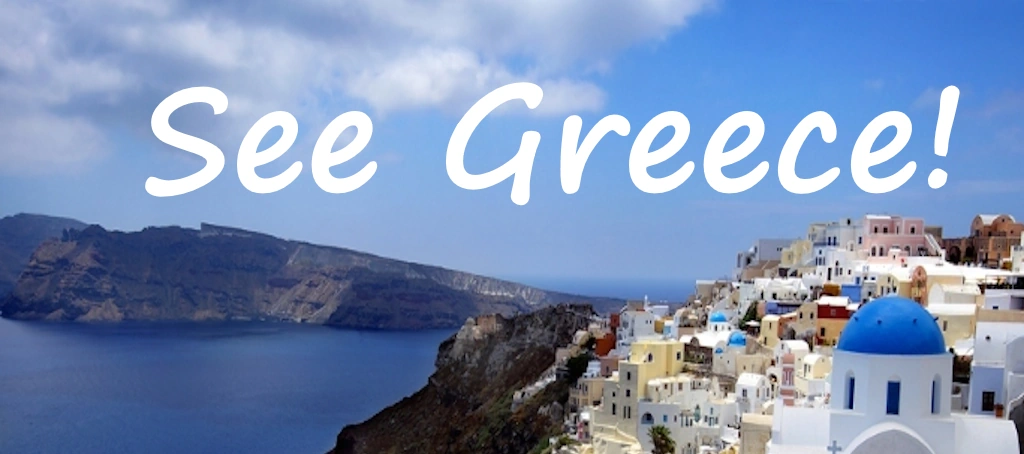

 There are two sides to every Greek island: the tourist and the traditional. Many visitors never stray further than the beaches and the bars, so have no idea what life is like for the average Greek person. To drive through northern Corfu is to see both sides of the picture, from busy resorts to quiet mountain villages, and to take in some of the most breathtaking scenery on the island.