Corfu’s special cuisine includes dishes like sofrito and pastitsada and the chance to try ginger beer and kumquats.
Kumquats on trees in Corfu
Some dishes you can find all over Greece, like moussaka, but there are a few dishes (and drinks) you’ll only find on Corfu. So, of you’re visiting the island and you get chance to sample kumquat liqueur, sofrito, pastitsada or bourdeto, then take it. You won’t be disappointed!
Ginger Beer and Kumquats
One was introduced by the British, the other came from Asia, and the two together show how different Corfu cuisine is from the typical Greek menu.
The kumquat plant only came to Corfu as recently as 1846, imported from Asia, and the only two places in the Mediterranean where it still flourishes are here and on Sicily. You might see it growing almost anywhere on Corfu, and it looks like a small orange tree, or a big bush.
It is hard to distinguish except when it is fruiting and the small orange fruit appear, though the productive period is quite long and you might see fruit at any time during the first four or five months of the year.
Corfu’s Kumquat Trees
Kumquat Trees Growing on Corfu
There are about 6,000 cultivated kumquat trees on Corfu, almost all of them around the area of Nýmfes, south of Róda, which has proved to have the ideal conditions for their growth. You know they grow well from the sheer volume of kumquat liqueur that is produced each year and on sale in the shops.
Kumquat Liqueur
Bottles of Kumquat Liqueur
The liqueur comes in various strengths and tastes, ranging from a low-alcohol, watery, sweet liqueur to a more robust drink that is more like Grand Marnier. Don’t be put off if you try it once and don’t like it. Try a range of them, perhaps at a tasting at the Vassilakis Distillery or their shop outside the Achilleion Palace, or at the Agricultural Cooperative in Nýmfes. And if you still don’t like the liqueur, settle for a jar of jam or marmalade.
Ginger Beer
The other drink that is unusual and associated with Corfu is ginger beer, or Tsitsibíra, to give it its Corfiot name. This is seen less and less on island menus, though, and it seems that the taste for it is not as strong as for kumquat liqueur. Only one factory, near Kelafatiónes, still makes the drink to the traditional recipe with lemon juice, natural lemon oil, grated ginger, water and sugar. It’s a drink which was introduced by the British, the ideal cooling drink to enjoy while watching a game of cricket.
Corfu’s Special Dishes
Sofrito
Sofrito
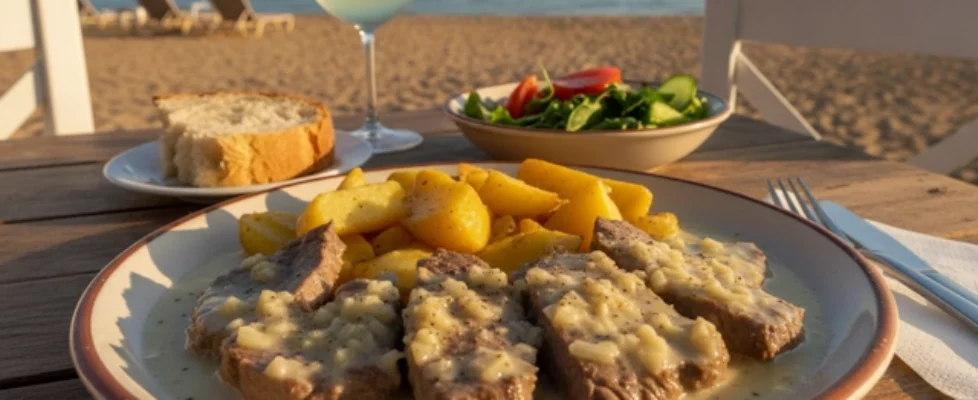
There are several food dishes that are also distinctive to Corfu, and which you will see on a lot of restaurant menus. One is sofrito, a casserole made of veal and served with a white sauce produced from wine, garlic, onion and pepper. Every chef has his own version, though, and you will also find beef sofrito, served with a red sauce, and other variations too. As with the kumquat liqueur, you need to try it more than once to taste the different variations.
Pastitsada
Pastitsada
Pastitsada is the other great Corfu meat dish. It is basically meat of some kind served in a tomato sauce over pasta, but the true version will use cockerel meat, which has a more gamey taste to it than chicken. It isn’t always available, and the more common version uses veal.
Bourdeto
Bourdeto
For those who prefer fish and seafood to meat, you will also find lobster pastitsada on many menus, though not served in the average Corfu household. Another popular fish dish that is very traditional on Corfu is bourdeto, and this is a casserole using white fish, onions, olive oil, and spicy red peppers, which give the dish quite a bite.
If you see any of these dishes on a menu you ought to give them a try, as these are true island dishes. You can try asking for the recipe if you like, but they are all different. The only thing they have in common is that they’re all sure to contain the chef’s own secret ingredient!
This Lawrence Durrell walk takes you from Kaminaki Beach in northern Corfu to the White House in Kalami where the writer Lawrence Durrell lived for four year.
Kalami
One of the most famous spots on Corfu is the White House in Kalámi where the writer Lawrence Durrell once lived. This walk approaches it along a coastal path above a handful of idyllic coves: good in springtime for the wildflowers and in summer because there’s plenty of shade.
Start of the Lawrence Durrell Walk
Begin at Kamináki Beach, north of Nissáki: look for the Shell station and a few hundred metres beyond is the small turning on the right to Kamináki. Parking there is so you may want to park on the roadside and walk down.
At Kamináki, turn left along the beach and at the far end take the cement track leading up from the Boat House between sage and prickly pear plants. Soon the cement becomes a dirt path which follows along above the shore. In a few minutes you reach Nissáki Beach.
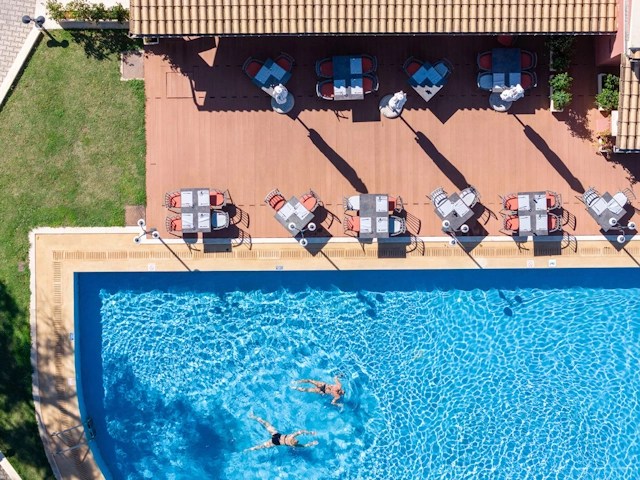
Atlantica Nissaki Beach Hotel
Atlantica Nissaki Beach Hotel
Head along the beach to the Atlantica Nissáki Beach Hotel. Walk through the grounds with the swimming pool on your right. Pass the rear entrance to the hotel and at the end of the buildings the dirt track continues. The music of the hotel bar gives way to the peace of an olive grove and the lapping waves.
If you like the look of the hotel, check their room rates here.
Prospero’s Cell
As you approach the next cove, look for the little chapel of Ágios Arséniou set into the rocks beside the sea. Durrell loved to bathe here. In Prospero’s Cell, he describes his wife diving down to retrieve cherries he had thrown into the clear waters of the cove.
A couple of minutes beyond, the path forks. Take the wider path up to the left and up the stone steps. At the top of the steps, veer left up to a wider track. Turn right and go up with a wall on your left. You are now looking down over the tops of the cypress trees.
A little further on is a crossroads. The path back and to the left returns to the main road, while to the right it leads down to some new villas being built. Take the path straight on and up the steps. Keep on this narrow path, which takes you round the villas, but note that with construction work the path may be moved slightly.
Nikolas Beach Taverna
Nikolas Beach Taverna
The steps lead back down to a concrete path that goes to the left, rejoining the old path towards Agni. Soon you see a sign for the Nikolas Beach Taverna. The path takes you across their dining area and almost into their kitchen! (The owners also have accommodation in both Kalami and Agni – check their website.)
Nikolas Beach Taverna
At the end of Agni beach the path continues uphill. After a few hundred metres a small track down to the right brings you to an undeveloped cove with large flat rocks for sunbathing at one end. The main path reaches a T-junction: turn right to the beach. Turn left on the beach and immediately left with a stone wall on your left. Then the path turns right between some fenced gardens.
Kalami
Kalami
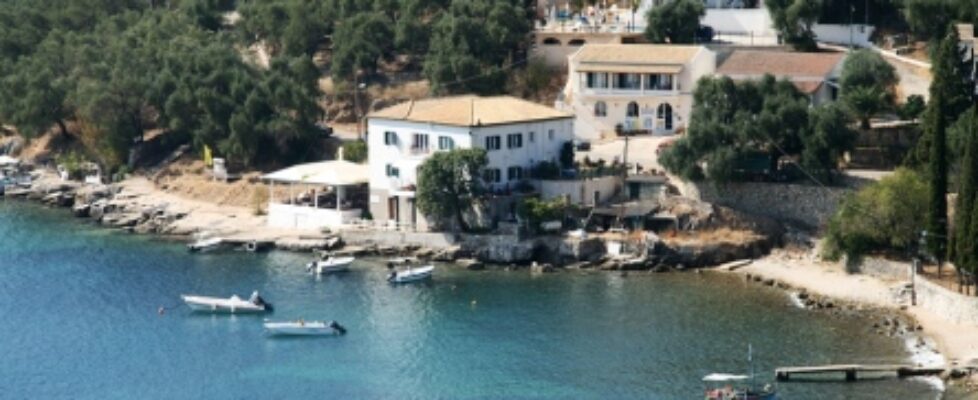
Beyond the gardens turn left and walk uphill to reach a cement road which zig-zags up and over the headland and down towards Kalámi. Ahead you see the famous White House, where Lawrence Durrell lived from 1935 to 1939.
Where to Stay in Kalami
Lawrence Durrell and the White House
Lawrence Durrell’s connection with the White House at Kalami is one of the most enduring literary associations on the Greek island of Corfu. In 1935, the young writer moved to the island with his family, seeking a warmer climate and a simpler way of life. He rented the White House, a striking Venetian-era building overlooking the turquoise waters of Kalami Bay on Corfu’s northeast coast.
Durrell lived in the house from 1935 until 1940, a period he later described with great affection in his celebrated memoir Prospero’s Cell. During these years, the White House became a gathering place for artists, writers and visitors drawn to the beauty and tranquillity of the island. Durrell wrote extensively while living there, finding inspiration in the surrounding olive groves, fishing boats and dramatic coastal scenery.
The idyllic lifestyle came to an abrupt end with the outbreak of the Second World War, forcing Durrell and his family to leave Corfu. Nevertheless, his writings immortalised both Kalami and the White House, introducing generations of readers to the island’s unique charm.
Today, the White House remains one of Corfu’s most famous literary landmarks. Restored and operating as a restaurant, it attracts visitors from around the world who come to experience the setting that inspired some of Durrell’s finest work and helped establish Corfu’s reputation as a destination of literary pilgrimage.
See Greece recommends where to stay in north-west and central Corfu including luxury mansions, inexpensive rooms, and resort hotels.
This is our personal choice of where to stay in north-west and central Corfu, based on the hotels we’ve visited over the years and trying to give a good spread both geographically and pricewise.
In a wonderful setting on wooded slopes looking out over one of Paleokastrítsa’s beautiful bays (with a path leading down to the pebbled beach and watersports), the Akrotiri Beach makes a great base for a stay here. It’s only a short walk to the centre, but everything is on site for those lazy days: pools, restaurant, bar, tennis courts, shops.
A lovely setting in the little bay at Liapádes for this inexpensive and charming hotel, whose buildings are terraced into the hillside behind the beach. The Blue Princess Beach Resort has a very friendly feel, and as well as being right on the beach, it has both a seawater and a freshwater pool, two restaurants and indoors and outdoors bars. The 140 rooms are spread out among fairly low-rise bungalow buildings spread around the palm-filled grounds.
Select set of villas in a fabulous location about 4 km (2.5 miles) from Paleokastritsa and overlooking the Ropa Valley. Fundana Villas is a 17th-century Venetian mansion, once the home of an artist, has been tastefully converted into a mix of apartments, studios, bungalows, and suites. There’s also a small olive press museum incorporated into the villas, which offer guests a bar and a library too. The main strawberry-pink villa was used for filming the BBC TV series of Gerald Durrell’s My Family and Other Animals. A truly delightful place.
Easily one of the best located hotels on Corfu by a long way, the Golden Fox is built on a headland north of Paleokastritsa and provides breathtaking views. Family-owned, the place is a haven with studios and suites, most with the same stunning views (some have side views of the sea) plus fridge, TV and phone. There is also an excellent restaurant, with shops next door in the traditional village of Lakones.
Right by the viewpoint known as the Kaiser’s Throne in Pelekas, and sharing its magnificent views, the Levant Hotel is a romantic hideaway in a very peaceful location. The décor is old-fashioned and romantic too, but the facilities are fully modern – swimming pool, TV, direct-dial phones, the Sunset Restaurant, and a terrace making the most of those views.
Domes of Corfu is a magnificent classic-style luxury hotel, whose rooms also have the classical look and furniture. There are both suites and regular rooms, although even the regular rooms here are twice the size of most hotel rooms. The gardens are lovely, lush and colourful, leading down to the beach, and there are sports and watersports facilities too, and a choice of restaurants and bars.
Opened in 1980 in Liapades, this lovely block of rooms is well looked-after by its very friendly owners and staff. The Villa Papoulas has a decent-sized swimming pool with a large shaded snack-bar terrace, with palm trees and bright red geraniums adding to the cheery look. The rooms are a little small but all have wide balconies, and the price is remarkably cheap for the quality provided.
The ultimate in upmarket rural comfort, the Pelecas Country Club has its own heliport and stables for guests bringing their own horses. There are only a handful of rooms and suites, including a Presidential Suite, in 25 hectares (62 acres) of grounds filled with ancient olive trees. In fact some of the rooms in this 18th-century mansion are in the renovated olive press and other farm buildings. All are filled with antique furniture and have a private courtyard. Superb.
One of the most truly sumptuous rural properties on Corfu, the Villa de Loulia building dates from 1803. The rooms have been decorated to reflect the island’s grand historic elegance, and with only nine rooms and suites the hosts can offer little luxuries such as breakfast at any time, in the separate modern building where you will also find a bar and a lounge. There’s a pool too, surrounded by idyllic countryside. It’s located in Peroulades.
Sidari is a popular holiday resort on the north coast of Corfu with beaches and unusual rock formations as well as plenty of places to eat and to stay.
Sidari Beach
Located on the north coast of Corfu, Sidari is one of the island’s most famous holiday destinations. Known for its dramatic sandstone cliffs, long sandy beaches, lively atmosphere, and excellent range of accommodation, restaurants, and bars, Sidari attracts visitors from across Europe who are looking for a combination of sunshine, scenery, and entertainment.
While it is often associated with package holidays and nightlife, Sidari also offers beautiful coastal landscapes, traditional villages nearby, and easy access to some of northern Corfu’s most attractive attractions.
Where is Sidari?
Corfu Town to Sidari Map
Sidari is about an hour’s drive from both Corfu Town and from Corfu International Airport, passing through olive groves, small villages, and some of the island’s most picturesque countryside.
The town occupies a broad bay on the Ionian Sea, with a coastline characterised by unusual sandstone formations that have been shaped by wind and waves over thousands of years. These distinctive cliffs are among the most photographed natural landmarks on Corfu.
The Beaches of Sidari
One of the Best Beaches on Corfu: Sidari
Sidari’s main beach stretches along the centre of the resort and is one of the largest sandy beaches on Corfu. The shallow waters make it particularly popular with families travelling with young children. Sunbeds, umbrellas, watersports facilities, and beach bars are readily available during the summer season.
Unlike many Corfu beaches that consist of pebbles or coarse sand, Sidari offers soft golden sand and a gently shelving seabed. The calm conditions found during much of the summer make swimming pleasant and safe.
Beyond the main beach, visitors will discover several smaller coves and inlets hidden among the sandstone cliffs. These quieter areas provide a more secluded atmosphere while still being within walking distance of the town centre.
Canal d’Amour
Rocks and shadows in Sidari on Corfu
Sidari’s most famous attraction is the Canal d’Amour, or Channel of Love. This remarkable natural formation consists of narrow channels carved through soft sandstone rock by centuries of erosion. The result is a landscape that looks almost otherworldly, with golden cliffs, small caves, and turquoise pools.
According to local legend, couples who swim through the canal together will remain in love forever, while single visitors who swim its length are destined to meet their soulmate. Whether or not visitors believe the folklore, the Canal d’Amour remains one of the most beautiful and distinctive coastal locations in Greece.
The area is particularly spectacular at sunset, when the sandstone cliffs glow in shades of gold, orange, and pink. Photographers often gather here during the evening to capture the changing colours.
Things to Do in Sidari
Explore the Coastline
One of the best ways to appreciate Sidari’s scenery is simply to walk along the coastal paths that connect the beaches and sandstone formations. Numerous viewpoints offer panoramic views across the sea towards the Albanian coastline.
Boat Trips
Several operators offer boat excursions from Sidari harbour. Popular trips include cruises along the dramatic north coast, visits to hidden caves, and journeys to the nearby Diapontia Islands of Erikoussa, Othoni, and Mathraki. These small islands provide a glimpse of a quieter and more traditional side of Greek island life.
Glass-bottom boat tours are also available and are especially popular with families.
Watersports
The main beach offers a wide range of watersports including jet skiing, parasailing, paddleboarding, kayaking, and inflatable rides. The relatively calm waters of the bay make these activities accessible even for beginners.
Visit Cape Drastis
A short drive west of Sidari brings visitors to Cape Drastis, one of Corfu’s most dramatic viewpoints. Here, white cliffs plunge into crystal-clear waters, creating a landscape that is often compared to the famous coastlines of the Mediterranean’s most celebrated destinations.
Boat excursions frequently combine visits to both Cape Drastis and the Canal d’Amour.
Nearby Villages
Although Sidari itself is a modern tourist resort, several traditional villages lie nearby and offer a different perspective on Corfu.
Peroulades
Just a few kilometres from Sidari, Peroulades is a charming village known for its traditional architecture and relaxed atmosphere. It is also home to Loggas Beach, often regarded as one of the best sunset locations on the island.
Karousades
This traditional inland village provides an opportunity to experience everyday Corfiot life away from the tourist centres. Narrow streets, local cafés, and historic churches create an authentic traditional atmosphere.
Avliotes
One of the oldest villages in northern Corfu, Avliotes features attractive stone houses and a peaceful village square. It is an excellent destination for visitors seeking a more traditional Greek experience.
Dining in Sidari
Sidari offers a surprisingly diverse dining scene. Traditional tavernas serve classic Corfiot dishes alongside international restaurants catering to the resort’s international clientele.
Local specialities worth trying include sofrito, a Corfiot dish of beef cooked in white wine and garlic, pastitsada, a rich pasta dish traditionally made with slow-cooked meat, and bourdeto, a spicy fish stew unique to the island.
Fresh seafood is widely available, with many restaurants serving fish caught locally in the surrounding waters. Grilled octopus, calamari, sea bream, and red mullet are frequently featured on menus.
For those seeking familiar favourites, numerous establishments offer British, Italian, and international cuisine.
Nightlife
Sidari has long been known as one of Corfu’s liveliest resorts. The main strip contains a wide selection of bars, pubs, and entertainment venues that remain busy throughout the summer season.
Visitors can choose from relaxed cocktail bars overlooking the sea, sports bars showing major sporting events, live music venues, and late-night clubs. Despite its reputation for nightlife, Sidari also caters well to families, with many areas remaining relatively peaceful during the evening.
Couples looking for a quieter atmosphere often prefer the restaurants and waterfront bars around the Canal d’Amour area.
Family-Friendly Activities
Sidari is particularly popular with families thanks to its sandy beaches and shallow waters. Beyond the beach itself, families can enjoy mini-golf, boat trips, watersports, and excursions to nearby attractions.
The resort’s relatively flat layout makes it easy to navigate with children in pushchairs, and many hotels provide family-oriented facilities such as swimming pools and entertainment programmes.
When to Visit
The main tourist season runs from May through October. July and August bring the warmest weather, with temperatures frequently exceeding 30°C and very little rainfall.
June and September are often considered the ideal months to visit. The weather remains warm and sunny, the sea is pleasant for swimming, and the resort is generally less crowded than during the peak summer period.
May and October can also be attractive options for travellers who prefer quieter conditions while still enjoying comfortable temperatures.
Getting Around
Many visitors find that Sidari itself is easily explored on foot. The beaches, restaurants, shops, and attractions are generally within walking distance of one another.
For those wishing to explore the wider island, car rental is highly recommended. Northern Corfu contains numerous scenic villages, hidden beaches, and viewpoints that are difficult to reach by public transport alone.
Regular bus services connect Sidari with Corfu Town and several neighbouring resorts, providing a convenient alternative for travellers who do not wish to drive.
There are three islands off the northwest coast of Corfu, Erikouusa, Othoni and Mathraki, popular with day-trippers from resorts like Sidari.
Corfu’s offshore island of Erikoussa
From many points along the northwest coast you can see three small islands, all of which can be visited from Sidari or on the ferry from Corfu Town. Day-trips are also possible in high season from other resorts including Kassiopi and Agios Stefanos.
The day-trippers seldom venture further than the nearest beach, so even in high season islands are probably the best chance you have in Corfu of getting away from it all. Facilities are limited, so if you plan to stay you need to make sure accommodation is available before you go – and consider your food supplies too.
Corfu Offshore Islands Map
Erikoussa
Erikoussa is the northernmost of these three Diapontia Islands. Covering just a few square kilometres and home to a tiny permanent population, Erikoussa offers a glimpse of traditional island life far removed from the crowds that flock to Corfu’s more famous resorts.
The island is best known for its tranquil atmosphere, lush green landscapes and beautiful sandy beaches. Porto Beach, located beside the main harbour settlement, is a long stretch of golden sand with crystal-clear waters that are ideal for swimming and relaxation. Unlike many Greek islands that become crowded during the summer months, Erikoussa retains a peaceful, unspoilt character.
Walking is one of the best ways to explore the island. A network of paths leads through olive groves, cypress trees and fragrant Mediterranean vegetation to hidden coves and scenic viewpoints. The island’s highest point, Merovigli, offers spectacular views across the Ionian Sea and towards Corfu and Albania on clear days.
Accommodation is limited to a handful of family-run hotels, apartments and guesthouses, adding to the island’s intimate charm. Traditional tavernas serve fresh seafood and classic Greek dishes, often accompanied by locally produced olive oil and wine.
Accessible by ferry from Corfu, Erikoussa is an ideal destination for travellers seeking authenticity, natural beauty and a slower pace of life. For visitors looking to escape modern distractions and experience a quieter side of Greece, Erikoussa remains one of the Ionian Islands’ best-kept secrets.
Where to Stay on Erikoussa
Othoni
Othoni is the largest and westernmost of the Diapontia Islands – in fact it’s the most westerly island in Greece. Remote, rugged and wonderfully unspoilt, the island offers visitors an authentic Greek island experience far removed from the life on Corfu.
Covering approximately 10 square kilometres, Othoni is characterised by rolling green hills, olive groves, dramatic cliffs and crystal-clear waters. The island is dotted with small hamlets rather than a single main town, giving it a peaceful, rural atmosphere that has changed little over the decades.
One of Othoni’s most famous attractions is Aspri Ammos Beach, a stunning stretch of white pebbles and turquoise water accessible by boat or a scenic hiking trail. The island’s coastline is filled with hidden coves, sea caves and secluded beaches, making it a favourite destination for walkers, nature lovers and sailors exploring the Ionian Islands.
According to local legend, Othoni is linked to Homer’s Odyssey and is sometimes identified as the mythical island of Ogygia, where the nymph Calypso held Odysseus captive for seven years. Visitors can explore the Cave of Calypso, one of the island’s most intriguing natural landmarks.
The small harbour settlement of Ammos serves as the island’s main gateway, with a handful of tavernas, cafés and family-run accommodation overlooking the sea. Ferries connect Othoni with Corfu, making it an excellent destination for a day trip or a longer stay.
Where to Stay on Othoni
Mathraki
Mathraki is the smallest and most secluded of Corfu’s offshore islands. With a permanent population numbering only a few dozen residents, Mathraki offers a rare opportunity to experience an island that remains largely untouched by mass tourism.
Measuring just a few kilometres in length, the island is characterised by gentle hills, olive groves, wildflowers and a rugged coastline fringed by clear blue waters. Life here moves at a leisurely pace, making Mathraki an ideal destination for travellers seeking peace, simplicity and an authentic taste of traditional Greek island life.
The island’s beaches are among its greatest attractions. Long stretches of sand and shingle, combined with exceptionally clear water, provide excellent opportunities for swimming and relaxation. Many beaches remain uncrowded even during the height of summer, allowing visitors to enjoy a sense of solitude that is increasingly rare in the Mediterranean.
Mathraki’s small villages are connected by quiet roads and walking paths that pass through unspoilt countryside. Hiking is one of the best ways to explore the island, with scenic routes offering beautiful views across the Ionian Sea towards Corfu, Othoni and Erikoussa.
Accommodation is limited to a handful of family-run guesthouses and apartments, while traditional tavernas serve fresh seafood and local Greek specialities. Ferries connect the island with Corfu and its neighbouring Diapontia Islands.
Discover the 10 best beaches on Corfu, from Paleokastritsa coves and Canal d’Amour to Glyfada, Issos and wild Halikounas—your ultimate Corfu beach guide.
One of the Best Beaches on Corfu: Sidari
Corfu, or Kerkyra, is often called the “Emerald Isle” of Greece, and for good reason. Between the rolling groves of silver-green olives and the dramatic cypress trees, the coastline unfolds into some of the most spectacular beaches in the Ionian Sea. Whether you are looking for a cosmopolitan beach club vibe, a family-friendly shallow bay, or a rugged, hidden cove accessible only by a goat path, Corfu has a stretch of sand (or pebble) for you.
To help you plan your Mediterranean getaway, we’ve rounded up ten of the absolute best beaches on the island. Pack your sunscreen, grab your snorkel, and let’s dive in!
1. Paleokastritsa
Paleokastritsa on Corfu
Location: Northwest Coast, approx. 25km from Corfu Town.
Paleokastritsa is arguably the most famous spot on the island. It isn’t just one beach, but a series of six beautiful coves surrounded by olive groves and limestone cliffs. The main beach, Agios Spyridon, is the busiest, known for its cold, crystal-clear turquoise waters.
Facilities: This is a fully organized resort. You’ll find plenty of sunbeds and umbrellas for hire, a large parking area, and numerous boat taxi operators.
Cafes & Sports: The village is packed with tavernas and cafes overlooking the water. Watersports are abundant, including pedalos, motorboat rentals, and several scuba diving centers exploring the nearby sea caves.
2. Canal d’Amour (Sidari)
Sidari Beach
Location: North Coast, near the town of Sidari.
Famous for its unique sandstone rock formations, the “Channel of Love” is a geological wonder. Legend has it that couples who swim through the channel together will stay in love forever. The water has carved narrow inlets and caves into the soft yellow rock, creating a stunning backdrop for photos.
Facilities: Sunbeds are perched on the flat rock plateaus and the small sandy beach. It is very close to the center of Sidari, so access is easy.
Cafes & Sports: Sidari is a major tourist hub, meaning you are steps away from countless bars, restaurants, and shops. While the canal itself is better for swimming and jumping off rocks, the main Sidari beach nearby offers paragliding and banana boat rides.
3. Porto Timoni
Location: Northwest Coast, near the village of Afionas.
Porto Timoni is a “double beach”—two narrow strips of land separated by a lush green peninsula, each facing a different bay. It is one of the most photographed spots on the island because of its “hourglass” shape when viewed from the hiking trail above.
Facilities: This is a wild, unorganized beach. There are no sunbeds, no toilets, and no shops. You must bring your own water and food.
Access: Reachable only by a 20-30 minute rocky hike down from Afionas or by taking a water taxi from nearby Agios Georgios Pagon.
4. Glyfada
Glyfada Beach on Corfu
Location: West Coast, below the village of Pelekas.
If you love wide, golden sandy beaches, Glyfada is your paradise. It is widely considered the best sandy beach on the island, framed by steep cliffs covered in pines. It has a youthful, cosmopolitan energy.
Facilities: Highly organized with premium sunbeds, showers, and changing cabins. There is also a beach volleyball court.
Cafes & Sports: Famous for its beach bars (like Pazuzu) that play music throughout the afternoon. You can find a full range of watersports here, from jet skis to inflatable sofa rides.
5. Issos Beach
Location: Southwest Coast, next to Lake Korission.
Issos is unique because of its vast sand dunes that look almost Saharan. It is part of a NATURA protected area, sitting right next to the Korission Lagoon, a haven for birdwatchers. The water is shallow and stays warm, making it perfect for families.
Facilities: There are organized sections with umbrellas near the main entry points, but because the beach is so long, you can easily find a private spot in the dunes.
Cafes & Sports: A few beach bars serve snacks and drinks. Due to the reliable cross-shore winds, this is the premier spot on Corfu for kitesurfing and windsurfing.
6.
Myrtiotissa Beach
Location: West Coast, between Glyfada and Ermones.
Once described by Lawrence Durrell as “the loveliest beach in the world,” Myrtiotissa is a small, pristine cove tucked beneath towering cliffs. It has a bohemian feel and has historically been the island’s most famous unofficial nudist beach (though the central part is used by everyone).
Facilities: Very limited. There is a small kiosk at the bottom of the steep access road selling drinks and snacks. A few sunbeds may be available in the peak of summer.
Cafes & Sports: No watersports here—the focus is entirely on the natural beauty and snorkeling around the rocks.
7. Agios Gordios
Location: Central West Coast.
Agios Gordios is famous for the “Ortholithi”—a massive, pointed rock rising straight out of the sea at the southern end of the bay. The beach is a long stretch of sand and shingle that caters to everyone from solo hikers to families.
Facilities: Well-organized with plenty of sunbeds. The village comes right down to the sand, making it very convenient.
Cafes & Sports: The beachfront is lined with excellent tavernas and bars. You can rent kayaks and pedalos to explore the coastline and get a closer look at the Ortholithi rock.
8. Bataria Beach (Kassiopi)
Location: Northeast Coast, in the village of Kassiopi.
Located on the “upmarket” northeast coast, Bataria is a small but breathtaking pebble beach. The water here is a vivid, translucent emerald color that looks almost like a swimming pool against the white pebbles.
Facilities: Small and cozy with sunbeds available. It is within walking distance of the charming Kassiopi harbor.
Cafes & Sports: While the beach is quiet, the harbor of Kassiopi is just five minutes away, offering high-quality seafood restaurants and chic cafes. Snorkeling is the main “sport” here due to the rocky seabed.
9. Marathias (Malta Beach)
Location: Southwest Coast.
Marathias (sometimes called Santa Barbara or Malta Beach) is a massive stretch of golden sand that seems to go on forever. It’s known for having some of the cleanest, clearest water on the island and a very relaxed, spacious atmosphere.
Facilities: Fully organized with several clusters of umbrellas and sunbeds. There are showers and ample parking.
Cafes & Sports: There are several high-quality beach bars and restaurants (like Wave and Karma) that serve everything from iced coffee to full Greek meals. Basic watersports and beach volleyball are often available.
10. Halikounas
Location: Southwest Coast.
Separating the Ionian Sea from Lake Korission, Halikounas is a 3km long “wild” beach. It is a narrow strip of golden sand with the sea on one side and the calm lagoon on the other. It feels rugged, windy, and wonderfully empty compared to the resort beaches.
Facilities: Mostly unorganized, though there is one famous beach bar (Taygeto) that provides a bit of life and music.
Cafes & Sports: This is the ultimate destination for windsurfers and kitesurfers. The local schools here take advantage of the steady thermal winds. Aside from the kitesurfing hub, there are no other facilities—just pure, raw nature.
Conclusion
Whether you want to dance at a beach club in Glyfada or find total solitude in the dunes of Halikounas, Corfu’s coastline is a gift that keeps on giving. The best way to see them all? Rent a car or a scooter and spend a week hopping from the rugged west to the calm, crystalline northeast. Happy swimming!
This day’s drive from Irakleio takes in highlights including the traditional village of Arolithos, a mountain village, and Minoan remains at Tilisos.
Arolithos Traditional Village on Crete
This day’s drive from Irakleio lets you take in some of the highlights to the west of the city, from Minoan remains to mountain villages. Although the total driving time is less than three hours, the drive will take all day, allowing for stops and a lunch break. The roads are mostly hood, with one or two steep curving sections – nothing to be worried about, though!
Fodele
This pleasant village is a 30-minute drive west from Irakleio along the coast. It’s surrounded by orange groves and claims to be the birthplace of the artist El Greco. It’s a peaceful place with a shady town square, where a memorial plaque to the painter is on display. Across a small bridge spanning the river is the church, which has many copies of El Greco’s works.
To see his birthplace, walk along the path (signposted) out of town beside the orchards for about 15 minutes. The house is greatly restored and contains a few displays on the painter’s life.
El Greco’s Last Supper
Opposite the house is the delightful church of the Panayía. Built in the early 14th century, it incorporates the nave of an earlier 8th-century basilica. The baptismal font beside the church (set in the floor for total immersion) also dates from this period. The partially restored frescoes depict angels, saints and scenes from Christ’s life.
Anoyia
The mountain village of Anoyia is almost an hour’s drive south from Fodele. It has suffered greatly at the hands of foreign invaders. It was twice destroyed by the Turks after rebellions in 1821 and 1866. Then, in 1944, German troops shot every male in the village and burnt the houses to the ground in retaliation for the abduction of the German General Kreipe. A statue commemorating the freedom fighters stands in the square in the upper part of town.
Anoyia is known for its woven goods and embroidery. The streets of the lower town are draped with brightly coloured textiles, and you can often watch the local women at work inside their shops.
Behind the café tables in Platía Livádhi, notice the odd wooden sculpture of Elefthérios Venizélos (1864-1936 and eight times the Prime Minister of Greece) with his arm in a sling. It is the work of the late local artist Alkibíades Skoúlas, whose son has opened a museum to display his father’s works. Anoyia is also renowned as a centre of lyra music, and many top musicians have come from here.
Tílisos
Tylissos Minoan Site on Crete
The remains of this ancient Minoan town sit right within the village of the same name, a delightful example of the continuity of life through the ages. It’s about a 30-minute drive, heading back towards Irakleio. This small peaceful spot beneath shady pines is little visited and makes a refreshing change from Crete’s larger archaeological sites, like Knossos and Phaistos. It centres on three Minoan villas, which are thought to have been part of a larger community.
Tílisos (or Tylissos) was one of the first Minoan sites on the island to be excavated, prompted by the discovery of three giant bronze cauldrons; these and other finds are now in the Irákleio Archaeological Museum. The ruins are well preserved, and you can wander among the stone walls and through doorways into small rooms and courtyards. Tílisos is surrounded by olive groves and vineyards, where sweet, dark Malmsey wine has been produced since Venetian times.
Arolíthos
Ten minutes beyond Tilisos is the ‘traditional village’ of Arolithos. This was actually purpose-built for tourists and centered on a hotel, but it’s charming all the same. Its name means ‘a natural hole in a rock which collects rainwater’, and so too does this village aim to gather up the folkloric traditions of Crete.
You can watch weavers, potters, icon painters and other artisans producing traditional crafts, enjoy Cretan food and music, or learn how raki is made in the agricultural history museum. There are several places to eat too, from a coffee shop to a proper restaurant.
Arolithos Village Accommodation
The hotel has several rooms decorated in traditional Cretan style, if you don’t want to head back to Irakleio, although if you do return it’s just a 20-minute drive. To check room prices click here.
See Greece chooses ten of the best beaches on Crete including the beautiful beaches at Vai and Elafonisi.
Plakias, one of the best beaches on Crete
Choosing the best beaches on Crete is an impossible job, as Greece’s largest island has hundreds of them. Some are always incredibly busy, and you can’t blame people for flocking to the beautiful settings of beaches like Vai and Elafonisi, on opposite corners of the island.
You can also find quiet coves and little beaches down tracks, which you can enjoy in solitude. You’ll have to find those for yourself, though. Here we’ve listed our top ten personal favourite beaches, that are either extremely scenic or have some unusual feature about them. We list our top ten Crete beaches in strictly alphabetical order.
Ayia Galini
The long strip of beach has more rocks than sand, but is pleasantly lined with tavernas. Although the town can get busy it is a real delight off-season.
Balos Beach
Balos Beach on Crete
This beach by Balos Lagoon is one of the most photographed on the island. It’s about 56 kms (35 miles) northwest of Chania and has soft white sand and a Caribbean feel to it.
Elafonísi
Elafonisi Beach
The vast beach here has even been called the best beach in Greece. It’s usually busy but there’s acres of space on its mix of pink and white sand. Lots of shallow waters too. It’s in the southwest of the island, just over an hour’s drive west of Palaiochora.
Falassarna
In the northwest corner of Crete, this soft sand beach has plenty of facilities including windsurfing in summer. It’s actually made up of five different beaches, and has been voted the best beach on Crete and even one of the best in Europe.
Istro Beach
This long sandy beach is one of the best beaches close to the town of Agios Nikolaos. It’s usually busy but it’s also big and has beautifully clear water. There are several other beaches nearby, both sand and pebble, so you can choose between them.
Matala
Matala Beach
Matala Beach, on the southern coast of Crete, is famous for its striking sandstone cliffs carved with ancient caves. Once a haven for hippies in the 1960s, it blends history with a relaxed seaside vibe. The sandy beach and clear waters attract swimmers, while tavernas and sunsets add to its distinctive charm.
Plakiás
Plakias Beach on Crete
Plakias Beach, on the south coast of Crete, is a long, sweeping stretch of sand and pebbles facing the Libyan Sea. Known for its clear, deep waters and steady breezes, it’s popular for swimming and windsurfing. Backed by mountains and a relaxed village, it offers a quieter, more laid-back atmosphere than northern resorts.
Préveli Beach
Preveli Beach
This lovely sandy beach is near the monastery of the same name, at the foot of the Kourtaliotikos Gorge. Here a river flows into the sea, and the beach is backed by palm groves, giving it a tropical feel. Don’t forget to dress respectably if you also plan to visit the monastery.
Rethymnon
Crete’s third-largest town, Rethymnon, has one of the best long beaches on the north coast, running for several miles. There are numerous other beaches within easy reach, too, both east and west of the town.
Vái Beach
Vai Beach
Vai Beach is famous for its unique natural palm forest—the largest in Europe—fringing golden sands and clear turquoise waters. Located on the east coast near Crete’s north-eastern tip, it feels almost tropical. Visitors enjoy swimming, sunbathing, and scenic views, though it can get busy during peak summer months.
Margarites is known on Crete for its pottery, with ceramics shops and workshops lining the streets of this charming small town not far from Rethymnon.
Margarites Ceramics
Where is Margarites?
Margarites is about 26 km (16 miles) east of Rethymnon, about a 35-minute drive. It’s about 7 km (4 miles) from the Dalabelos Estate, where we stayed the night before visiting Margarites. It stands about 300 meters (984 ft) above sea level.
Map (c) Google Maps
Where to Stay in Margarites
Visiting Margarites
We were encouraged to visit Margarites by Vasilis, owner of the Dalabelos Eco-Tourism Estate, where we’d spent the second night of our most recent visit to Crete. We already knew about Margarites, though, as we’d had a quick look-round on an earlier trip to Crete, when we spent six weeks there researching a guidebook. We’d definitely wanted to go back for longer.
Margarites Ceramics
Our guide Isi from GoCrete.net drove us the few minutes from Dalabelos to Margarites, parking below the village. Margarites has one narrow main street and a few back streets, and as we walked up the main street we were reminded what a colourful place Margarites is. Every few yards there’s a pottery workshop or a ceramics studio, or a souvenir shop selling ceramics, with bright and colourful displays both inside and outside.
Margarites Ceramics Souvenirs
Local Guide
The advantage of having a local guide like Isi is that he knows everyone and directed us to what he thought was the best place in town. This was the Kerameion pottery shop where Isi introduced us to owner and potter, Jorgos Dalamvelas. Jorgos was happy to show us some of his skills and we won’t need to repeat it all here as we captured most of it for our YouTube channel.
The Ceramics Capital
By going to see Jorgos first, we learned a lot about Margarites and its rich history of pottery-making, which goes back to Minoan times. Most potters use the local clay, which is perfect for ceramics, and is one reason the pottery trade developed here.
Margarites Ceramics Studio
We went to visit several other places, where potters were at work and giving demonstrations, but Jorgos remained our favourite. He was so passionate about pottery, and its role in the history of Margarites. Some shops had no potter or potter’s wheel, and it was clear they were buying in pottery, probably from China. Yes, that ‘Souvenir of Crete’ that you find may well have been imported from China! But when you can see the potter making beautiful items before your eyes, you know you’re buying the real thing and helping support the local economy.
Novelty Ceramics
Jorgos showed us some novelty pottery, including jugs that played tricks and other fun things:
One thing he showed us was a salt cellar that he made, with several holes in the bottom, though no salt came out until you shook it side to side. I still don’t know how it worked, as the salt should have simply poured through the holes, but it didn’t until you shook it.
Donna was keen to buy one but we talked about it and decided against it, as this was only the second day of what would be a three-week trip, and we didn’t want to load up with souvenirs so soon. We wandered along the street, and before we knew it Isi presented Donna with a gift. He had somehow sneaked back to the shop and bought one of the salt cellars for her. It was a typical act of Greek generosity and kindness… and we were to experience many more on our travels round Crete with Isi.
Crete Tours
Our tour with GoCrete.net was a food and drink themed tour, which we’d asked Isi to organise, and he did it superbly. But he organises tours on other themes, like history, or covering particular parts of the island, and from a few hours to as long as you like.
The Corfu Trail runs from the southernmost point of Corfu at Cape Asprokavos and winds for 220km (137 miles) to the northernmost point near Andinioti Lagoon.
The Corfu Trail
The Corfu Trail is 25 years old in April 2026. Soon after it was opened, See Greece spoke to the trail’s founder, Hilary Whitton Paipeti. Here’s what we wrote at the time, including Hilary’s top tips for hiking The Corfu Trail.
When Hilary Whitton Paipeti first came to Corfu as a holiday rep at the start of the 1980s, she had no intention of staying, but she fell in love with the island. More than that, though, she has contributed something to island life of which she can be forever proud, for Hilary is the woman who created the island’s only long-distance footpath: the Corfu Trail.
‘I worked as a rep for two years,’ she says, ‘and by then I was totally in love with Corfu. I went into journalism and publishing, and have been publishing The Corfiot Magazine for 15 years now. It’s aimed at the local community and is published monthly all year round, but in summer it does carry information on what’s going on for the benefit of the visitors. I also publish regional magazines that people will find in the different resorts around the island. More recently I’ve also been doing real estate and real estate development.’
The Corfiot Magazine
Creation of the Corfu Trail
One of the reasons behind Hilary’s venture into the property market is tied in with the Corfu Trail. Part of its original aim was to link the villages of the island, and bring some life back into those whose population was dwindling as young people moved down to the coast to work in the holiday business, or moved away to Athens and beyond.
‘Some of the villages inland were being left to disintegrate,’ Hilary says, ‘and yet they have some beautiful Venetian architecture. I wanted walkers to stop and at least have a coffee in the local kefeneon, but preferably be able to stay overnight. The problem is that in some villages there is no accommodation, so walkers have to leave the Trail for their overnight stay, and return the next morning. Now I’m actively working to encourage people to buy properties in these villages, with the express purpose of opening them as small guesthouses.’
Corfu’s Pennine Way
Hilary’s energy is beyond doubt, yet she has to credit her father with the idea for the Corfu Trail. Hilary was already leading walks on the island (another of her many different hats), and had written The Corfu Book of Walks, when her father suggested she put together a long-distance path, the Corfu equivalent of the Pennine Way.
‘It was a great idea,’ Hilary says, ‘but nothing happened for a while. Then on one of my walks I met a German guy, Fried Aumann, who said he thought he might be able to get help with EU funding, and put up the rest of the money himself, so he is the one who people must thank for bringing the Trail into existence.’
Hilary met Fried in 1999, and by May 2001 she was leading the first group of walkers to tackle the Trail. The route runs from the southernmost point of Corfu at Cape Asprokavos and winds for about 220km (137 miles) to emerge at the northernmost point near the Andinioti Lagoon.
Corfu Trail from South to North
‘I recommend doing it from south to north,’ Hilary advises, ‘for several reasons. It’s flatter in the south so that gives people time to build up a bit of stamina. Also the best scenery is in the north so it builds up to that, as well. And it also means that the sun is on your back and not in your face for most of the way. The whole trip should take about 10 days, doing 4-6 hours walking a day without pushing yourself.’
Anyone can arrange to do the trail for themselves, and Hilary has written a guide to it, but it does take some planning. Instead you can book it all through Aperghi Travel in Corfu Town, who will not only book the accommodation but arrange for your luggage to be transferred each day and give you a copy of Hilary’s book as well. And if you meet her on the trail, no doubt she would be delighted to sign it for you.
Video of the Corfu Trail
Hilary’s Corfu Trail Tips
The best times of year are May-June and September-October.
Even in August, don’t assume it will be fine weather. Corfu is very changeable. Always take wet weather gear.
You should take a sun hat with you, and lots of water.
Take a mobile phone with you, but also a number to ring. There’s no point in having a phone if you don’t know where to ring for help.
In summer you could do most of the walk in walking sandals, except for the mountainous bits at the end when you should wear good boots with ankle support.
Carry a stick, too. Be aware of snakes. They are not a major problem but they are there so check the ground in front of you if it’s overgrown and you can’t see where you’re treading.
Discover the best things to do in Piraeus and explore ancient bronze statues, neoclassical architecture, and the hidden harbors of Mikrolimano and Marina Zeas.
The Harbour at Piraeus
For many travelers, Piraeus is simply a waypoint—a chaotic stretch of asphalt and salt air where you wait for a ferry to whisk you away to Mykonos or Crete. But to treat Piraeus as a mere transit hub is to miss out on one of Greece’s most storied and vibrant cities.
Piraeus is the heart of Greek maritime identity. It is a place of grand neoclassical architecture, hidden circular harbors, and some of the finest seafood in the Mediterranean. If you have a few hours before your boat departs—or better yet, a full day to spare—here are the best things to do in Piraeus.
The Best Budget Hotels in Piraeus
The Best Things to Do in Piraeus
1. Step Back in Time at the Archaeological Museum of Piraeus
Archaeological Museum of Piraeus
While Athens has the Acropolis Museum, Piraeus boasts a collection that is equally vital for understanding the ancient world. This museum focuses on Piraeus’s history as a naval powerhouse. The absolute highlights are the “Piraeus Bronzes”—four rare, oversized bronze statues (including a stunning Apollo and two versions of Artemis) discovered by chance by workmen in 1959.
The museum is rarely as crowded as the ones in central Athens, allowing for a quiet, intimate look at the marble reliefs and ancient pottery that once decorated this bustling port city.
• Address: 31 Charilaou Trikoupi Street, Piraeus 185 36
• Phone: +30 210 452 1598
• Website: hh.gr
2. Take Center Stage at the Municipal Theatre of Piraeus
Municipal Theatre of Piraeus
Even if you aren’t catching a play, the Municipal Theatre is worth a visit just to admire its facade. Located in the center of the city, this 19th-century neoclassical masterpiece is one of the most significant architectural landmarks in Greece. Built in the 1880s, its design was inspired by the Comédie-Française in Paris. Following a massive restoration, the interior—with its plush red velvet and ornate gold leaf—is a breathtaking example of European elegance in the heart of the Levant.
• Address: 32 Iroon Polytechneiou Avenue, Piraeus 185 35
• Phone: +30 210 414 3310
• Website: dithepi.gr
3. Explore the Hellenic Maritime Museum
Hellenic Maritime Museum Piraeus
Greece’s soul is tied to the sea, and there is no better place to witness that connection than here. Located at the edge of Zea Marina, this is the largest maritime museum in the country. It houses over 2,500 items, from models of ancient triremes to relics from the Greek War of Independence. A particularly fascinating section is dedicated to the Aristotle Onassis collection, featuring items from his legendary yacht, the Christina.
• Address: Akti Themistokleous, Freattys, Piraeus 185 37
• Phone: +30 210 451 6264
• Website: hmmuseum.gr
4. Dine by the Water in Mikrolimano
If you are looking for that quintessential “Greek island” feeling without leaving the mainland, head to Mikrolimano. This small, horseshoe-shaped harbor is packed with traditional fish tavernas and high-end seafood restaurants. As the sun sets, the lights of the restaurants reflect off the water where small wooden fishing boats bob next to sleek yachts. It is the perfect spot for a long, slow lunch of grilled octopus and ouzo. See also our page on Where to Eat in Athens and Piraeus.
• Address: Mikrolimano Harbor (Akti Koumoundourou), Piraeus 185 33
• Practical Info: Easily accessible via the Faliro Metro station (Green Line), followed by a 15-minute walk or a quick taxi ride.
5. Rub Shoulders with Locals at the Piraeus Flea Market
If you happen to be in Piraeus on a Sunday morning, the Flea Market is an absolute must. Unlike the more tourist-oriented markets in Monastiraki, this is where the real deals happen. Spilling out from the streets near the Piraeus Metro station, you’ll find everything from antique gramophones and vintage Greek movie posters to stacks of copper pots and old coins. It’s loud, crowded, and wonderfully authentic.
• Location: Alipedou and Skylitsi streets (near the Piraeus Metro Station)
• Hours: Every Sunday, 7:00 AM – 2:00 PM
6. Stroll Through Marina Zeas (Pasalimani)
Once a major naval base for the triremes of ancient Athens, Zea Marina is now one of the most cosmopolitan spots in the city. It’s a favorite for locals to take their volta (evening stroll). The wide promenade is lined with cafes and bars where you can sit and watch the luxury mega-yachts. If you continue walking toward the Freattida area, you’ll find sections of the ancient Themistoclean Walls hugging the coastline.
• Address: Akti Moutsopoulou, Piraeus 185 34
• Practical Info: Located on the eastern side of the Piraeus peninsula; it is a 20-minute walk from the main ferry port.
7. Pay Your Respects at Agios Nikolaos Church
Agios Nikolaos Church in Piraeus
Dedicated to Saint Nicholas, the patron saint of sailors, this church is the spiritual guardian of Piraeus. Its blue dome and grand twin towers are a landmark for ships entering the harbor. The interior is filled with stunning hagiographies and the scent of incense, offering a peaceful sanctuary from the noise of the port. It is a reminder that for centuries, sailors have come here to pray for safe passage before hitting the open Aegean.
• Address: Agiou Nikolaou 1, Piraeus 185 37
• Phone: +30 210 451 1247
• Website: agiosnikolaospeiraios.blogspot.com
Practical Tips for Your Visit Getting There: The easiest way to reach Piraeus from central Athens is the Metro (Green Line or the newer Blue Line extension). The Blue Line is particularly convenient as it connects Piraeus directly to the Airport. The Piraeus Tower: Keep an eye out for the Piraeus Tower near the port. Recently redeveloped, it is now a hub for shops and dining with incredible 360-degree views of the Saronic Gulf. Walking vs. Taxis: Piraeus is quite hilly (especially the beautiful Kastella neighborhood). While the waterfront is walkable, don’t hesitate to use a taxi or a ride-sharing app like Uber/FreeNow to get between the main port and Mikrolimano.
Piraeus is a city with its own rhythm—salty, bustling, and deeply historic. Next time you find yourself with a ferry ticket in hand, drop your bags at a locker and take a few hours to discover why this port is so much more than just a gateway. Even better, spend a night or two and discover all of the best things to do in Piraeus.
Discover the best budget hotels in Piraeus! Read our guide to find the best affordable hotels near the port and local attractions.
Glaros Hotel Piraeus
A bustling port city, Piraeus is the gateway to the beautiful Greek islands. But beyond its function as a transport hub, Piraeus also boasts its own unique charm, with a lively waterfront, great eating, ancient sites, and a vibrant local culture. If you’re planning a trip to Greece and want to experience the authentic side of Piraeus without breaking the bank, here’s a curated list of the best budget hotels that offer comfort, convenience, and value for money.
The Best Budget Hotels in Piraeus
Piraeus Port Hotel
Piraeus Port Hotel
Located in the heart of Piraeus, the Piraeus Port Hotel is an ideal choice for travelers looking to be near the action. Just steps away from the main port, this hotel offers easy access to ferries departing to the Greek islands. The rooms are clean, comfortable, and equipped with all the essential amenities, including air conditioning, free Wi-Fi, and a flat-screen TV. The staff is friendly and helpful, always ready to assist with any requests or recommendations.
Location: 5-7 Kanari Street, Piraeus 185 37, Greece.
Phone Number: +30 210 411 1111
Website Address: piraeusporthotel.com
Olympic Hotel Piraeus
Olympic Hotel Piraeus
If you’re looking for a hotel that combines affordability with style, the Olympic Hotel Piraeus is the perfect choice. This modern and chic hotel features elegantly designed rooms with contemporary decor and all the latest amenities. Enjoy a refreshing dip in the rooftop pool while taking in breathtaking views of the city and the sea. The hotel also offers a delicious buffet breakfast and a cosy bar where you can unwind after a day of exploring.
Location: 12 Akti Moutsopoulou, Piraeus 185 34, Greece.
Phone Number: +30 210 422 2222
Website Address: olympicpiraeus.eu
Savoy Hotel Piraeus
Savoy Hotel Piraeus
The Savoy Hotel Piraeus is a hidden gem that offers excellent value for money. This boutique hotel features individually designed rooms with a unique and artistic flair. Enjoy a meal at the hotel’s restaurant, which serves both traditional Greek and international cuisine. The Savoy Hotel Piraeus is conveniently located just a short walk from the port and the main shopping areas.
Location: 93 Kolokotroni Street, Piraeus 185 35, Greece.
Phone Number: +30 210 413 3333
Website Address: savoyhotel.gr
Faros Piraeus Hotel
Faros Piraeus Hotel
For a cosy and welcoming experience, the Faros Piraeus Hotel is a great option. This family-run hotel features clean and comfortable rooms with all the basic amenities. Enjoy a warm and friendly welcome from the staff, who are always happy to help with any requests or recommendations. The Faros Piraeus Hotel is located in a quiet and residential area, perfect for a peaceful night’s sleep.
Location: 7-9 Akti Moutsopoulou, Piraeus 185 34, Greece.
Phone Number: +30 210 412 2222
Website Address: faros1piraeus.com
Argo-Anita Hotel Piraeus
Argo-Anita Hotel Piraeus
The Argo-Anita Hotel Piraeus is a great choice for travelers looking for a budget-friendly hotel with a unique character. This charming hotel features artfully decorated rooms with a touch of eccentricity. Enjoy a delicious breakfast and relax in the hotel’s inviting common areas. The Argo-Anita Hotel Piraeus is in a lively neighborhood, just a short walk from the port and the main attractions.
Location: 23-25 Notara Street, Piraeus 185 35, Greece.
Phone Number: +30 210 412 1795
Website Address: hotelargoanita.com
Glaros Hotel Piraeus
Glaros Hotel Piraeus
For a clean, comfortable, and affordable experience, the Glaros Hotel Piraeus is a fantastic option. This straightforward hotel features basic but functional rooms with all the necessary amenities. Enjoy a pleasant stay and easy access to the port and the city’s main attractions. The Glaros Hotel Piraeus is a popular choice among budget travelers looking for good value for money.
Location: 4-6 Glarou Street, Piraeus 185 38, Greece.
Phone Number: +30 210 417 7777
Website Address: glaros-hotel.gr
Lilia Hotel Piraeus
Lilia Hotel Piraeus
The Lilia Hotel Piraeus is a friendly and welcoming hotel that offers excellent value for money. This charming hotel features simple but clean rooms with all the basic amenities. Enjoy an authentic Greek experience and easy access to the port and the city’s main attractions. The Lilia Hotel Piraeus is a popular choice among budget travelers looking for a comfortable and affordable stay.
Location: 12 Lilia Street, Piraeus 185 36, Greece.
Phone Number: +30 210 413 3333
Website Address: liliahotel.gr
Phidias Piraeus Hotel
Phidias Piraeus Hotel
For a unique and memorable experience, the Phidias Piraeus Hotel is a great option. This historic hotel features classically-designed rooms with a touch of elegance. Enjoy a delicious breakfast and explore the hotel’s unique character. The Phidias Piraeus Hotel is located in a convenient location, just a short walk from the port and the city’s main attractions.
Location: 12-14 Akti Moutsopoulou, Piraeus 185 34, Greece.
Phone Number: +30 210 412 2222
Website Address: hotelphidias.gr
These are just a few of the many excellent budget hotels available in Piraeus. Whether you’re looking for a simple and functional room or a hotel with a unique character, you’re sure to find the perfect place to stay within your budget.
See Greece’s pick of where to stay in southern Corfu including hotels in Moraitika, Paramonas, Messonghi, Agios Georgios and near Benitses.
The Sentido Apollo Palace Hotel in Messonghi in Southern Corfu
Here’s our very select list of where to stay in Southern Corfu. It’s just five places but we’ve only picked ones that we can personally recommend from staying in them. They include stylish resort hotels and tucked-away hidden gems, and we’ve tried to spread it around a little geographically.
The Sentido Apollo Palace Hotel in Messonghi in Southern Corfu
The Sentido Apollo Palace is an impressive and inexpensive option for the popular resort of Messonghi, its rooms mostly being in individual units spread around the large and lush gardens, almost like living in a little Greek village. It even has its own small church, but more conventional amenities too like swimming pools, bar, and restaurant. It’s also right by the beach, which is reached by a pleasant stroll through the grounds.
The Delfinia comprises three separate buildings all more or less facing the sea across trees and green lawns, and only five minutes from the centre of Moraïtika. There are a couple of pools, tennis courts, water sports at the beach, lots of indoor and outdoor activities for children, bars, and restaurants: in fact you hardly need leave the grounds.
The Golden Sands Hotel in Agios Georgios in Southern Corfu
Right by the beach in Agios Georgios that gives the hotel its name, the Golden Sands has 83 rooms with most of them having a view of the sea. All rooms are done out in modern hotel-style, nothing fancy but clean and comfortable. They all have fridge, TV, air-conditioning and direct-dial phones, and the hotel, which is about five minutes from the centre of town, provides two pools, a children’s playground, bars, a restaurant, and Greek dancing on summer evenings.
The salad bar at the The Valmar Corfu Hotel near Benitses
The Valmar Cordu is in Agios Ioannis Melitieon, a 5-minute drive south from Benitses. It’s a 4-star all-inclusive hotel that stands above the road overlooking a beach and the sea, and with wooded hills all around. It’s got two pools, a waterpark, a tennis court, other sporting facilities, organized children’s activities, a mini-market, and many other facilities.
The Hotel Paramonas in Paramonas in Southern Corfu
In the as-yet hardly developed little bay at Paramonas, with just a few tavernas and a sprinkling of low-key accommodation for company, the lovely spacious Hotel Paramonas is separated from the sea by a hundred metres of vines, vegetables, palm trees, and colourful flowers. You walk from the car park over a bridge that crosses a stream, which at night is filled with the sound of frogs… and a few ducks from a nearby house. It’s a modern property in which there are 22 very spacious rooms, 20 with sea views and balconies, and two more suites at the back, which are even bigger and with private terraces. It also has a bar, with breakfast served inside or on the front terrace.
See Greece shares its list of favourite places where you can eat in north-west Corfu, including in Paleokastritsa, Pelekas, and Ayios Stefanos.
View from the Golden Fox Restaurant overlooking Paleokastritsa in North-West Corfu
If you’re wondering where to eat in north-west Corfu then take a look at this list of our personal favourites, from restaurants in popular resorts like Paleokastritsa to family tavernas in mountain villages.
Look for the car park sign as you drive through Doukades and walk up to the little main square where you’ll find the immensely-popular Elizabeth’s. There’s a large dining room inside, the walls lined with drink bottles, while outside there’s only room for one row of tables as there has to be space for the occasional bus or tractor to squeeze by. It’s a good reason to eat late here, Greek time, so that the traffic has eased. Occasionally Elizabeth makes the truly authentic and hard-to-find cockerel pastitsada, but everything she does, she does beautifully.
Sample Dish at the Golden Fox Restaurant near Paleokastritsa
With the most spectacular setting in Corfu, bar none, the Golden Fox looks down over Paleokastritsa Bay. It’s part of the Golden Fox Hotel but is open to non-residents and well worth the drive to get to it. The food is priced higher than average, but not overly so given the standards, the service and of course that view from the dining terrace. You can push the boat out and have lobster spaghetti, a dish they are rightly proud of, though there are plenty of less expensive options too such as sofrito and rooster with spaghetti.
Musicians at Jimmy’s Restaurant in Pelekas in North-West Corfu
For over 50 years Jimmy and his wife Georgia have run their traditional restaurant in Pelekas, and now the children help out too though Jimmy still likes to do the cooking. It’s a lovely, friendly, family place, often enlivened by walking groups who stay in the rooms above. There are traditional Corfiot favourites such as stifado and sofrito, but often cooked from old family recipes making them that bit different. Definitely worth trying.
Sample dishes at Taverna Manthos in Ayios Stephanos
Open since 1976 in Ayios Stefanos, the owner still does 75% of the cooking and uses fresh local ingredients rather than frozen imports which many places buy to keep costs down. He mixes traditional Corfu and other Greek dishes with international dishes such as salmon in the oven with garlic, peppers and mushrooms, though his signature dish is crayfish in a tomato, onion and paprika sauce with spaghetti. Blue and white tables against a periwinkle blue floor on the large patio overlooking the beach give a sense of space and summer, and steps lead down to the beach past an overturned boat.
Fresh Fish at the Sunset Restaurant in Paramonas Beach
A terrace tastefully decorated with fishing nets and ropes provides a seating area looking out over the waves and of course the sunset at Paramonas Beach. Get there early to get a front row seat and be prepared to linger over a glass of wine as the orange sun sinks down. It’s a very friendly family-run place with one house speciality being lobster pastitsada, but check the price first as it’s done by weight. You can choose your lobster from the tank on the terrace.
No need to worry about what to order at Tripas in Kinopiastes as it’s a set menu and dish after dish is brought to your table till you groan and can eat no more. There’s entertainment every night too. If that sounds like a typical ‘Greek evening’ laid on for tourists, then it is a little similar but the food here is good enough to please Corfiots all year round and a great (and late) night out is guaranteed. Booking is highly recommended.
A perfect spot for one of the most popular restaurants in Paleokastritsa. It stands both on a rock overlooking the harbour here, and under the rocks of one of the Paleokastrítsa headlands. A long narrow terrace of outdoor seating ensures that almost everyone gets a good view over the water and the beach, and there is more seating inside. The menu is an absolutely standard list of typical Greek-Corfiot dishes, but the number of Greeks eating here lets you know that they’re doing them right.
Athens is a compact city with access to a remarkable range of landscapes and heritage sites, from island harbors to mountain monasteries. ere are the ten best day trips reachable from the city, with practical travel times, highlights, and tips for planning each outing.
Delphi
Ten best day trips from Athens
Below are ten destinations that work well as day trips by ferry, car, or organized tour from Athens. Each entry notes why it matters, how long it takes and what to prioritize. Choose based on your interests: beaches, ancient sites, scenic drives, or unique island atmospheres.
Aegina
Temple of Aphaia on Aegina
Aegina is one of the closest islands to Athens and an ideal quick escape. Ferries from Piraeus take around 35–45 minutes, and the harbor town offers seafront cafes, a lively market, and easy bike or scooter rental.
Must-sees include the Temple of Aphaia perched above the island and the island’s famous pistachios. Aegina suits visitors who want a relaxed combination of swim stops and archaeological views without a long boat ride.
Hydra is car-free and cinematic, popular for daytrippers wanting picturesque stone streets and waterfront tavernas. Fast ferries take about 1.5–2 hours from Piraeus; slower options are also available.
The town is compact, so a walking stroll to the old port, a short hike to lookout points, and a seafood lunch will fill the day. Bring comfortable shoes—the island’s marble lanes are beautiful but uneven.
Poros is an easy island hop, typically reached in about 1 hour by ferry. It’s ideal for a leisurely day of waterfront promenades, beach time, and a climb to the clock tower for panoramic views.
Combine Poros with a boat tour of nearby coves or an afternoon swim at a sheltered beach. The island’s small size makes it perfect for couples and families who prefer minimal transit stress.
Spetses has a chic, relaxed atmosphere and elegant seaside mansions. Ferries are longer—roughly 2–2.5 hours depending on the service—so start early to maximize daylight.
Expect stylish dining, horse-drawn carriages, and pleasant coastal walks. The island remains peaceful off-season and lively in summer, with good options for swimming and boutique browsing.
Cape Sounion is a classic half-day or full-day drive south of Athens, roughly 1–1.5 hours by car. The highlight is the dramatic hilltop Temple of Poseidon, where sunsets are especially memorable.
Combine a temple visit with a swim at nearby beaches like Legrena or a stop at seaside tavernas. The coastal drive along the Athenian Riviera is scenic and very accessible for self-drive visitors or small-group tours.
Delphi is one of Greece’s most important archaeological sites and remains a powerful day-trip destination from Athens. The drive is about 2–2.5 hours each way, so expect a long but rewarding day.
Explore the ancient sanctuary, the Temple of Apollo, and the onsite museum with artifacts that contextualize the oracle’s role in antiquity. Pair the visit with a stop in the mountain town of Arachova for local cuisine and views.
Meteora is farther afield but feasible as a long day trip for early starters. The journey is roughly 4–5 hours one way by car or train; many travelers combine it with an overnight stay, though a well-planned tour can cover the highlights in a long day.
The site’s remarkable monasteries perched on sandstone pillars are a UNESCO highlight. Hike short trails between viewpoints, and allow time to visit one or two monasteries to appreciate the scale and history.
Nafplio is a charming seaside town in the Peloponnese, about 2 hours from Athens by car. It blends Venetian architecture, a scenic old town, and easy access to nearby archaeological sites.
Climb the fortress of Palamidi for sweeping views, wander the cobbled lanes of the old center, and consider a short drive to Epidaurus to hear the acoustics of the ancient theater.
For a low-effort day near the city, the Athens Riviera and Lake Vouliagmeni offer warm mineral waters, seaside cafes, and stylish beach clubs within 30–45 minutes of central Athens. This is perfect for a restorative day after museum-heavy city visits.
Book a table at a seaside taverna or enjoy a swim in the warm lake; parking and beach facilities make this an easy option for families and visitors on a tight schedule.
Practical tips for planning day trips
Start early for longer destinations like Delphi and Meteora to avoid rushing and to make the most of daylight. For islands, check ferry timetables and reserve return tickets in high season.
Consider a mix of independent travel and guided tours: independent trips suit islands close to Piraeus, while organized tours can simplify logistics for distant or logistically complex sites.
Pack water, sun protection, and comfortable footwear. Many archaeological sites have uneven surfaces and limited shade; always carry a small daypack and lightly layer for changing weather near the coast or at altitude.
When to go and final planning notes
The busiest months are July and August, when islands and popular shorelines fill up. Late spring and early autumn offer ideal weather, fewer crowds, and more comfortable travel times. Winter can work well for cultural and mainland destinations like Delphi or Meteora, though ferry schedules reduce outside summer.
Reserve any required tickets ahead of time for high-season travel and check local transport connections on the morning you travel—timetables can vary by day. If you prefer a relaxed outing, pick closer options such as Aegina or the Athens Riviera; for dramatic history and landscapes, choose Delphi, Meteora, or Nafplio.
With planning that matches your pace and interests, these ten destinations provide a wide range of what Greece offers beyond Athens: islands, ancient sanctuaries, dramatic cliffs, and coastal bliss, all reachable within a day.
Skyros carnival transforms the island into a raw, communal masquerade during Apokries. Expect masked processions, improvised music, local food and vivid street performances rooted in island tradition.
Skyros Carnival
The Skyros carnival arrives each year as a raw, communal ritual on the island’s wind-swept streets. Locals and visitors alike are drawn into a living pageant of masks, music and food that upends ordinary life for a few fevered days. Known locally as Apokries, the celebration ties the island to a wider Greek carnival season while keeping a fiercely local character.
Skyros Carnival: Origins and timing
Historically linked to the Orthodox calendar, Skyros’ festivities unfold in the weeks leading up to Clean Monday, the start of Great Lent. The exact dates shift each year with the moveable feast, but visitors will typically find the highest intensity in late winter, usually in February or March. This timing makes the carnival a stark, wind-chilled contrast to the island’s famed summer calm.
Characters, masks and communal roles
The cast of characters is deliberate yet improvisational: masked revellers, town musicians and onlookers who suddenly become actors. Costumes emphasize movement and sound; the jangle of bells and the thud of stomps drive a collective rhythm. Observers should expect performances that are participatory rather than staged.
Masks vary from crude papier-mâché faces to animalistic disguises that evoke shepherding traditions. Some participants adopt exaggerated personas, adopting mock authorities or pretending to be other villagers in playful, often pointed satire. These moments of role reversal are social release valves, allowing critiques and jokes that would be difficult at other times of year.
Music, dance and food
Music is elemental: simple rhythmic songs, improvised percussion and occasional wind instruments. Street dances erupt without rehearsal, and visitors are frequently invited to join. Food stalls and family kitchens keep the practical side covered; traditional pastries, roasted meats and local cheese are staples during the festival.
Local tavernas and private homes both play host, and sharing a plate often becomes part of the masquerade itself. Eating, drinking and conversation smooth the edges between visitor and resident, reinforcing the carnival’s communal character.
Skyros
What visitors should expect
Visitors to Skyros during carnival should prepare for spontaneity. The schedule is loose and many events are improvised, so staying flexible will yield the richest encounters. Expect crowded lanes, boisterous crowds and sudden bursts of activity in village squares and the port.
Practical realities matter: winter weather can be brisk and dusty, and accommodations fill early around carnival dates. Those planning to attend should book early and confirm ferry or flight options well in advance. The best experiences come from engaging respectfully with local practices rather than trying to orchestrate private access to events.
Etiquette and safety
Respect local boundaries. Photographs are common, but participants sometimes value anonymity; asking before taking close-up images is polite.
While the mood is festive, the dynamic energy can feel intense to outsiders, so keep a calm presence.
Getting there and planning logistics
Skyros is part of the Sporades island group and is reachable by sea and air. Ferries connect the island to the mainland from ports such as Kymi and Agios Konstantinos depending on the season, while scheduled flights arrive at Skyros Island National Airport from Athens at various times of the year. Travel options tighten in winter, so check timetables before you go.
Ferries: Seasonal frequency varies; book seats and plan extra travel time in case of weather delays.
Flights: Short hops from Athens offer the quickest route if schedules align with carnival dates.
Accommodation: Guesthouses and small hotels are concentrated near the port and in Skyros Town; reserve ahead of the festival.
On-island logistics are straightforward but rustic. Public transport is limited, so many visitors walk between events or use local taxis. Renting a car can help if one plans to explore the island beyond carnival gatherings, but narrow roads and tight village squares favor pedestrian travel during festivities.
Where to stay on Skyros
Why Skyros stands out
Unlike larger, more commercialized carnivals, the event on Skyros feels intimate and community-rooted. Its power lies in local continuity: family networks, age-old jokes and a shared willingness to be seen as other. For travelers looking for a carnival that resists leisure-stage spectacle in favor of living tradition, Skyros offers a rare, unmediated window into island culture.
Visitors who attend with curiosity and respect can leave with vivid memories: the shock of a sudden parade, the warmth of a shared dish, and the sight of masked townspeople moving like a single organism through a whitewashed street. The island, for a few days, becomes a place where the ordinary rules bend and old patterns surface in bright, noisy life.
Faliraki is a vibrant resort town on Rhodes offering beaches, coves, dining, and nightlife on Greece’s sunniest island.
Faliraki Beach on Rhodes
Here’s your complete travel guide to the town of Faliraki on Rhodes — one of Greece’s liveliest and most popular seaside destinations. This guide covers history, beaches, activities, food, nightlife, culture, practical tips, and day-trip ideas to help you make the most of your visit.
🏖️ Welcome to Faliraki
Faliraki (Greek: Φαληράκι) is a vibrant seaside resort village on the northeastern coast of the Greek island of Rhodes, in the Dodecanese. It’s about 14 km south of Rhodes Town and 10 km southeast of Rhodes International Airport. Originally a quiet fishing community, today it’s a bustling holiday destination beloved by sun-seekers, families, couples, and party lovers alike.
Faliraki’s charm lies in its blend of golden beaches, crystal-clear waters, traditional Greek culture, lush nearby landscapes, and energetic nightlife. Whether you’re after relaxation, adventure, or fun after dark, Faliraki has something for every traveler.
🌅 Beaches & Water Fun
Faliraki Beach
Faliraki Beach on Rhodes
The town’s centerpiece is its 5 km stretch of sandy coastline, one of the longest on Rhodes and backed by a lively promenade. The soft sand, shallow entry, and warm Aegean waters make it perfect for all ages — from families with kids to sun worshippers.
Here’s what to expect:
Beach setups with loungers, parasols, and daybeds.
Water sports stations offering jet skiing, parasailing, banana boat rides, paddleboards, and more.
Beach bars and cafés serving refreshing drinks, snacks, and lunches.
💡 Pro tip: For a quieter scene, stroll to the northern and southern edges of the beach where crowds thin out and the vibe is more chilled.
Kathara Beach
Just south of the main beach lies Kathara Beach — smaller and more tranquil. It offers sunbeds, shade, and several local tavernas just steps away. It’s ideal for those who want a peaceful sea day without straying far from the center.
Mandomata (Naturist Beach)
At the southern end of Faliraki lies Mandomata Beach, a designated naturist area of soft sand and clear water. It’s respectful, calm, and often feels like a different world compared to the busy central sands.
Nearby Coves & Water Spots
Anthony Quinn Bay – A stunning cove named after the actor who filmed The Guns of Navarone here. Crystal-clear emerald waters and great snorkelling make it a must-visit — bring water shoes as the shoreline is pebbly.
Ladiko and Tsambika Coves – Short taxi or bus rides from Faliraki, perfect for scenic swims and photos.
🍽️ Food & Dining
Faliraki offers a wide range of dining experiences — from traditional Greek tavernas to international cuisine:
Greek & Local Cuisine
Greek Moussaka
Expect classics like grilled fish, moussaka, tzatziki, Greek salads, and local seafood straight from the harbour.
The fishing harbour of Agioi Apostoloi is a great spot to watch the day’s catch come in and tuck into freshly prepared fish dishes.
International Eats
Alongside Greek favorites, you’ll find Italian, Mexican, Chinese, and British style restaurants and cafés.
Shopping & Local Markets
Browse local shops for olive oil, honey, spices, soaps, handmade crafts, jewelry, and pottery — perfect souvenirs or gifts. Family-run stores often provide a more authentic experience and better prices than tourist shops.
🍸 Nightlife & Entertainment
Faliraki Nightlife on Rhodes
When the sun sets, Faliraki transforms. It’s known across Rhodes for its busy nightlife scene — especially in summer.
Bar Street & Club Street
These two streets are packed with bars, pubs, and clubs where music, dancing, and late-night energy continue until dawn.
Alternative Evening Spots
Beyond the loudest venues, there are cocktail lounges, harbour bars, and live-music tavernas where you can enjoy drinks with a view or a more relaxed vibe.
💡 Travel tip: Nightlife peaks from June to August. Visiting in early June, September, and October gives a more laid-back feel while still offering plenty of options.
Faliraki Nightlife on Rhodes
🧭 Beyond the Beach
While Faliraki is best known for its seaside fun, there’s more to explore nearby:
Saint Nectarios Church
A striking Orthodox church with traditional architecture and a serene courtyard — perfect for a peaceful few moments or photos.
Faliraki Harbour
Stroll around the harbour in the morning as fishing boats arrive, or in the evening for a quieter waterfront walk.
Day Trips & Excursions
Symi Harbour
Boat trips from Faliraki lead to Lindos, Symi Island, and hidden coves, often including swim stops and meals.
Rhodes Town — explore medieval streets, UNESCO-listed Old Town attractions, and museums.
Kallithea Springs — a historic spa complex with beautiful restored architecture and a calm bay.
Monastery of Profitis Amos — perched above Faliraki, offering panoramic views and tranquil vibes.
🛏️ Where to Stay
Faliraki has accommodation for every budget and style — from large beach resorts and all-inclusive hotels to smaller boutique stays and apartments.
Tips:
Beachfront hotels offer quick access to sun, sea, and beach bars.
Family-friendly resorts often come with pools, kid’s activities, and entertainment.
Adults-only options provide a quieter, romantic escape.
🚗 Getting Around & Practical Tips
Transport
Buses run regularly between Faliraki, Rhodes Town, and Lindos during the day.
Taxis are available for shorter journeys or late-night returns.
Renting a car, scooter, or bicycle gives you flexibility to explore the island at your pace.
Facilities
Faliraki has ATMs, supermarkets, pharmacies, and convenience stores — so you’ll have what you need within walking distance.
Season & Weather
Peak tourist season is June to August, with sunny days, warm waters, and busy beaches.
Shoulder seasons (May & September-October) still offer great weather with fewer crowds.
🧳 Tips for First-Time Visitors
Beach etiquette: Public beaches are free to access; loungers and umbrellas usually have a rental fee. Sunrise and sunset: Early mornings are perfect for peaceful beach strolls, while sunsets light up the harbour and terrace bars. Explore locally: Step beyond the main strip to find quieter lanes, local cafés, and authentic tavernas. Hydrate & sunscreen: The Greek sun can be strong — drink water and use high-SPF sunscreen.
🛫 Final Thoughts
Faliraki is more than just a party destination — it’s a multifaceted seaside resort with beautiful beaches, adventurous activities, rich food culture, and vibrant social scenes. Whether your perfect holiday includes lounging by the sea, discovering scenic bays, sipping wine at sunset, or dancing till dawn, this seaside gem on Rhodes has it all.
The best lunch restaurants in Rhodes Town include fine dining, seafood, and authentic Greek cuisine perfect for cruise visitors and holidaymakers.
Piatakia Restaurant Rhodes Town
Rhodes Town, the capital of Rhodes, is one of the most enchanting destinations in the Dodecanese, where medieval stone walls meet sparkling harbours and sun‑drenched squares. Whether you’re stepping off a cruise ship for the day or enjoying a longer holiday on the island, lunch in Rhodes Town can be a highlight of your visit. The town offers everything from refined fine‑dining restaurants to charming, affordable tavernas serving authentic Greek flavours.
Below are ten excellent lunch restaurants in Rhodes Town, chosen for their quality, ambience, and convenience for daytime visitors. Most are high‑end, with a couple of more budget‑friendly favourites included. Each entry includes why it’s ideal for lunch, what to order, and where to find it.
Best Lunch Restaurants in Rhodes Town
1. Piatakia
Piatakia Restaurant Rhodes Town
Piatakia is one of Rhodes Town’s most inventive and consistently praised restaurants, making it an outstanding choice for a memorable lunch. Known for its playful approach to Greek and Mediterranean flavours, the restaurant serves beautifully presented small plates designed for sharing — ideal for a relaxed midday meal. Expect dishes like slow‑cooked pork with citrus glaze, seafood risotto, and imaginative vegetarian options that showcase local produce.
The tasting‑style menu allows you to sample a variety of flavours without feeling too full, which is perfect if you’re continuing your sightseeing afterward. Piatakia’s warm, modern interior and friendly service create a welcoming atmosphere that appeals to both cruise passengers and holidaymakers looking for something a little different from the typical taverna experience. Its central location in the New Town makes it easy to reach on foot from the harbour or the Old Town.
Address:Leontos 13, Rhodes Town Phone: +30 698 836 2268 Website:facebook.com
2. Oniro Art Meze
Oniro Art Meze Rhodes Town
Oniro is one of Rhodes Town’s most elegant modern Greek restaurants. Located just outside the Old Town walls, it offers a refined yet relaxed setting that’s perfect for a high‑quality lunch. The menu blends traditional Greek flavours with contemporary techniques, focusing on fresh seafood, premium meats, and seasonal produce. For lunch, the grilled sea bass with herb oil is a standout, as is the slow‑braised beef served with creamy mashed potatoes and local spices.
Oniro’s stylish interior and shaded outdoor seating create a calm, sophisticated atmosphere ideal for travellers who want something special without the formality of dinner. Its convenient location makes it easy to reach from both the harbour and the medieval streets, making it a great choice for cruise passengers seeking a memorable midday meal.
Address:Efstathiou Georgiou 7, New Town Phone: +30 2241 601491 Website:facebook.com
3. Pan & Vino
Pan & Vino Restaurant Rhodes Town
Pan & Vino is one of Rhodes Town’s most consistently praised modern Mediterranean restaurants. Known for its polished service and beautifully executed dishes, it’s a superb choice for a refined yet relaxed lunch. The menu blends Italian and Greek influences, with standout dishes such as the seafood risotto, fresh pasta with truffle cream, and grilled prawns served with citrus dressing. Portions are generous but balanced, ideal for a midday meal before continuing your sightseeing.
The restaurant’s stylish interior and shaded outdoor seating create a comfortable atmosphere that appeals to both cruise passengers and holidaymakers looking for something special. Located in the New Town, just a short walk from the Old Town walls, Pan & Vino is easy to reach from the harbour and offers a reliably high‑quality lunch experience.
Address: Dilmperaki 42, Rhodes Town Phone: +30 2241 038373 Website:facebook.com
4. Koukos
Koukos Rodos Rhodes Town Restaurant
Koukos is a Rhodes favourite and housed in the boutique hotel of the same name. It offers exceptional value and authentic flavours, making it a perfect affordable lunch option. The building itself is a charming traditional house with multiple terraces and cosy corners.
For lunch, try the melitzanosalata, baby calamari, or bekri meze—tender pork or chicken cooked in wine and spices. Portions are generous, and the lively atmosphere attracts both locals and visitors. It’s a great place to enjoy a hearty, flavourful meal before continuing your exploration.
Located in a picturesque Old Town square, Ouzeri Tapedaladika is a relaxed, friendly spot known for excellent meze and local wines. It’s an ideal lunch choice if you prefer sharing small plates rather than ordering a large entrée. Try the grilled halloumi with honey, fried zucchini chips, or a classic Greek salad with capers and local olive oil.
The atmosphere is casual but charming, with outdoor seating perfect for warm afternoons. It’s also one of the more affordable options on this list, offering great value without sacrificing quality.
Wonder is a stylish, contemporary restaurant known for its creative Mediterranean‑fusion dishes and elegant presentation. It’s a superb choice for a refined lunch, offering dishes like tuna tartare, truffle risotto, and grilled sea bream. The leafy courtyard provides a cool, tranquil setting—ideal for a long, relaxed midday break.
Address: El. Venizelou 16-18, Old Town Phone: +30 2241 039805 Website:restaurantwonder.gr
7. Nireas Seafood Restaurant
Shrimp Salad at the Nireas Restaurant in Rhodes Town
Nireas is a classic Old Town seafood restaurant with a charming vine‑covered courtyard that’s perfect for lunch. The menu focuses on fresh fish and traditional Greek flavours, with standout dishes like grilled octopus, red mullet, and shrimp pasta.
The atmosphere is warm and welcoming, offering an authentic Greek dining experience without being overly rustic. Its quiet Old Town location makes it a peaceful escape from the busier tourist areas.
Address: Sofokleous 22, Old Town, Phone: +30 2241 021703 Website:None
8. Hatzikelis Seafood Restaurant
Hatzikelis Seafood Restaurant Rhodes Town
Hatzikelis is one of Rhodes Town’s most established seafood restaurants, known for its fresh catches and harbour‑side location. It’s an excellent lunch choice for travellers who want a meal with a view—especially cruise passengers who appreciate being close to the port. Try the lobster pasta, grilled sea bass, or the fisherman’s meze platter for a sampling of local seafood. The breezy outdoor seating area makes it ideal for a midday meal by the water.
Romios is one of the Old Town’s most charming and consistently well‑reviewed traditional restaurants. Open for lunch and set in a beautifully restored stone building with a leafy courtyard, it offers a relaxed, atmospheric setting perfect for a midday break. The menu focuses on classic Greek dishes prepared with care — favourites include the slow‑cooked lamb kleftiko, grilled octopus, and stuffed vegetables baked in olive oil and herbs. Portions are generous, and the friendly service adds to the welcoming feel.
Romios is located just a few minutes’ walk from the main Old Town sights, making it convenient for both cruise passengers and holidaymakers exploring the medieval streets. It’s a great choice for those who want a satisfying, authentic Greek lunch in a picturesque setting.
Address: Sofokleous 26, Old Town Phone: +30 2241 025334 Website:romios-restaurant.gr
10. Ronda Beach Bar & Restaurant
Ronda Beach Bar and Restaurant Rhodes Town
For those who want a chic, beachside lunch with a stylish atmosphere, Ronda is a top pick. Located on Elli Beach, at the northern tip of both the island and Rhodes Town, it offers a beautiful sea view and a menu that blends Mediterranean and international flavours. Recommended dishes include sushi platters, grilled salmon, and refreshing salads.
The vibe is modern and upscale, making it a great choice for travellers who want a leisurely lunch by the water before returning to sightseeing. At a three-minute taxi ride or fifteen-minute walk, it’s also close enough to the harbour to be convenient for cruise passengers.
Discover the best lunch restaurants in Fira on Santorini; from high-end caldera views at Selene to affordable gems, find the perfect spot for your island visit.
Idol Restaurant
Perched on the edge of the soaring volcanic cliffs of Santorini in the Cyclades, the town of Fira (Thira) is a labyrinth of whitewashed houses, blue-domed churches, and some of the most spectacular views on the planet. For travelers arriving via cruise ship or those enjoying a longer stay, lunch is the perfect time to soak in the Aegean sun and the deep sapphire blue of the caldera.
Fira offers a diverse culinary landscape, ranging from world-class fine dining to charming, family-run tavernas. Whether you are looking for a white-tablecloth experience with a panoramic view or a cozy spot away from the crowds, here’s our choice of the ten best restaurants for a memorable lunch in Fira.
Best Lunch Restaurants in Fira
1. Selene
Selene
Selene is arguably the most storied restaurant in Santorini. Recently relocated to the stunning courtyard of a converted 18th-century monastery within the Katikies Garden hotel, it offers an atmosphere of refined elegance. Now under the guidance of Michelin-starred chef Ettore Botrini, the menu is a sophisticated homage to Santorini’s unique volcanic terroir. Choosing Selene for lunch allows you to appreciate the architectural beauty of the monastery and the vibrant colors of the food in natural light. It is the ultimate choice for a bucket list meal.
• What to try: The Selene Classics tasting menu or the sea bass carpaccio with local citrus.
• Where to find it: Tucked away in the quiet, prestigious area of the Catholic Quarter, away from the main tourist bustle.
Address: Fira 847 00, Santorini
Phone: +30 22860 22249
Website: selene.gr
2. Argo Restaurant
Argo Restaurant in Fira
For cruise passengers who want the quintessential caldera view combined with high-end Mediterranean cuisine, Argo is a top contender. Spread across four levels, the restaurant offers an open-air design that ensures almost every table has a view of the volcano. The service is impeccably polished but warm. It’s an ideal lunch spot because the elevation provides a cool breeze even on warm afternoons, and the Eclectic Cuisine menu offers a lighter, modern take on Greek flavors that won’t leave you too heavy for an afternoon of exploring.
• What to try: The sea bass gyros or the signature Argo shrimp with feta and tomato.
• Where to find it: Located near the top of the cable car station, making it very convenient for cruise guests.
Address: Fira (Near the Cable Car), Santorini
Phone: +30 22860 21014
Website: argo-restaurant-santorini.com
3. Idol Restaurant Bar
Idol Restaurant
Idol is a masterclass in multi-level dining. This stylish venue manages to feel like a high-end beach club and a gourmet restaurant all at once. The executive chef, Panagiotis Giakalis, creates dishes that look like modern art but taste like traditional Greece. It is particularly recommended for lunch because of its prime location for people-watching and its extensive cocktail list, which is perfect for a celebratory midday toast. The views over the volcano and the harbor below are unobstructed and breathtaking.
• What to try: The lobster pasta or the Deconstructed Pastitsio for a gourmet twist on a classic.
• Where to find it: On the main pedestrian caldera path in the heart of Fira.
Address: Fira 847 00, Santorini
Phone: +30 22860 23296
Website: idolsantorini.gr
4. Esperisma Bar-Restaurant
Esperisma Restaurant
Located within the Athina Luxury Suites, Esperisma offers a more intimate, boutique fine-dining experience. It is perched high on the cliffs, providing a sense of hanging over the Aegean. The restaurant specializes in Aegean Creative Cuisine, focusing on fresh seafood and local produce. It’s an excellent lunch choice for those who want to escape the crowded main streets of Fira; the atmosphere here is calm, luxurious, and exclusive. The service is highly attentive, ensuring a relaxed pace that fits a holiday mood.
• What to try: The scallops with cauliflower purée or the grilled octopus with fava beans.
• Where to find it: Down a few steps from the main path, nestled in the cliffs of southern Fira.
Address: Fira (Athina Luxury Suites), Santorini
Phone: +30 22860 24910
Website: esperisma.com
5. Naoussa
Naoussa Restaurant
If you are looking for a high-end feel but with a more traditional soul, Naoussa is the place to be. It is consistently rated as one of the best restaurants in Fira for its authentic flavors and generous portions. While many view-heavy restaurants sacrifice food quality for the scenery, Naoussa excels at both. The dining area is bright and airy, and the terrace offers a sweeping view of the caldera stretching toward Imerovigli. It is a fantastic lunch spot for families or groups who want to share several traditional appetizers.
• What to try: The lamb kleftiko or their famous moussaka, widely regarded as the best on the island.
• Where to find it: Centrally located next to the Orthodox Metropolitan Cathedral.
Address: Fira 847 00, Santorini
Phone: +30 22860 21277
Website: naoussasantorini.restaurant
6. V Lounge Cafe & Cocktail Bar
V Lounge Cafe and Cocktail Bar
For a lighter lunch that doesn’t skimp on the wow factor, V Lounge is an exceptional choice. Located on the rooftop of the Panorama Boutique Hotel, it offers one of the highest vantage points in Fira. This is more of a sophisticated lounge environment, making it perfect for cruise passengers who might want a high-end sandwich, a fresh salad, and a glass of Assyrtiko wine without committing to a full three-course sit-down meal.
• What to try: The Santorini salad with cherry tomatoes and capers, or their gourmet club sandwich.
• Where to find it: On the rooftop of the Panorama Boutique Hotel on the caldera edge.
Address: Fira (Panorama Boutique Hotel), Santorini
Phone: +30 22860 21760
Website: santorini-vlounge.com
7. Ouzeri Santorini
Ouzeri Santorini
Ouzeri Santorini is a delightful find for those who want high-quality food in a slightly more relaxed, mid-range setting. While it doesn’t have the direct cliff-edge caldera view, it overlooks the eastern side of the island and the Aegean Sea. The chef, Georgios Stakias, was trained at Le Cordon Bleu, and it shows in the technical execution of his meze-style dishes. It’s a great lunch choice because it’s shaded, comfortable, and offers a more local feel than the high-traffic caldera front.
• What to try: The baked white eggplant with kasseri cheese or the feta rolled in pistachios with beet marmalade.
• Where to find it: Just off the main walkway near the Fabrica Shopping Center.
Address: Fira (Fabrica Shopping Center), Santorini
Phone: +30 22860 21566
Facebook: Ouzeri Santorini
8. Aktaion (Firostefani)
Aktaion Restaurant
While technically in Firostefani, Aktaion is a scenic 10-minute walk from Fira and absolutely worth the stroll. Operating since 1922, it is a historic institution. It feels like a high-end version of a traditional taverna, with blue chairs and white walls. It is the perfect lunch spot for those who want a vintage Santorini experience away from the heavy crowds of central Fira. The walk there along the caldera path is one of the most beautiful in Greece, making the meal feel like a well-earned reward.
• What to try: The Tomatokeftedes (tomato fritters) and the slow-cooked lamb shank.
• Where to find it: On the main caldera path in Firostefani, right next to the church.
Address: Firostefani, Santorini
Phone: +30 22860 22336
Website: aktaionsantorini.com
9. Parea Tavern
Parea Tavern
Parea Tavern is one of our affordable gems that still delivers on quality and view. It is situated on an upper level, giving it a fantastic vantage point over the town and the sea. The atmosphere is unpretentious and friendly—the kind of place where you feel like family. It’s an ideal lunch spot for cruise passengers on a budget who still want that special Santorini feeling. The food is honest, traditional, and made with heart.
• What to try: The seafood platter for two or the traditional fava with pita bread.
• Where to find it: Located on the upper road of Fira, near the bus station area.
Address: Fira 847 00, Santorini
Phone: +30 22860 25444
Facebook: parearestaurant.gr
10. Fanari Restaurant
Fanari Restaurant
Fanari is a large, multi-level restaurant that specializes in fresh seafood and grilled meats. It is particularly well-suited for lunch because of its spacious, shaded terraces that offer a cool respite from the midday sun. The menu is extensive, catering to all tastes, including vegetarians and children. It offers a classic Greek dining experience with a stunning backdrop of the volcanic islands. It is a reliable, high-quality choice for those who want a great view without the extreme price tag of some fine-dining neighbors.
• What to try: The grilled octopus or the Tastes of Santorini platter to sample local specialties.
• Where to find it: Located on the caldera cliffside, near the cable car entrance.
Address: Fira 847 00, Santorini
Phone: +30 22860 22875
Website: fanari-restaurant.gr
Discover the best lunch restaurants in Mykonos Town, from high-end seaside dining at Kastro’s to authentic gyros at Sakis, find the top spots for a tasty meal.
Koursaros Restaurant Mykonos Town
Mykonos Town (or Chora) is the capital of Mykonos and the pulsing heart of the Cyclades, famous for its labyrinthine marble streets, whitewashed houses, and a dining scene that rivals the world’s most cosmopolitan cities. While the island often gains fame for its late-night revelry, the lunch hour is perhaps the most magical time to explore. In the midday sun, the blue of the Aegean pops against the white stone, and the town’s best restaurants offer a serene escape from the afternoon heat.
Whether you’re looking for a glamorous seaside experience with chilled champagne or a tucked-away courtyard serving authentic family recipes, Chora has it all. Here’s our choice of the ten best lunch restaurants in Mykonos Town.
Best Lunch Restaurants in Mykonos Town
1. Kastro’s Restaurant
Kastro’s Restaurant Mykonos Town
Nestled in the Little Venice district, Kastro’s is perhaps the most photographed restaurant in Mykonos. We’ve chosen it for lunch specifically because of its breathtaking “alleyway to the sea” view, which is best appreciated in the bright daylight. While many flock here for sunset, lunch offers a more relaxed pace to enjoy the Mediterranean breeze. The service is impeccable, and the atmosphere strike a perfect balance between high-end sophistication and island charm.
What to try: The Seafood Risotto is legendary, creamy and packed with the catch of the day. For something lighter, the Umbrine fish with wild greens is a masterclass in Aegean simplicity.
Address: Agion Anargyron 1, Little Venice, Mykonos 846 00
Located inside the Myconian Korali hotel overlooking the harbour, Baos is the pinnacle of fine dining in Town. We recommend it for lunch because of its elevated position; you can watch the yachts glide into the port while enjoying a menu that reinterprets traditional Greek flavours with avant-garde techniques. It’s a quiet, air-conditioned sanctuary (or breezy terrace) for those who want to avoid the crowded central alleys during peak sun hours.
What to try: The Lobster with truffle sauce is an indulgent standout. Also, don’t miss their Deconstructed Greek Salad, which turns a classic into a work of modern art.
M-eating is widely considered one of the best restaurants on the whole island. Set in a beautiful 20th-century traditional Mykonian house, it features a small, elegant terrace that overlooks one of the town’s busiest pedestrian paths. Lunch here is a sophisticated affair. Chef Panagiotis Menardos focuses on local ingredients, and the restaurant’s commitment to slow food makes it the perfect place to linger over a long, luxurious midday meal.
What to try: The Sous vide Lamb served on a bed of pea purée is exceptionally tender. For a starter, the Mykonian Onion Pie with local tyrovolia cheese is a sophisticated take on a rustic favorite.
If you want to escape the wind and the salt spray for a while, Kalita offers a lush, hidden garden oasis in the center of Chora. It’s chosen for lunch because of its tranquil atmosphere; the courtyard is filled with palm trees and lavender, providing a cool, shaded environment. The menu is “Modern Greek,” focusing on fresh, seasonal produce and creative plating that looks as good as it tastes.
What to try: The Grilled Octopus with fava bean purée is a classic done to perfection. The Shrimp Orzo with saffron and ouzo is also a favourite.
Address: 31 N. Kalogera Street, Mykonos Town 846 00
Koursaros is a stylish seafood and sushi restaurant located in a spacious, white-stone courtyard that feels like a chic pirate’s hideout. We love it for lunch because of its “Sails and Sea” aesthetic and its expansive outdoor area. It’s one of the few places in the center of town that feels airy and open, making it ideal for groups or those who want a high-end seafood experience without the beach club noise.
What to try: Their Nigiri and Sashimi platters are arguably the freshest in town. If you prefer cooked food, the Salt-Crusted Sea Bass is a spectacular tableside presentation (see above).
Remezzo is a historic Mykonos institution, established in 1967. While it’s famous for its late-night party vibes, its lunch service is surprisingly elegant and serene. Situated right at the edge of the Old Port, it offers unobstructed views of the water. We chose it for lunch because the light reflecting off the harbor is stunning, and the Mediterranean-fusion menu is light enough for a mid-day meal.
What to try: The Seafood Linguine is rich and aromatic. For a refreshing side, the Watermelon and Feta Salad with mint is the ultimate summer refresher.
Nice n Easy is the island’s pioneer in organic, farm-to-table dining. Located on the waterfront near the famous windmills, it’s a prime spot for people-watching. We’ve included it because it offers a healthier, high-end alternative to the heavier taverna fare. The philosophy here is “conscious eating,” using products sourced from their own farm in Messinia and local Mykonian producers.
What to try: The “Frank Sinatra” Lobster Pasta is a luxurious treat. For a healthy lunch, try the Quinoa Salad with smoked salmon and avocado.
Found in the Myconian Kyma hotel, NOA offers a spectacular view of the Aegean and the town’s famous windmills. It’s a high-end taverna that celebrates the culinary heritage of Greece. We chose it for lunch because it captures the “Grandmother’s cooking” feel but elevates it with five-star service and presentation. It’s the perfect place to enjoy the sea breeze while tucked away from the crowded harbor.
What to try: The Moussaka here is legendary—reimagined with premium beef and a light, airy béchamel; warning: moussaka will never taste the same again. The Fresh Grilled Calamari with lemon-oil dressing is also a must.
Not every lunch in Mykonos needs to be a three-hour fine dining experience. Sakis is a well-known spot in the heart of Chora that serves what many consider the best gyros on the island. We’ve chosen it because it’s an essential Mykonos experience—authentic, fast, and high-quality. Despite being inexpensive, it’s clean, well-run, and captures the old-school soul of the island.
What to try: You can’t go wrong with the Pork Gyros Pita with “the works” (onions, tomatoes, fries, and tzatziki). Their Chicken Souvlaki skewers are also incredibly juicy.
Operating since 1976, Niko’s Taverna is a Mykonos landmark. You’ll find it just behind the town hall near the harbour. It’s famous for its red-checked tablecloths and its friendly resident pelicans. It’s one of the more affordable sit-down restaurants in town that still maintains a high standard of fresh seafood. It’s perfect for a lively, traditional Greek lunch in the thick of the action.
What to try: The Grilled Lamb Chops are savory and charred to perfection. Also, try the Stuffed Vine Leaves (Dolmadakia), which are handmade daily.